

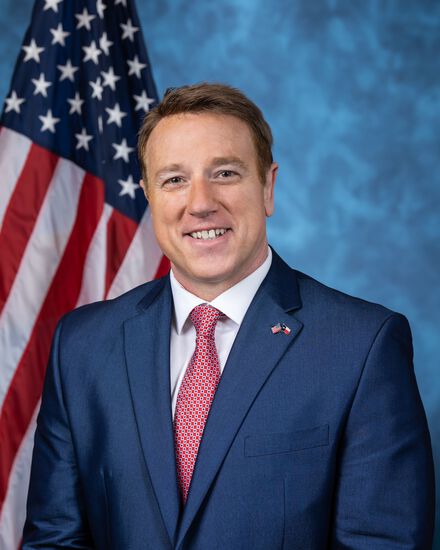
Photo of Pat Fallon
R United States House · District 4 · Texas On the 2026 ballot

Rep. Pat Fallon

Compare
Total votes
2,818
all sessions
Attendance
98%
65 missed
Near the chamber average
With party
93%
of cast votes
Near the chamber average
Bipartisan score
4%
crosses aisle rarely
Near the chamber average
Sponsored
746
bills & resolutions
Lower than 78% of chamber peers
Committees
8
assignments
746 bills and resolutions

Sponsored bills

Total
746
Primary
60
Co-sponsor
686
This page
746
matching current filters
Co-sponsor HR 563
In committee · Washington House · Co-sponsor
No Retaining Every Gun In a System That Restricts Your Rights Act

Maddy summaryHR 563 requires the Bureau of Alcohol, Tobacco, Firearms and Explosives (ATF) to destroy all firearm transaction records from discontinued businesses within 90 days of the law's enactment. It also amends a federal law to prevent future registration of such transactions by removing language that required these records to be delivered to the Attorney General. The bill mandates that the ATF submit a report to Congress detailing how many records were destroyed. This legislation directly affects ATF record-keeping procedures, not individual gun owners or firearm ownership rights.

In committee Jan 20, 2025 1 co-sponsor
Co-sponsor HRES 50
In committee · Washington House · Co-sponsor
Recognizing that article I, section 10 of the United States Constitution explicitly reserves to the States the sovereign power to repel an invasion and defend their citizenry from the overwhelming and "imminent danger" posed by paramilitary, narco-terrorist cartels, terrorists and criminal actors who seized control of our southern border.

Maddy summaryHRES 50 is a symbolic resolution, not a bill with policy changes. It declares that states bordering Mexico have the constitutional right under Article I, Section 10 to defend against "paramilitary, narco-terrorist cartels" and criminal actors at the southern border. The resolution states that states like Texas, Arizona, New Mexico, and California were "invaded" or faced "imminent danger" from these groups from 2021-2024, and that the federal government failed to protect them. It makes no new laws or allocate funds - only asserts a constitutional interpretation for states to act unilaterally. (Note: This is a procedural resolution; no concrete policy change is enacted.)

In committee Jan 16, 2025 1 co-sponsor
Co-sponsor HR 473
In committee · Washington House · Co-sponsor
SHOW UP Act of 2025

Maddy summaryHR 473, the SHOW UP Act of 2025, requires federal executive agencies to return to pre-pandemic telework policies within 30 days of enactment, limiting work-from-home options to those in place on December 31, 2019. Agencies must then conduct a 6-month study analyzing pandemic-era telework impacts - including effects on mission performance, costs from underused office space, and employee productivity tools - and submit a plan to Congress if they seek to expand telework beyond these baseline levels. The plan requires certification from the Office of Personnel Management confirming it will improve mission performance, reduce real estate costs, lower locality pay expenses, and ensure secure remote work capabilities without increasing agency costs. This bill directly affects all federal executive agencies (excluding the Government Accountability Office) and their employees by restricting telework flexibility and imposing strict requirements for any future expansion.

In committee Jan 16, 2025 1 co-sponsor
Co-sponsor HR 516
In committee · Washington House · Co-sponsor
To amend the Internal Revenue Code of 1986 to modify the railroad track maintenance credit.

This bill increases the annual limit on the tax credit for qualified railroad track maintenance expenses (also referred to as the short line railroad tax credit) and expands eligibility for claiming the credit. Under current law, the tax credit is limited each tax year to $3,500 multiplied by the sum of the number of miles of railroad track owned or leased by the taxpayer (miles owned or leased) and the number of railroad track miles assigned to the taxpayer by a Class II or III railroad (miles assigned). This bill increases the annual limit to $6,100 multiplied by the sum of miles owned or leased and miles assigned. The $6,100 amount used in the calculation of the tax credit limit is adjusted for inflation for tax years beginning after 2025. The bill also expands eligibility for the tax credit to include gross expenses for maintaining railroad tracks owned or leased as of January 1, 2024. Under current law, the tax credit is limited to gross expenses for maintaining railroad tracks owned or leased as of January 1, 2015.

In committee Jan 16, 2025 1 co-sponsor
Co-sponsor HR 551
In committee · Washington House · Co-sponsor
Make the Migrant Protection Protocols Mandatory Act of 2025

Maddy summaryHR 551, the "Make the Migrant Protection Protocols Mandatory Act of 2025," would require U.S. border officials to apply the Migrant Protection Protocols (MPP) to all eligible asylum seekers at the southern border, rather than allowing discretion. The bill amends the Immigration and Nationality Act to change the language from "may" to "shall" in Section 235(b)(2)(C), meaning officials must send asylum seekers back to Mexico to await their immigration hearings. This directly affects asylum seekers who would no longer have the option of remaining in the U.S. during processing. The key mechanism is a technical legal change to make the existing MPP policy mandatory for all applicable cases.

In committee Jan 16, 2025 1 co-sponsor
Co-sponsor HR 522
In committee · Washington House · Co-sponsor
FAITH in Small Business Act

Maddy summaryThis bill makes a 2021 Small Business Administration (SBA) rule permanent, requiring equal treatment for religious organizations in SBA loan and disaster assistance programs. It directly affects faith-based groups applying for SBA financial support, ensuring they cannot be excluded solely due to religious affiliation. The key provision incorporates the existing SBA rule - issued January 19, 2021 - into law without creating new requirements. This policy change ensures religious organizations have the same access to federal small business programs as other entities.

In committee Jan 16, 2025 1 co-sponsor
Co-sponsor HR 404
In committee · Washington House · Co-sponsor
Hearing Protection Act

Maddy summaryHR 404, the "Hearing Protection Act," reclassifies firearm silencers (devices that reduce gunfire noise) as firearms for federal tax and regulatory purposes. It imposes a 10% federal tax on silencers, requires the destruction of all existing federal silencer registration records within one year, and preempts state laws that tax or regulate silencers. The bill clarifies that silencers are treated as firearms under federal law, including for licensing and marking requirements, and defines "firearm silencer" to include specific components. Note: The bill’s title is misleading - it addresses firearm silencer regulation, not hearing protection for people.

In committee Jan 15, 2025 1 co-sponsor
Co-sponsor HR 424
In committee · Washington House · Co-sponsor
State Border Security Reimbursement Act of 2025

Maddy summaryHR 424, the State Border Security Reimbursement Act of 2025, requires the federal government to reimburse states that spent over $2.5 billion on border security since 2014. It directly affects states like Texas, which has allocated over $3.2 billion for border security since 2008-2009 due to federal inaction. States meeting the spending threshold must submit expense reports within 180 days of the bill's enactment, and the federal government must reimburse these costs within one year of submission. The bill aims to address the financial burden on states that have funded border security efforts primarily the federal government's responsibility.

In committee Jan 15, 2025 1 co-sponsor
Co-sponsor HR 401
In committee · Washington House · Co-sponsor
No Taxpayer Funding for the World Health Organization Act

Maddy summaryHR 401, the "No Taxpayer Funding for the World Health Organization Act," prohibits the U.S. government from providing any assessed or voluntary contributions to the World Health Organization (WHO) starting on the day the bill becomes law. This directly affects the WHO, which would lose U.S. funding through these specific channels, and the U.S. government, which would no longer allocate taxpayer money for this purpose. The key mechanism is a statutory ban that overrides existing law, requiring immediate cessation of such payments without needing additional authorization. The bill does not impact other U.S. international health programs or the WHO's broader operations.

In committee Jan 14, 2025 1 co-sponsor
Co-sponsor HR 342
In committee · Washington House · Co-sponsor
Honor Inauguration Day Act

Maddy summaryHR 342, the Honor Inauguration Day Act, requires the U.S. flag to be flown at its highest peak on every presidential Inauguration Day, overriding any conflicting laws. This procedural bill directly affects all federal buildings and properties where the flag is displayed on that specific day. It mandates a ceremonial flag display to "commemorate and celebrate" the presidential election process, as stated in the congressional findings. The bill makes no substantive policy changes but establishes a specific flag protocol for Inauguration Day.

In committee Jan 13, 2025 1 co-sponsor
Showing 181 to 190 of 746 bills
Previous 1 18 19 20 75 Next