

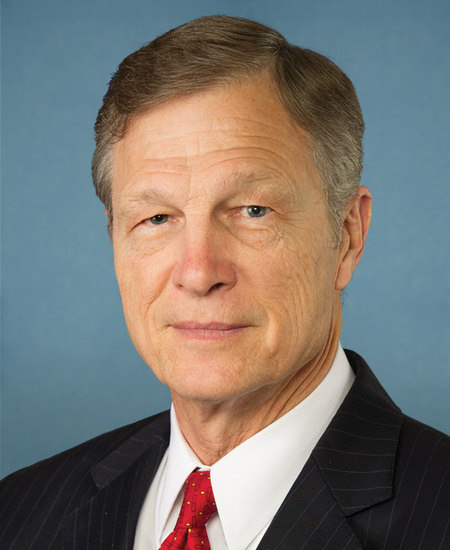
Photo of Brian Babin
R United States House · District 36 · Texas On the 2026 ballot

Rep. Brian Babin

Compare
Total votes
2,818
all sessions
Attendance
98%
63 missed
Near the chamber average
With party
94%
of cast votes
Higher than 75% of chamber peers
Bipartisan score
3%
crosses aisle rarely
Lower than 76% of chamber peers
Sponsored
1,283
bills & resolutions
Near the chamber average
Committees
4
assignments
1,283 bills and resolutions

Sponsored bills

Total
1,283
Primary
44
Co-sponsor
1,239
This page
1,283
matching current filters
Co-sponsor HRES 1273
In committee · Washington House · Co-sponsor
Honoring mothers, and recognizing the significance of motherhood and the impact mothers have on raising the next generation, on the occasion of Mother's Day.

Maddy summaryThis resolution formally recognizes the importance of motherhood and honors mothers on Mother's Day. It explicitly supports policies that define mothers as women and opposes recent legislative efforts to remove the term "mother" from official House rules. The text also acknowledges various types of mothers, including stepmothers, adopted mothers, and single mothers, while rejecting alternative terms like "birthing person" or "gestational parent." Ultimately, the bill encourages the public to celebrate the sacrifices and contributions of mothers to the nation.

In committee May 11, 2026 1 co-sponsor
Co-sponsor HR 8679
In committee · Washington House · Co-sponsor
To amend title 38, United States Code, to require the Secretary of Veterans Affairs to transmit a veteran's history of opioid prescriptions to a Community Care health care provider.

Maddy summaryThis bill requires the Department of Veterans Affairs to share a veteran's history of opioid prescriptions with their community healthcare providers. The rule applies to veterans receiving care outside the VA system and mandates that this prescription data be sent to both the specific non-VA doctors treating them and any third-party administrators managing their care. By updating existing regulations, the legislation aims to improve coordination between VA medical records and private healthcare providers to ensure comprehensive treatment information is available.

In committee May 7, 2026 1 co-sponsor
Co-sponsor HR 8630
In committee · Washington House · Co-sponsor
PEAT Act of 2026

Maddy summaryThe PEAT Act of 2026 amends federal regulations to clarify how certain biologic drugs are classified for approval purposes. Specifically, it prevents the Food and Drug Administration from denying approval to a biologic product simply because it contains a protein that does not have a clinical effect. This change ensures that the presence of inactive proteins does not automatically disqualify a drug from being treated as a biological product. The legislation directly impacts pharmaceutical companies developing complex biologics and the regulatory review process for these medicines. By removing this specific barrier, the bill aims to streamline the path to market for drugs that include non-active protein components.

In committee Apr 30, 2026 1 co-sponsor
Co-sponsor HR 8462
In committee · Washington House · Co-sponsor
National Quantum Initiative Reauthorization Act

Maddy summaryThis bill, the National Quantum Initiative Reauthorization Act, extends and expands the existing National Quantum Initiative through December 2032. It broadens the initiative's focus from "science" to "science, engineering, and technology" across federal agencies like NIST, NSF, DOE, and NASA, emphasizing the development of quantum applications, commercialization, and a robust domestic quantum industry. Key

In committee Apr 29, 2026 1 co-sponsor
Co-sponsor HR 8538
In committee · Washington House · Co-sponsor
Save America’s Family Forests Act of 2026

Maddy summaryThe Save America's Family Forests Act of 2026 provides tax incentives to encourage landowners to replant forests damaged by natural disasters. It increases the standard tax deduction for routine reforestation projects from $10,000 to $30,000 per property and adjusts these amounts annually for inflation. Additionally, the bill allows a special deduction of up to $1 million for expenses related to replanting trees destroyed by federally declared disasters, with specific rules to prevent double-dipping with other tax benefits. These financial benefits are designed to help taxpayers recover costs and promote forest regeneration without changing the underlying laws governing disaster relief or timber management.

In committee Apr 28, 2026 1 co-sponsor
Co-sponsor HR 8443
In committee · Washington House · Co-sponsor
End H–1B Visa Abuse Act of 2026

Maddy summaryThis bill proposes a comprehensive overhaul of the H-1B visa program by pausing new issuances for three years and capping the annual limit at 25,000 visas. It would eliminate the current lottery system, replacing it with a process that prioritizes employers offering the highest wages, while also restricting visa holders to a maximum stay of three years and banning them from holding multiple jobs simultaneously. The legislation further mandates that all H-1B workers be paid at least $200,000 annually, prohibits staffing agencies from sponsoring these visas, and bars federal agencies from hiring or petitioning for H-1B workers. Additionally, the bill would end employment authorization for foreign students and interns, and generally prevent most nonimmigrants from adjusting their status to become permanent residents while in the United States.

In committee Apr 22, 2026 1 co-sponsor
Co-sponsor HJRES 158
In committee · Washington House · Co-sponsor
Encouraging States to establish "Veterans Tax Relief Weekends" that coincide with Memorial Day, Independence Day, and Veterans Day, providing a practical way for communities across the country to recognize the service of veterans and members of the Armed Forces by providing financial relief to them.

Maddy summaryThis joint resolution encourages U.S. states to establish "Veterans Tax Relief Weekends" to benefit veterans, active duty military personnel, Reservists, and National Guard members. It proposes that states voluntarily implement three-day sales tax holidays coinciding with Memorial Day, Independence Day, and Veterans Day. During these periods, eligible individuals and their families would receive temporary relief from state sales taxes on consumer purchases, offering a practical way for communities to recognize their service.

In committee Apr 21, 2026 1 co-sponsor
Co-sponsor HRES 1205
In committee · Washington House · Co-sponsor
Encouraging military discounts in honor of the 250th anniversary of the United States.

Maddy summaryThis House Resolution encourages small and major businesses across the United States to voluntarily offer military appreciation discounts to members of the Armed Forces, veterans, and their families. This initiative is a non-binding gesture to honor their service during the 250th anniversary of the United States in 2026, relying solely on voluntary business participation without mandates or public funding.

In committee Apr 21, 2026 1 co-sponsor
Co-sponsor HRES 1204
In committee · Washington House · Co-sponsor
Expressing the sense of the House of Representatives that as the United States marks 250 years of independence, establishing a "Veterans Appreciation Month" offers a simple but powerful way for the Nation to recognize the men and women whose service has protected American freedom for generations.

Maddy summaryThis resolution expresses the sense of the House of Representatives that establishing a "Veterans Appreciation Month" would be a powerful way for the nation to recognize veterans. It suggests this recognition should occur as the United States marks its 250th anniversary of independence.

In committee Apr 21, 2026 1 co-sponsor
Co-sponsor HR 151
In committee · Washington House · Co-sponsor
Equal Representation Act of 2025

Equal Representation Act This bill requires that the statement sent by the President to Congress after the decennial census indicating the number of persons in each state exclude noncitizens. (This statement is the basis for reapportionment of U.S. Representatives.) The bill also requires any questionnaire used in the decennial census to include a checkbox or other similar option for respondents to indicate whether the respondent and each household member is (1) a U.S. citizen, (2) a U.S. national but not a citizen, (3) a non-U.S. national ( alien under federal law) lawfully residing in the United States, or (4) a non-U.S. national unlawfully residing in the United States. The Department of Commerce must make public the number of persons in each state, disaggregated by each of these four categories.

In committee Apr 21, 2026 1 co-sponsor
Showing 41 to 50 of 1,283 bills
Previous 1 4 5 6 129 Next