

Maddy summaryThis bill amends the Small Business Act to add penalties for small businesses falsely claiming goods or services are "Made in America" to win federal contracts. It directly affects small business concerns that receive federal contracts based on such false claims. The key provision extends the penalty period from 3 to 5 years for these violations, applying existing remedies from subsection (d)(2) but substituting the longer timeframe. This targets fraud in government procurement by strengthening consequences for misleading claims about domestic production.
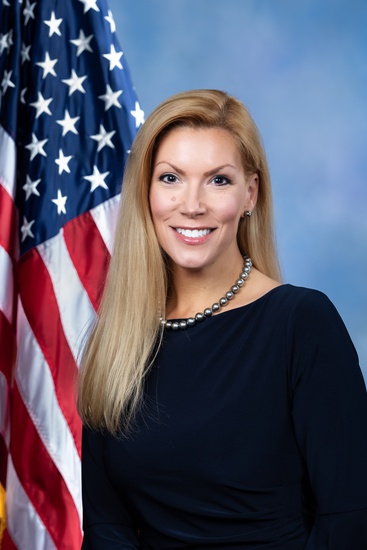
Rep. Beth Van Duyne
Sponsored bills
Maddy summaryHR 6197, the Health Tech Investment Act, establishes a new payment category under Medicare for algorithm-based healthcare services (like AI tools used in diagnosis or treatment) starting January 1, 2026. It requires Medicare to pay based on manufacturer-provided costs (including software, staff, and overhead) for these services and prohibits removing them from the special payment category for at least five years after initial payment. This directly affects Medicare beneficiaries (through coverage), healthcare providers (who deliver these services), and AI/algorithm service manufacturers (who receive reimbursement). The bill ensures these new technologies get fair payment while gathering sufficient claims data before potentially moving them to standard payment categories.
Maddy summaryHR 5107, the Common-Sense Law Enforcement and Accountability Now in DC Act (CLEAN DC Act), repeals D.C. Law 24-345 (the 2022 Comprehensive Policing and Justice Reform Amendment Act). This bill directly affects Washington, D.C.'s policing and justice systems by reversing all changes made under that 2022 law. The key mechanism is a straightforward repeal, restoring all prior District laws as if the 2022 reform had never been enacted. The bill does not introduce new provisions but undoes existing reforms to the District’s law enforcement framework.
Maddy summaryThis bill regulates healthcare platforms that help patients find providers (like online appointment directories). It prohibits these platforms from steering patients toward specific providers based on payment, requiring full disclosure of financial ties between platforms and healthcare providers. Platforms must use objective criteria for listing providers, cannot offer medical services or collect patient data improperly, and must set fair, pre-agreed compensation rates. It directly affects health tech companies operating these platforms and healthcare providers using them to connect with patients.
Maddy summaryHRES 782 is a non-binding House resolution expressing condolences to victims of the July 4, 2025, catastrophic floods in Texas, which caused at least 135 deaths (including 37 children) and widespread destruction. It honors first responders who rescued over 850 people and community heroes like camp staff who saved children, while committing the House to stand with affected Texans. The resolution does not create new laws or allocate funds - it formally mourns the loss of life, recognizes acts of courage, and urges prioritization of rebuilding infrastructure and support for vulnerable residents. This symbolic gesture was introduced by multiple Texas representatives and referred to the Transportation Committee.
Maddy summaryHR 6072, the "No Aid for Illegal Entry Act," prohibits federal funding for non-governmental organizations (like nonprofits) that provide legal services, housing, or transportation to undocumented immigrants who entered the U.S. without authorization. It also blocks the Department of the Interior from managing services related to immigration enforcement, legal representation, or resettlement. The law includes an exception allowing funds for minors (under 18) and requires agencies to ensure compliance with these restrictions. This bill directly affects nonprofits receiving federal grants and federal agencies handling immigration-related programs, effective upon enactment.
Maddy summaryThis bill amends the Immigration and Nationality Act to add new grounds for deporting non-citizens. It makes any non-citizen deportable if they have been convicted of a felony or two misdemeanors (under either state or federal law) after entering the United States. The key provision expands deportation eligibility beyond previous standards by explicitly including state misdemeanor convictions alongside federal offenses. This change directly affects non-citizens with specific criminal records, potentially increasing deportation risks for those with certain convictions. The policy alters the legal standard for removal but does not change sentencing or enforcement procedures.
Maddy summaryThis bill amends the Federal Food, Drug, and Cosmetic Act to extend the destruction authority for counterfeit, adulterated, or misbranded tobacco products at U.S. borders, similar to existing rules for drugs and devices. It updates the law by adding "counterfeit tobacco product" to the list of items subject to destruction and replacing "drug or device" with "drug, device, or tobacco product" in relevant sections. As a result, U.S. border agencies like the FDA can now destroy illicit tobacco products upon import without needing separate legal authority. The bill does not affect the importation of legitimate tobacco products.
Maddy summaryHR 5926, the Mexican Energy Trade Enforcement Act, requires the U.S. Trade Representative to take specific actions to enforce Mexico's obligations under the USMCA regarding energy trade. It mandates either requesting a dispute resolution panel with Mexico under USMCA rules or demanding Mexico provide non-discriminatory market access for U.S. energy companies during the first USMCA review. The bill directly affects U.S. energy companies operating in Mexico and exporting energy to Mexico, which faced alleged preferential treatment of Mexico's state-owned energy firms (CFE and Pemex). The USTR must report to Congress within 90 days on actions taken under the law.
Maddy summaryThe Caring for Mothers Act of 2025 requires health insurance plans to cover pregnancy-related care, postpartum care, and mental health services for birth mothers who place their newborns for adoption. It directly affects birth mothers (citizens or lawfully present individuals who are pregnant or within six months postpartum) and their health insurance plans. To activate coverage, an adoptive parent must submit a joint request with the birth mother, including attestations about the adoption plan. Coverage begins the month after the request is received and lasts up to one year from the child’s birth, ending if either party requests termination. The law explicitly states it does not require an adoption to proceed or impose penalties if adoption is not completed.