

Eliminating a Quantifiably Unjust Application of the Law Act of 2021 or the EQUAL Act of 2021 This bill eliminates the federal sentencing disparity between drug offenses involving crack cocaine and powder cocaine. Currently, different threshold quantities of crack cocaine and powder cocaine (e.g., 28 grams of crack cocaine and 500 grams of powder cocaine) trigger the same statutory criminal penalties. This bill eliminates the lower quantity thresholds for crack cocaine offenses. Under the bill, the same threshold quantities of crack cocaine and powder cocaine trigger the same statutory criminal penalties. The change applies to future cases and cases pending on the date of enactment. With respect to past cases, the bill authorizes a sentencing court to impose a reduced sentence on a defendant who was convicted or sentenced for a specified crack cocaine offense before this bill's enactment. A defendant does not have to be present at the sentence reduction hearing. Finally, the bill prohibits the reduction of a sentence that was previously reduced.
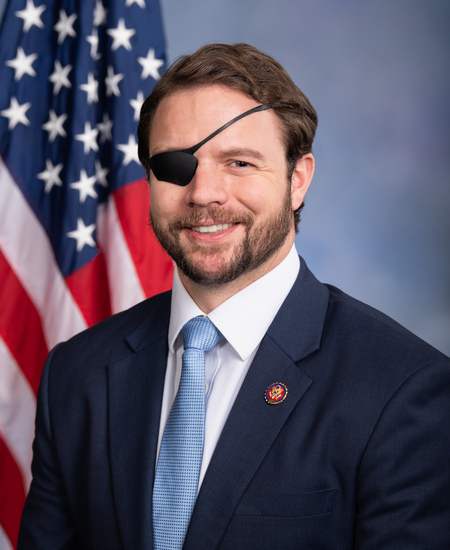
Sponsored bills
National Treasures Act of 2021 This bill prohibits the National Archives and Records Administration from including content warnings alongside items associated with the founding fathers of the United States. Content warning is defined as any message preceding or attached to the document labeling it as dangerous, harmful, anachronistic, or any other terms implying harm associated with the documents; disparaging the documents; assuming malicious intent on the part of the authors; or discouraging potential readers from reading the documents. Founding father means any individual who signed the Declaration of Independence, served as an officer in the Revolutionary War, attended the Second Continental Congress, attended the Constitutional Convention, or was granted a charter for one of the original 13 colonies of the United States.
This concurrent resolution expresses the sense of Congress that the men and women who undertook efforts in Afghanistan over the years have provided heroic service to the country and the peace experienced by our country is a direct result of the actions of our service members, diplomats, and humanitarians. The concurrent resolution also expresses that veterans who feel stress, anger, or disappointment over the end of operations in Afghanistan should seek resources and reach out to friends, mentors, and caregivers.
This resolution expresses the sense of the House of Representatives that the United States shall recognize kind actions in our country, encourage kindness, spread love, and foster a culture of being kind to one another.
This bill designates the community-based outpatient clinic of the Department of Veterans Affairs in San Angelo, Texas, as the Colonel Charles and JoAnne Powell VA Clinic.
Direct Primary Care for America Act This bill allows participants in health savings accounts to pay for direct primary care service arrangements from such accounts. A direct primary care service arrangement is primary medical care provided by primary care practitioners if the sole compensation for such care is a fixed periodic fee. The bill allows waivers to states under Medicaid to provide direct primary care to low-income Medicaid recipients. The bill also allows health care facilities to participate in the National Health Service Corps Scholarship or Loan Repayment Program if they offer direct primary care service arrangements and are in a health professional shortage area.
Countering Communist China Act This bill addresses issues related to China, tax incentives, and other topics. The bill imposes visa- and property-blocking sanctions on certain entities and individuals that (1) are involved in acts of malign disinformation on behalf of a foreign government or political party, or (2) have engaged in a pattern of significant infringement of intellectual property belonging to a U.S. entity or individual. It also authorizes sanctions on developers and owners of software that makes unauthorized transmissions of user data to servers that are located in China and are accessible by China's government. The bill also provides tax incentives for relocating pharmaceutical, medical supply, or medical device manufacturing to the United States, including by allowing accelerated depreciation of nonresidential real property acquired in connection with such relocation; eliminates the five-year amortization requirement for research and experimental expenditures scheduled to begin in 2022, thus allowing continued expensing of such expenditures in the taxable years in which they are incurred; prohibits an institution of higher education from receiving certain federal funds if the institution has a contractual partnership with an entity controlled by China's government or organized under China's laws; modifies presumptions and evidentiary standards in administrative patent validity challenges; bars China from asserting sovereign immunity in certain instances; requires U.S. representatives to the International Monetary Fund (IMF) to take certain actions, such as opposing any increase to the weight given to China's currency when determining the value of IMF Special Drawing Rights; and permanently rescinds unobligated funds previously made available for certain economic relief programs related to COVID-19.
This concurrent resolution condemns and censures President Joseph R. Biden for the military withdrawal from Afghanistan, which the resolution states was executed in a haphazard manner.
Combating Predatory Lending in Higher Education Act of 2021 This bill includes Direct PLUS Loans that are made to graduate students and parents on behalf of dependent students in an institution of higher education's (IHE's) cohort default rate. This rate is the percentage of an IHE's borrowers who enter repayment and default on certain student loans. Further, the Department of Education must include this information in its annual report on cohort default rates.
Puppies Assisting Wounded Servicemembers for Veterans Therapy Act or the PAWS for Veterans Therapy Act This bill implements a program and a policy related to service dog therapy for veterans. Specifically, the bill requires the Department of Veterans Affairs (VA) to implement a five-year pilot program to provide canine training to eligible veterans diagnosed with post-traumatic stress disorder as an element of a complementary and integrative health program. Eligible veterans are those who are enrolled in the VA health care system and have been recommended for participation by a qualified mental health care provider or clinical team. The VA must seek to enter agreements containing specified elements with accredited nongovernmental entities that have demonstrated ability to provide canine training. Veterans who participate in the program are authorized to adopt the dog they assisted in training if their health provider determines it is in the best interest of the veteran. The VA must establish processes to document and track the progress of participating veterans with respect to health benefits and improvements. The Government Accountability Office must brief Congress and submit a report on the program. The bill also authorizes the VA to provide service dogs to veterans with mental illnesses, regardless of whether they have a mobility impairment.