Court Shopping Deterrence Act This bill gives the U.S. Supreme Court exclusive jurisdiction to hear appeals from a nationwide injunction issued by a U.S. district court.
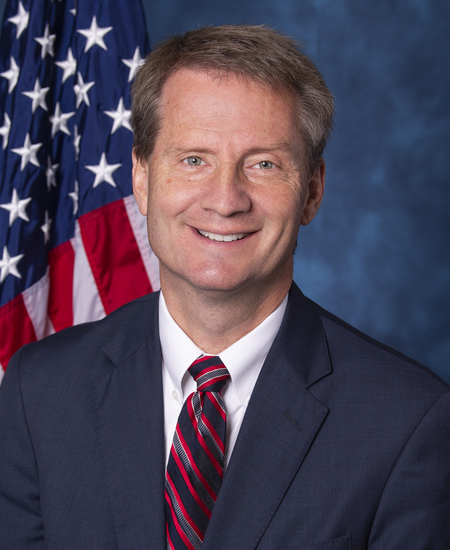
Rep. Tim Burchett
Sponsored bills
No Taxpayer Funding for Abortion and Abortion Insurance Full Disclosure Act of 2021 This bill modifies provisions relating to federal funding for, and health insurance coverage of, abortions. Specifically, the bill prohibits the use of federal funds for abortions or for health coverage that includes abortions. Such restrictions extend to the use of funds in the budget of the District of Columbia. Additionally, abortions may not be provided in a federal health care facility or by a federal employee. Historically, language has been included in annual appropriations bills for the Department of Health and Human Services (HHS) that prohibits the use of federal funds for abortions—such language is commonly referred to as the Hyde Amendment. Similar language is also frequently included in appropriations bills for other federal agencies and the District of Columbia. The bill makes these restrictions permanent and extends the restrictions to all federal funds (rather than specific agencies). The bill's restrictions regarding the use of federal funds do not apply in cases of rape, incest, or where a physical disorder, injury, or illness endangers a woman's life unless an abortion is performed. The Hyde Amendment provides the same exceptions. The bill also prohibits qualified health plans from including coverage for abortions. Currently, qualified health plans may cover abortion, but the portion of the premium attributable to abortion coverage is not eligible for subsidies.
Empower our Girls Act This bill allows certain grants authorized under the Violence Against Women Act to be used to support victims of female genital mutilation. Such grants already support victims of domestic violence, sexual assault, dating violence, and stalking. The bill also requires the Federal Bureau of Investigation (FBI) to classify female genital mutilation as a Part II crime (i.e., a less serious offense) in the Uniform Crime Reports. (The FBI compiles and periodically publishes crime statistics through the Uniform Crime Reporting Program. Currently, the FBI does not compile and publish information about female genital mutilation.)
Growing Climate Solutions Act of 2021 This bill authorizes the Department of Agriculture (USDA) to establish a voluntary Greenhouse Gas Technical Assistance Provider and Third-Party Verifier Certification Program to help reduce entry barriers into voluntary environmental credit markets for farmers, ranchers, and private forest landowners. A voluntary environmental credit market is a market through which agriculture and forestry credits may be bought or sold. Entities eligible to participate in the program are (1) providers of technical assistance to farmers, ranchers, or private forest landowners in carrying out sustainable land use management practices that prevent, reduce, or mitigate greenhouse gas emissions, or sequester carbon; or (2) third-party verifiers that conduct the verification of the processes described in the protocols for voluntary environmental credit markets. Among other requirements, USDA must publish (1) a list of protocols and qualifications for eligible entities; (2) information describing how entities may self-certify under the program; (3) information describing how entities may obtain the expertise to meet the protocols and qualifications; and (4) instructions and suggestions to assist farmers, ranchers, and private forest landowners in facilitating the development of agriculture or forestry credits and accessing voluntary environmental credit markets. USDA must also establish an advisory council to make recommendations regarding the list of protocols and qualifications, best practices, and voluntary environmental credit markets. The bill also rescinds certain funds provided in the American Rescue Plan Act of 2021 and makes the funds available for the certification program.
Finish the Wall Act This bill requires the Department of Homeland Security (DHS) to resume activities related to the construction of a barrier system along the U.S.-Mexico border and addresses other border-related issues. DHS must resume all such construction activities that were planned or underway prior to January 20, 2021. DHS must also expend all funds appropriated or explicitly obligated since October 1, 2016, for construction of this barrier system. DHS may not cancel contracts for activities related to such construction entered into on or before January 20, 2021. Furthermore, within 14 days of this bill's enactment, DHS must certify to Congress that U.S. Customs and Border Protection facilities that process adults taken into custody at the border are fully compliant with certain laws related to the collection of DNA. (Among other things, these laws allow for the collection of DNA samples from non-U.S. persons detained under U.S. authority.)
Microloan Improvement Act of 2021 This bill revises the microloan program through which the Small Business Administration (SBA) provides, through designated intermediaries, certain financial assistance to small businesses. Specifically, the bill authorizes an intermediary to offer a line of credit to a small business, and it increases the average amount for loans from an intermediary to participating small businesses that makes the intermediary eligible for a reduced interest rate on SBA loans. The bill also places limits on the repayment term for a microloan, and it prohibits the SBA from imposing any additional limitation on the term for repayment of a microloan. Further, the SBA must (1) reserve 15% of new loan funds that are made available for disbursement as microloans to designated underutilized states and make the remaining 85% available for any state, (2) establish a process for an intermediary to provide the major credit reporting agencies with information about a borrower that is relevant to credit reporting, and (3) include information regarding equitable distribution of loan funds in its annual report.

Microloan Transparency and Accountability Act of 2021 This bill modifies reporting requirements related to the Small Business Administration's (SBA) disbursement of certain financial assistance. Specifically, the bill requires the SBA to report certain metrics related to the disbursement of microloans to small businesses, including (1) the number, amount, and percentage of such loans that went into default in the previous year; (2) the extent to which microloans are provided to small businesses in rural areas; and (3) the average size, rate of interest, and amount of fees charged for each microloan.
FDA Modernization Act of 2021 This bill allows an applicant for market approval for a new drug to use methods other than animal testing to establish the drug's safety and effectiveness. Under this bill, these alternative methods may include cell-based assays, organ chips and microphysiological systems, sophisticated computer modeling, and other human biology-based test methods.
Master Sergeant Roddie Edmonds Congressional Gold Medal Act This bill provides for the posthumous award of a Congressional Gold Medal to Roddie Edmonds in recognition of his achievements and heroic actions during World War II.
No TikTok on Government Devices Act This bill requires the social media video application TikTok to be removed from the information technology of federal agencies. Specifically, the bill requires the Office of Management and Budget to develop standards for executive agencies that require TikTok and any successor application from the developer to be removed from agency information technology (e.g., devices). Such standards must include exceptions for law enforcement activities, national security interests, and security researchers.