

Uyghur Stop Oppressive Sterilizations Act or the Uyghur SOS Act This bill expands existing visa-blocking sanctions to cover certain high-ranking foreign government officials who are responsible for coercive population control policies, such as forced abortions, with a focus on those responsible for such policies against ethnic minority groups in China. Specifically, the Department of State may not issue a visa to a foreign national who is a head of state, head of government, or cabinet-level minister and responsible for establishing or enforcing such policies if the policies are (1) imposed with the intent to destroy a national, ethnic, racial, or religious group; or (2) targeting ethnic minority groups (e.g., Uyghurs, Kazakhs, or Tibetans) or individuals peacefully expressing internationally-recognized human rights in China. (Currently, these sanctions do not apply to any foreign government officials at these higher ranks.) The State Department must make a public announcement each time sanctions are imposed under this bill. The bill also requires the State Department to provide all appropriate assistance to women who belong to an ethnic minority group in China and who have experienced sexual violence, torture, or coercive population control policies.
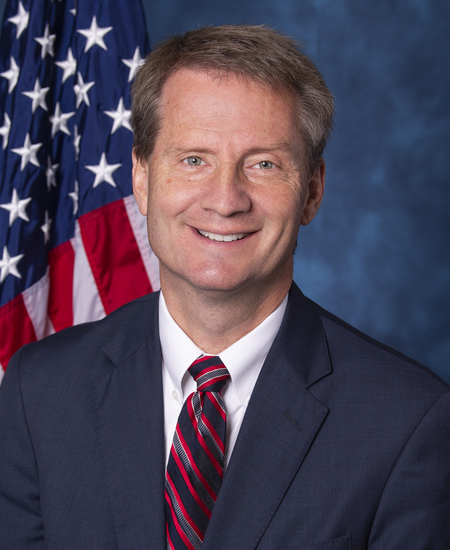
Rep. Tim Burchett
Sponsored bills
Protecting Jobs and Wages from Regulations Act of 202 1 This bill revises and expands the requirements for federal agency rulemaking by requiring agencies, in making a rule, to base all preliminary and final factual determinations on evidence and to consider the legal authority under which the rule may be proposed, the specific nature and significance of the problem the agency may address with the rule, any reasonable alternatives for the rule, and the potential costs and benefits associated with such alternatives.
Federal Firearms Licensee Protection Act This bill modifies provisions related to theft of firearms. Under current law, it is unlawful to steal a firearm from a licensed importer, manufacturer, or dealer, or from their business premises. This bill broadens the scope of unlawful conduct to also prohibit stealing a firearm from a gun range that rents firearms or a shooting club. An attempt to commit an offense is subject to the same penalties as a substantive offense. The bill modifies these penalties by increasing the maximum prison term.
Having Employees Return to Duty Act or the HERD Act This bill addresses federal employees who comply with Executive Order 14043 (requiring COVID-19 vaccination for federal employees). Specifically, the bill requires each federal agency to require employees who comply with the order to work from their duty station and to work the hours required as of February 15, 2020. The bill's requirement does not apply to immunocompromised employees. Additionally, the bill does not prohibit an agency from implementing different policies at a particular work site if the agency finds that (1) there is substantial transmission of COVID-19 within a community in which such requirements would otherwise be carried out; and (2) implementing those different policies will not degrade the level of service that the agency provides to the public.
Keeping Our COVID-19 Heroes Employed Act This bill exempts essential workers from COVID-19 vaccination requirements imposed by the federal government and contractors, public entities that received federal COVID-19 relief funds, and private entities that received any federal funds. An essential worker is an individual who was deemed to be essential or exempted from response measures during the COVID-19 pandemic by a state, tribe, or territory.
This resolution recognizes the importance of gig workers (i.e., workers hired on a per-project basis) and other independent contractors to the economy.
This bill prohibits the use of federal funds to require a member of the Armed Forces to receive a COVID-19 vaccination. The bill also prohibits adverse action (e.g., punishment) being taken against a member of the Armed Forces because the member refuses to receive a COVID-19 vaccination.
State, Local, Tribal, and Territorial Fiscal Recovery, Infrastructure, and Disaster Relief Flexibility Act This bill allows states, tribes, territories, and localities to use certain COVID-19 relief funds for new categories of spending, including for natural disasters and infrastructure projects. It also makes changes to expenditure deadlines and other aspects of this funding. Specifically, recipients may use funds for emergency relief from natural disasters and associated negative economic impacts of natural disasters. In addition, recipients may use a portion of their COVID-19 relief funds for designated infrastructure projects, such as nationally significant freight and highway projects. Furthermore, the bill allows recipients to expend COVID-19 relief funds on these types of infrastructure projects until September 30, 2026. Under current law, recipients must expend the funds by December 31, 2024. Other changes in the bill include (1) modifying eligibility and allocation requirements for funding set aside for counties and Indian tribes that are near public lands, (2) allowing Indian tribes an additional year to expend their COVID-19 relief funds, and (3) establishing a process for government entities to decline COVID-19 relief funds and requiring any declined funds to be used to reduce the federal deficit.
Treatment Restoration for Emergency Antibody Therapeutics Act or the TREAT Act This bill prohibits the Department of Health and Human Services (HHS) from implementing any policy that restricts health care facilities from ordering and receiving COVID-19 monoclonal antibody therapies directly from manufacturers and distributors. In addition, the bill expressly nullifies a policy announced on September 13, 2021, under which HHS allocated supplies of these therapies through state or territorial governments.
This resolution honors and congratulates the Tennessee Farm Bureau Federation on its 100th anniversary and commemorates the Tennessee Farm Bureau Federation for its service to the farmers and rural communities in the state of Tennessee.