

Increasing Access to Osteoporosis Testing for Medicare Beneficiaries Act of 2021 This bill specifies that certain Medicare payment rules applicable to imaging services shall apply to dual-energy x-ray absorptiometry services used in bone mass scans beginning in 2022. The Centers for Medicare & Medicaid Services must establish national minimum payment amounts for such services.
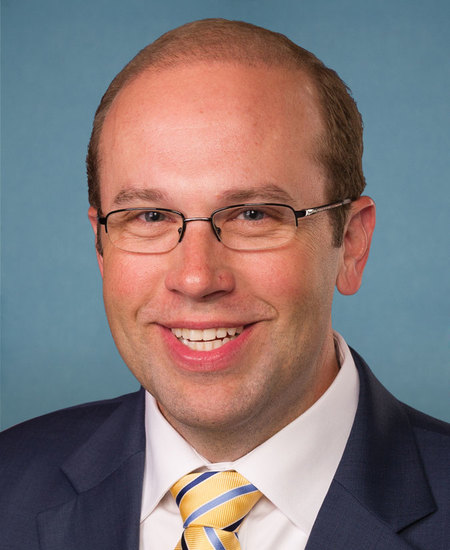
Rep. Jason Smith
Sponsored bills
Permanency for Audio-Only Telehealth Act This bill expands coverage of telehealth services under Medicare. Specifically, the bill permanently removes geographic restrictions on originating sites (i.e., the location of the beneficiary). It also permanently expands coverage to include audio-only services for evaluation and management and behavioral health services; beneficiaries must have received in-person or video services during the preceding three-year period.
Saving Gig Economy Taxpayers Act This bill modifies requirements for third party settlement organizations to eliminate their reporting requirement with respect to the transactions of their participating payees unless they have earned more than $20,000 on more than 200 separate transactions in an applicable tax period. A third party settlement organization is the central organization that has the contractual obligation to make payments to participating payees (generally, a merchant or business) in a third party payment network. This reverses a provision in the American Rescue Plan Act of 2021 that lowered the reporting threshold to $600 with no minimum on the number of transactions.
Rural Jobs Act This bill allocates an additional $500 million in 2021 and 2022 for new markets tax credit investments in the Rural Jobs Zone (an area comprised of low-income communities with populations not greater than 50,000 that are not adjacent to an urbanized area). The bill also requires that at least 25% of such investments be made in areas that are persistent poverty counties, high migration rural counties, or both.
Close the Double Subsidy Loophole for Electric Vehicles Act This bill reduces the allowable amount of the tax credit for a new qualified plug-in electric drive motor vehicle by any subsidy made available by the state in which the vehicle is registered and was placed in service.
No Subsidies for Government Purchases of Electric Vehicles Act This bill disallows a tax credit for qualified plug-in electric drive motor vehicles that are sold to the federal government or a state government.
Recognizing the Protection of Motorsports Act of 2019 or the RPM Act of 2019 [ sic ] This bill authorizes the modification of a vehicle's air emission controls for vehicles that are not legal for operation on a street or highway and are used solely for competition.
U.S. Military Right to Carry Act This bill requires a state that receives funds under the Edward Byrne Memorial Justice Assistance Grant Program to have implemented (1) a law or policy authorizing members of the Armed Forces who are outside of their state of residence under orders to renew a permit to carry a concealed firearm through the mail, and (2) a law or policy that treats members of the Armed Forces on active duty in the state as residents of the state for purposes of issuing a permit to carry a concealed firearm in the state. The Department of Justice must reduce by 5% the amount that a state would otherwise receive under the grant program if the state fails to comply with either requirement.
Stop Forced Organ Harvesting Act of 2021 This bill establishes specified measures to combat forced organ harvesting and the international trafficking in persons for the purpose of removing their organs. These measures include (1) establishing property-blocking and visa-blocking sanctions, (2) prohibiting exports of certain surgery devices to entities that are identified as being responsible for forced organ harvesting or related human trafficking, and (3) requiring the Department of State to report on these practices.
Combatting COVID Unemployment Fraud Act of 2021 This bill requires additional documentation for individuals seeking pandemic unemployment assistance, requires state unemployment agencies to use designated fraud prevention tools, and otherwise addresses pandemic-related unemployment benefits.