

Maddy summaryHR 5408, the Faster Labor Contracts Act, requires employers to begin negotiating a first contract with a newly certified union within 10 days of written request. If no agreement is reached within 90 days, the parties must seek mediation, and if unresolved after 30 days of mediation, the dispute moves to binding arbitration by a three-member panel. The arbitration decision, based on factors like employer finances, industry standards, and cost of living, becomes binding for two years. This bill directly affects newly certified unions and their employers during initial contract negotiations, aiming to reduce delays that currently average 465 days.
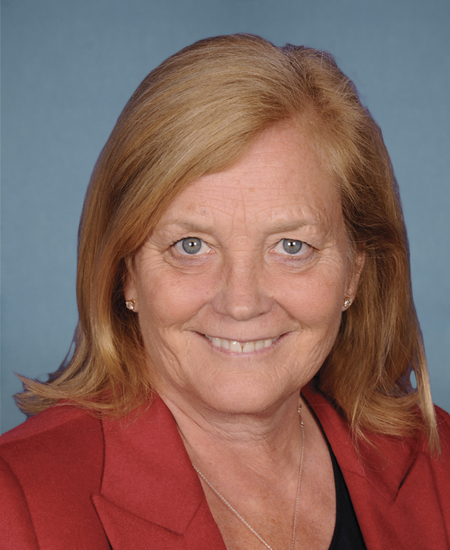
Rep. Chellie Pingree
Sponsored bills
Maddy summaryThe No Toxic Chemicals in Food Packaging Act of 2026 prohibits the use of specific chemicals, including PFAS, certain phthalates, and bisphenols, in materials that come into contact with food. This law directly affects manufacturers and distributors of food packaging by requiring the FDA to consider potential health risks to vulnerable populations, such as children and pregnant women, when evaluating alternative substances. While the federal restrictions do not take effect for two years after enactment, the bill explicitly preserves the right of states and local governments to pass stricter regulations on food additives.
Maddy summaryThis bill, known as the Double the Wage for Overtime Act of 2026, aims to change how overtime pay is calculated for employees covered by the Fair Labor Standards Act. It directly affects workers who currently earn less than $23,660 annually, as it would require employers to pay them two times their regular hourly rate instead of one and a half times for hours worked beyond 40 in a week. The law takes effect 180 days after it is signed, ensuring a transition period before the new pay requirements begin. By raising the overtime multiplier, the legislation seeks to increase earnings for hourly workers who work extra hours.
Maddy summaryThis bill directs the United States Postal Service to review and implement specific recommendations from its own Inspector General regarding how to handle undelivered and partially delivered mail routes. The Postal Service must complete these changes within one year of the bill's enactment to improve the identification and notification processes for customers. This legislation directly affects mail carriers and customers by aiming to resolve issues related to mail that fails to reach its destination or is only partially delivered.
Maddy summaryThis bill, known as the Email Privacy Act, amends existing federal laws to clarify how information about stored emails can be shared and how government agencies can access email content. It requires internet service providers to use the term "disclose" rather than "divulge" when sharing subscriber data and expands the definition of who can receive this information to include agents of the customer. The legislation also changes rules for government warrants by allowing providers to notify customers about the receipt of a warrant unless the government requests otherwise, while maintaining exceptions for communications made public by the sender. Additionally, the bill removes a specific time limit that previously required a warrant for emails stored for less than 180 days, ensuring consistent warrant requirements for all stored communications.
Maddy summaryThis joint resolution seeks to officially reject a final rule issued by the Department of Education regarding federal student loan programs. If passed, the measure would prevent the new regulations from taking effect, leaving the previous rules in place. The bill directly impacts borrowers, lenders, and the Department of Education by nullifying the specific changes outlined in the "Reimagining and Improving Student Education" proposal. It is a procedural action that uses the Congressional Review Act to disapprove the agency's policy without altering the underlying law.
Maddy summaryThis bill creates a new federal tax credit to encourage owners of manufactured home communities to sell their land to residents or nonprofit organizations that agree to keep the community affordable. The credit allows sellers to claim 75% of their profit from the sale, provided the buyer agrees to a binding 50-year covenant that the land will remain used for manufactured housing. To qualify, the new owner must be a resident-owned cooperative or a nonprofit corporation with democratic governance where residents elect the board of directors. The legislation aims to prevent community closures and protect low-income homeowners from rising rents by promoting long-term resident ownership. This change takes effect for taxable years beginning after December 31, 2026.
Maddy summaryThis bill, titled the No Presidential Self-Serving Lawsuits Act of 2026, prevents the current or former President of the United States from filing civil lawsuits against the federal government. It specifically invalidates an existing settlement agreement between a former President and the Internal Revenue Service and bars the use of federal funds to create compensation for such lawsuits. Additionally, the legislation authorizes the Treasury Secretary to recover any money already spent in violation of these new restrictions. The primary goal is to stop a President from using taxpayer money to settle legal disputes with the government they lead.
Maddy summaryThis bill extends the Rural Community Hospital Demonstration Program by an additional five years, allowing rural hospitals to continue receiving Medicare payment adjustments designed to help them compete with larger health systems. The legislation amends existing federal laws to change the program's timeline from a 15-year extension to a 20-year extension, ensuring these financial incentives remain in place for a longer period. It also includes specific rules for hospitals that joined the program later, ensuring they receive the same extended benefits during the final years of the new timeframe. The primary effect is to maintain current funding mechanisms for participating rural hospitals without altering the core rules of the demonstration.
Maddy summaryThis bill would add pharmacist services to Medicare Part B coverage for beneficiaries, specifically covering pharmacist-led testing and treatment for illnesses like flu, COVID-19, or strep throat during public health emergencies. It defines covered services as those performed under state law, often requiring collaboration with a physician, and sets payment at 80% of the lesser of the actual charge or 85% of physician payment rates. Pharmacists would be prohibited from balance billing for these services, ensuring Medicare beneficiaries pay only their standard copayment. The changes would take effect January 1, 2026.