

Cardiovascular Advances in Research and Opportunities Legacy Act This act addresses research, education, and awareness concerning valvular heart disease and its treatment. This disease is caused by damage to or disease affecting any valve that controls blood flow in the heart. The National Institutes of Health may conduct or support research on the disease in consultation with the National Heart, Lung, and Blood Institute (NHLBI). The NHLBI must also conduct a workshop on mitral valve prolapse, which occurs when the valve between the chambers of the left side of the heart seals improperly. The Department of Health and Human Services (HHS) must develop best practices to treat valvular heart disease. HHS may also carry out other projects to increase education and awareness of the disease.
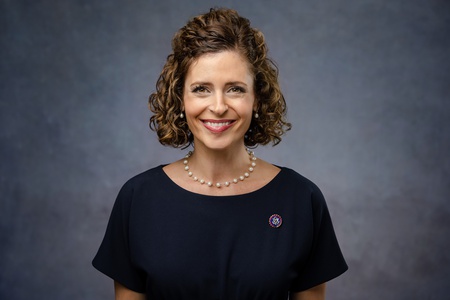
Rep. Julia Letlow
Sponsored bills
Maddy summaryHRES 1501 is a symbolic resolution expressing the House of Representatives' support for National Adoption Day (November 19, 2022) and National Adoption Month (November 2022). It encourages the public to raise awareness about children in foster care awaiting permanent families and promotes adoption as a way to provide safety and stability. The resolution does not create new laws or policies but formally recognizes efforts to connect children in foster care with adoptive families, referencing that over 75,000 children joined permanent families on National Adoption Day since 2000. It directly affects public awareness and national recognition of adoption needs, not specific individuals or programs.
Lymphedema Treatment Act This bill provides for Medicare coverage of lymphedema compression treatment items. Specifically, the bill provides for coverage of standard and custom fitted gradient compression garments and other approved items that are prescribed by a physician or other specified health care professional to treat lymphedema.
Maddy summaryHRES 1114 is a non-binding House resolution expressing support for recognizing "National Police Week" as a way to honor law enforcement officers across the United States. The resolution acknowledges the service and sacrifices of law enforcement officers, particularly those who have died in the line of duty, and specifically references 619 officers who died in 2021 as listed in the resolution. This resolution does not create new laws or allocate funds but serves as a symbolic gesture to encourage public recognition of law enforcement personnel. It calls for Americans to observe National Police Week by honoring officers and raising awareness about their essential role in community safety. The resolution was introduced by multiple members of Congress and referred to the Committee on the Judiciary.
This resolution expresses support for the First Amendment to the Constitution and its bipartisan protection of free speech and academic freedoms for all students and faculty.
Protecting Families from Fertility Fraud Act of 2022 This bill establishes a new federal criminal offense for knowingly misrepresenting the nature or source of DNA used in assisted reproductive technology or assisted insemination. The term assisted reproductive technology includes any treatment or procedure that involves the handling of human oocytes or embryos, such as in vitro fertilization, gamete intrafallopian transfer, and zygote intrafallopian transfer. The term assisted insemination includes any procedure that involves the handling of sperm including intrauterine insemination. A violation is subject to a fine, a prison term of up to 10 years, or both. Additionally, the bill makes the violation a predicate offense (i.e., an underlying offense) for prosecutions under the federal racketeering statute.
Secure Every School and Protect Our Nation’s Children Act or the STOP II Act This bill reauthorizes and supports various grants to enhance school safety and security initiatives. It also provides statutory authority for the federal clearinghouse of school safety resources. (The clearinghouse identifies and publishes best practices and recommendations for school safety for use by state and local educational and law enforcement agencies, institutions of higher education, health professionals, and the public.)
Supreme Court Police Parity Act of 202 2 This bill grants the Marshal of the Supreme Court and the Supreme Court Police the authority to protect any member of the immediate family of the Chief Justice, any Associate Justice, or any officer of the Supreme Court if the Marshal determines that such protection is necessary.
Immigration Transparency and Transit Notification Act of 2022 This bill requires notifications to certain officials before an unaccompanied alien child or a non-U.S. national ( alien under federal law) without lawful immigration status may be placed in or transported to a state or local jurisdiction. The bill also authorizes the office of the governor of the relevant state to prohibit the placement or transportation. At least seven calendar days before taking such an action, the Department of Homeland Security (DHS) or the Department of Health and Human Services (HHS) must notify (1) the relevant state governor's office, (2) the state attorney general's office, (3) the county or municipal government, (4) local law enforcement, and (5) federal and state legislators representing the relevant jurisdiction. The action may not take place if the state governor's office objects no later than three calendar days after receiving the notification. This authority to object shall not apply if the action is to place an unaccompanied child with, or transport the child to, a family member.
Upholding the Law at Our Border Act This bill requires the Office of Inspector General of the Department of Homeland Security (DHS) to periodically investigate and report on certain issues until there have been fewer than 35,000 apprehensions at the southwest border for three consecutive months. When required, the reports must address certain issues, including (1) the vetting procedures applicable to aliens seeking entry into the United States who were apprehended along the southwest border, (2) the total number of individuals not lawfully present who have been processed and released into the United States, (3) the number of such individuals who have received parole, and (4) an audit of the parole applications. The office must submit such reports (and provide briefings on the reports) to the President, Congress, DHS, and the Department of Justice.