

Maddy summaryThis bill directs the National Science Foundation to create a network of cloud laboratories that use automated robotics and advanced instrumentation to conduct biological experiments and generate data for artificial intelligence research. The legislation establishes a three-phase program where Phase I involves planning and assessment, Phase II funds at least two new laboratories, and Phase III funds at least three additional laboratories over a 12-year period. Key provisions include creating an advisory board to guide development, setting up data sharing protocols for authorized researchers, and requiring cybersecurity and biosecurity safeguards. The program aims to connect public and private research facilities while providing access to experimental capabilities for scientists across academia, industry, and government.
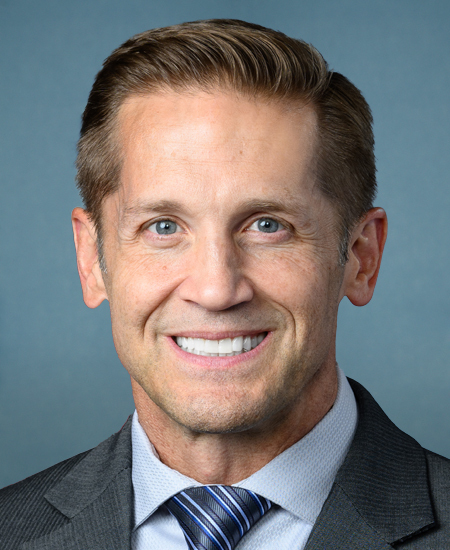
Rep. Richard McCormick
Sponsored bills
Respect State Housing Laws Act This bill eliminates a provision that requires a 30-day notice period before a landlord may begin eviction proceedings against a tenant in federally assisted or federally backed housing.
Maddy summaryHRES 1076 is a House resolution recognizing the 10th anniversary of the first U.S. liquefied natural gas (LNG) export shipment from the lower 48 states, which occurred on February 24, 2016. The resolution celebrates this milestone as a historic achievement in American energy production, highlighting its role in supporting over 273,000 annual jobs and $400 billion in economic growth over the past decade. It honors the workers and communities involved and acknowledges LNG exports' contribution to U.S. economic growth, energy security, and global partnerships. The resolution has no binding effect or policy changes - it solely expresses recognition of a past event.
Maddy summaryThe HBCU Empowerment and Reform Act amends the definition of "historically Black college or university" (HBCU) in the Higher Education Act of 1965 by changing the establishment date cutoff from "prior to 1964" to "prior to November 8, 1965." This adjustment would include institutions founded between January 1, 1964, and November 7, 1965, in the HBCU category for federal programs. It directly affects those institutions' eligibility for HBCU-specific funding, grants, and support under federal law. The bill focuses solely on this technical definition update without additional policy provisions.
Maddy summaryThis bill allows reserve service members to be reimbursed for renting a car when traveling over 150 miles for required training or duty. It expands existing travel allowances to cover actual vehicle rental costs during the full training period plus one additional travel day before or after. The policy directly affects reserve members who incur these expenses for mandatory military activities. The Department of Defense must update travel regulations within 180 days of the bill's passage to implement these changes.
Protection of Women in Olympic and Amateur Sports Act This bill requires certified national governing bodies (NGBs) of amateur sports (e.g., USA Gymnastics) to prohibit a person whose sex is male from participating in an amateur athletic competition that is designated for females, women, or girls. Under the bill, male means an individual who has, had, will have—or would have, but for a developmental or genetic anomaly or historical accident—the reproductive system that at some point produces, transports, and utilizes sperm for fertilization.
Maddy summaryThe Contract Our Veterans Act of 2026 establishes new federal contracting preferences for small businesses owned and controlled by veterans. It allows agencies to award contracts above the simplified acquisition threshold without competition to qualified veteran-owned businesses if they meet performance, pricing, and value criteria, and creates restricted competitions exclusively for these businesses. The bill sets a mandatory governmentwide goal of at least 5% of all federal prime and subcontract awards going to veteran-owned small businesses each fiscal year. It also amends reporting requirements to track these contracts separately across agencies, including through sole-source awards and restricted competitions. This directly affects veteran-owned small businesses seeking federal contracts and federal agencies responsible for procurement.
Maddy summaryThe No Tax Dollars for Terrorists Act requires the U.S. State Department to identify foreign countries and organizations receiving U.S. foreign aid that have provided financial or material support to the Taliban, including the amounts of aid they receive and the support they give to the Taliban. It mandates a strategy to use U.S. aid to discourage such support, with initial and follow-up reports to Congress on the strategy and its implementation. The bill also demands detailed reports on U.S. cash assistance programs in Afghanistan and the Afghan Fund, explaining how funds are transferred (including traditional money transfer systems) and how safeguards prevent Taliban access.
Maddy summaryThis bill modifies federal budget rules for unspent agency funds. It requires federal agencies to allocate 49% of unused funds to the next fiscal year, 49% toward paying the national debt, and 2% for retention bonuses (capped at 10% of an employee's base pay). Agencies must also limit future budget requests to the previous year's amount adjusted for inflation. The bill directly affects all executive branch agencies (excluding the Red Cross), altering how they manage leftover budget authority. It does not create new savings programs for individuals but changes government fiscal management procedures.
Maddy summaryThis bill requires Medicare plans (including Medicare Advantage and prescription drug plans) to base coverage decisions on medical necessity and evidence-based standards. It mandates that plans seek input from practicing physicians when creating or changing coverage rules, post all preauthorization requirements online in plain language, and publicly share statistics on approvals and denials. The bill also requires that adverse coverage decisions be made by licensed, board-certified physicians and prohibits denying coverage solely due to lack of evidence-based standards when none exist for a service. These changes aim to reduce unnecessary delays in care for Medicare beneficiaries by increasing transparency and clinical input in coverage decisions.