

Maddy summaryHR 2925, the Maritime Fuel Tax Parity Act, extends an existing tax exemption for alternative motorboat fuels to small vessels operating exclusively between ports on the Atlantic or Pacific coasts of the United States. The bill amends the Internal Revenue Code to include these single-coast vessels under the current exemption, ensuring they pay the same excise tax rate as other qualifying vessels. This change applies to fuel sales after December 31, 2023, directly affecting small maritime businesses that operate only along one coastal region. The key provision modifies Section 4041(g) to clarify that the tax exemption covers these specific vessels, promoting tax parity without creating new taxes or altering broader fuel regulations.
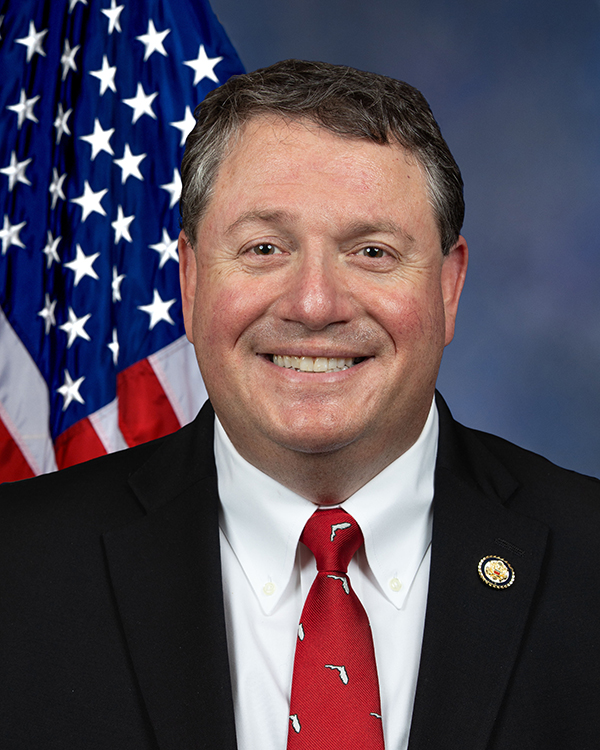
Rep. Randy Fine
Sponsored bills
Maddy summaryThis bill amends the Elementary and Secondary Education Act to explicitly include accounting education as part of a well-rounded K-12 curriculum. It requires schools to develop and strengthen programs teaching accounting, including increasing access to high-quality accounting courses for students from groups historically underrepresented in accounting careers. The key provision inserts specific language into existing law, directing schools to promote accounting career awareness and expand course availability through grade 12. This directly affects K-12 students, particularly those from underrepresented backgrounds, by making accounting education a recognized component of career-focused learning.
Safeguard American Voter Eligibility Act or the SAVE Act This bill requires individuals to provide documentary proof of U.S. citizenship when registering to vote in federal elections. Specifically, the bill prohibits states from accepting and processing an application to register to vote in a federal election unless the applicant presents documentary proof of U.S. citizenship. The bill specifies what documents are considered acceptable proof of U.S. citizenship, such as identification that complies with the REAL ID Act of 2005 that indicates U.S. citizenship. Further, the bill (1) prohibits states from registering an individual to vote in a federal election unless, at the time the individual applies to register to vote, the individual provides documentary proof of U.S. citizenship; and (2) requires states to establish an alternative process under which an applicant may submit other evidence to demonstrate U.S. citizenship. Each state must take affirmative steps on an ongoing basis to ensure that only U.S. citizens are registered to vote, which shall include establishing a program to identify individuals who are not U.S. citizens using information supplied by certain sources. Additionally, states must remove noncitizens from their official lists of eligible voters. The bill allows for a private right of action against an election official who registers an applicant to vote in a federal election who fails to present documentary proof of U.S. citizenship. The bill establishes criminal penalties for certain offenses, including registering an applicant to vote in a federal election who fails to present documentary proof of U.S. citizenship.
Maddy summaryHR 2798 creates a federal tax credit allowing individuals to claim 75% of qualified cash or securities donations (up to $5,000 or 10% of adjusted gross income) to eligible charter school organizations. To qualify, organizations must be 501(c)(3) entities meeting strict criteria, including being in the top 10% for student performance in their state or receiving specific federal grants, and must undergo annual audits. The credit is subject to a $5 billion annual cap, allocated first to states (with $10 million per state) and then nationally on a first-come, first-served basis. This directly affects individual donors making qualifying contributions and charter school organizations seeking to expand operations through tax-advantaged funding.
Nuclear Family Priority Act This bill imposes limits on various types of family-sponsored immigration visas. The non-U.S. national ( alien under federal law) parents of U.S. citizens shall not qualify for visas for immediate relatives, which are not subject to any direct numerical limits. Currently, the spouses, unmarried children under 21, and parents of citizens are considered immediate relatives. The bill also creates a nonimmigrant visa for such parents of citizens. Such non-U.S. nationals shall not be eligible for employment or any public benefits. The bill also reduces the baseline annual cap for family-sponsored visas from 480,000 to 88,000, and revises the methods for calculating the cap. Currently, the 480,000 cap may be adjusted depending on various factors but shall not be less than 226,000. The bill eliminates preference allocations (visa categories subject to various annual caps) for various family-sponsored visas, including those for the siblings and married children of citizens. The bill provides for a preference allocation for the unmarried children under 21 and spouses of permanent residents, subject to the 88,000 annual cap.
Maddy summaryHR 2687, the End Kidney Deaths Act, creates a federal tax credit for living kidney donors who give non-directed donations (meaning they don't know the recipient's identity). It provides a $10,000 annual credit for five years ($50,000 total) to donors whose kidney is removed after December 31, 2026, with special rules if the donor dies during this period. The credit applies only to living, non-directed kidney donations and explicitly states it does not count as "valuable consideration" under laws prohibiting organ sales. This bill directly affects living kidney donors who choose to donate anonymously, aiming to incentivize such donations by offsetting related costs through tax relief. The credit expires after December 31, 2036.
Maddy summaryThis bill creates a $500 non-refundable tax credit for homeowners who purchase emergency generators for their primary residence. It applies only to individuals whose homes were in areas affected by two or more federally declared major disasters (excluding public health emergencies) within the past five years, and who previously received individual disaster assistance. The credit phases out for higher-income households ($300,000 joint filer limit, $150,000 for others) and expires two years after the bill becomes law. The credit covers generator costs up to $500 per household, aiming to help disaster-prone communities prepare for power outages.
Maddy summaryHR 2581, the Iranian Terror Prevention Act, requires the U.S. government to designate 29 specific Iranian-backed militant groups as terrorist organizations within 90 days of the bill’s passage. The President must then decide within 60 days whether to impose sanctions on these groups, blocking their U.S. assets and transactions under existing law. The bill also mandates regular reports to Congress on these designations and sanctions, including for any new groups meeting the criteria. This law directly affects the 29 named groups (such as the Badr Organization and Houthis) and any entities controlled by Iran’s Islamic Revolutionary Guard Corps.
Save America's Forgotten Equines Act of 2025 or the SAFE Act of 2025 This bill permanently prohibits the slaughter of equines (e.g., horses and mules) for human consumption. (Current law prohibits the slaughter of dogs and cats for human consumption. This bill extends the prohibition to equines.) Specifically, this bill prohibits a person from knowingly (1) slaughtering an equine for human consumption; or (2) shipping, transporting, possessing, purchasing, selling, or donating an equine to be slaughtered for human consumption or equine parts for human consumption. The bill subjects a violator to a fine. The bill applies to conduct in or affecting interstate or foreign commerce or within the special maritime and territorial jurisdiction of the United States. However, it does not apply to an activity carried out by an Indian for a religious ceremony. As background, in recent years, the appropriations acts have prohibited the Department of Agriculture (USDA) from using federal funds to inspect horses before they are slaughtered for human consumption. Therefore, there are currently no USDA-inspected horse slaughter facilities in the United States.
Maddy summaryThe Freedom from Unfair Gun Taxes Act of 2025 would prohibit states and local governments from imposing taxes on the sale of firearms, ammunition, or firearm parts during interstate or foreign commerce. This bill directly affects state tax policies and manufacturers or dealers selling these items across state lines. It explicitly states that the bill does not change the existing federal tax on firearms and ammunition that funds wildlife conservation programs. The key provision bans state-level taxes for these sales in interstate transactions while preserving current federal funding mechanisms.