

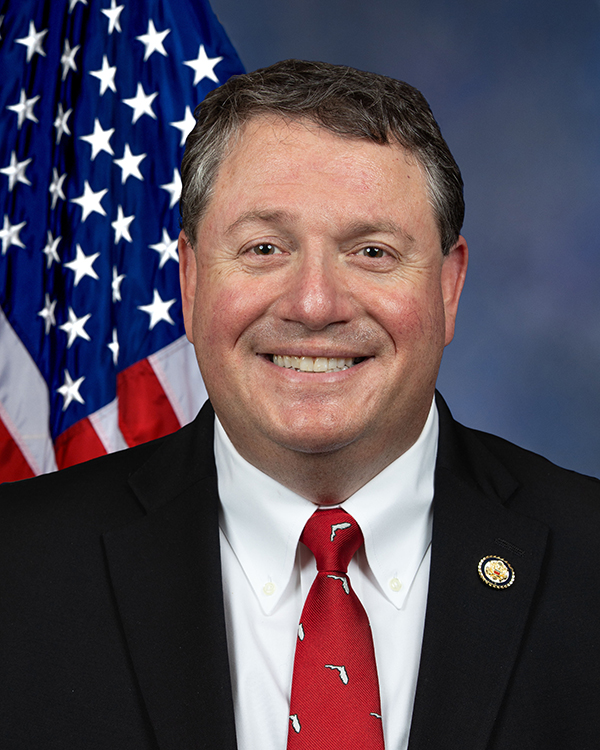
Photo of Randy Fine
R United States House · District 6 · Florida On the 2026 ballot

Rep. Randy Fine

Compare
Total votes
564
all sessions
Attendance
83%
113 missed
Lower than 93% of chamber peers
With party
92%
of cast votes
Lower than 90% of chamber peers
Bipartisan score
4%
crosses aisle rarely
Higher than 89% of chamber peers
Sponsored
246
bills & resolutions
Near the chamber average
Committees
7
assignments
246 bills and resolutions

Sponsored bills

Total
246
Primary
30
Co-sponsor
216
This page
246
matching current filters
Co-sponsor HR 9893
In committee · Washington House · Co-sponsor
Stop Support for UNRWA Act of 2026

Maddy summaryThis bill prohibits the United States from providing any voluntary or assessed funding to the United Nations Relief and Works Agency for Palestine Refugees in the Near East. The restriction applies directly to the U.S. government's financial contributions to the agency, effectively cutting off official U.S. support. However, the law allows for humanitarian aid to individuals who receive help from UNRWA if that aid is delivered through other organizations that do not promote violence, terrorism, or antisemitism. Ultimately, the legislation mandates a complete halt to direct U.S. funding for UNRWA while permitting indirect assistance under specific conditions.

In committee Jul 23, 2026 1 co-sponsor
Primary HR 9850
In committee · Washington House · Lead sponsor
No Deliveries Act

Maddy summaryThe No Deliveries Act amends federal immigration laws to increase penalties for individuals who knowingly enter the United States specifically to give birth and misrepresent their true purpose. Under this bill, anyone convicted of this offense could face fines and imprisonment of up to 25 years, with a mandatory minimum of 10 years if the child is born in the U.S. Additionally, the legislation grants federal courts the authority to immediately order the removal of convicted aliens at the time of sentencing. This law directly affects non-citizens attempting to bypass immigration requirements by using childbirth as a means to gain entry.

In committee Jul 22, 2026 0 co-sponsors
Co-sponsor HR 9827
In committee · Washington House · Co-sponsor
Wildfire Reduction Market Expansion Act of 2026

Maddy summaryThe Wildfire Reduction Market Expansion Act of 2026 updates the Clean Air Act to broaden the definition of renewable biomass eligible for carbon credits. It specifically allows materials from forest management, such as slash, storm debris, and wood residuals, to be counted as renewable fuel if they come from sustainably managed lands or public forests designated for fuel reduction. The bill also includes vegetation cleared from defensible space around buildings and from wildfire risk reduction projects in the wildland-urban interface. By clarifying these categories and establishing certification requirements, the legislation aims to increase the supply of biomass available for generating renewable energy credits.

In committee Jul 22, 2026 1 co-sponsor
Primary HR 8747
In committee · Washington House · Lead sponsor
K–12 AI Literacy and Readiness Act of 2026

Maddy summaryThe K-12 AI Literacy and Readiness Act of 2026 amends the Elementary and Secondary Education Act to allow federal funding for artificial intelligence education in schools. This legislation directly affects states, local school districts, and educational staff by permitting the use of funds to teach students how to use AI safely and responsibly. Additionally, the bill authorizes money for professional development programs that equip teachers, librarians, and administrators with the skills to teach and utilize AI effectively. By adding these specific allowable uses to existing federal education grants, the act provides a clear pathway for integrating AI literacy into the K-12 curriculum.

In committee Jul 21, 2026 0 co-sponsors
Co-sponsor HR 6213
In committee · Washington House · Co-sponsor
Heat Workforce Standards Act of 2025

Maddy summaryHR 6213, the Heat Workforce Standards Act of 2025, prohibits the U.S. Department of Labor from finalizing, implementing, or enforcing OSHA's proposed "Heat Injury and Illness Prevention" standard (published August 30, 2024). This bill directly blocks the specific regulatory proposal targeting heat safety in both outdoor and indoor work settings. It does not create new requirements or affect workers; it solely prevents the implementation of the existing OSHA proposal. The bill is procedural, focusing on halting a regulatory action rather than establishing new policy.

In committee Jul 21, 2026 1 co-sponsor
Co-sponsor HR 2004
In committee · Washington House · Co-sponsor
Tyler’s Law

Maddy summaryHR 2004, titled "Tyler’s Law," requires the Secretary of Health and Human Services to study how often hospital emergency departments test for fentanyl during overdose cases (beyond standard drug tests), including associated costs, patient benefits/risks, and impacts on privacy and patient-physician relationships. The study must be completed within one year of the bill's enactment. Based on the study results, the Secretary must issue guidance within six months on whether emergency departments should routinely test for fentanyl, how to inform clinicians about test contents, and how such testing may affect future overdose risks and health outcomes. This bill directly affects hospital emergency departments and patients experiencing overdoses by shaping future testing protocols.

In committee Jul 21, 2026 1 co-sponsor
Co-sponsor HR 9742
In committee · Washington House · Co-sponsor
English Language Proficiency Act

Maddy summaryThe English Language Proficiency Act removes specific exceptions that currently allow certain immigrants to bypass the naturalization requirement of understanding U.S. history, government, and English language skills. By amending the Immigration and Nationality Act, the bill eliminates these exemptions, meaning more applicants must now demonstrate proficiency in these areas to become citizens. This change directly impacts immigrants who previously qualified for waivers based on factors such as age, education, or length of residence in the United States. The legislation aims to standardize the naturalization process by ensuring a consistent set of requirements for all applicants seeking citizenship.

In committee Jul 16, 2026 1 co-sponsor
Co-sponsor HRES 1436
In committee · Washington House · Co-sponsor
Condemning Omar Suleiman for celebrating the death of Senator Lindsey Graham and acknowledging that House Democrats invited him to serve as the Guest Chaplain of the U.S. House of Representatives in 2019.

Maddy summaryThis resolution honors the late Senator Lindsey Graham and condemns Omar Suleiman for publicly celebrating Graham's death. It also acknowledges that House Democrats invited Suleiman to serve as a guest chaplain in 2019 and highlights his past statements and affiliations. The measure expresses support for the House Republicans' Sharia-Free America Caucus, which aims to protect constitutional principles from what it describes as an ideology incompatible with American life.

In committee Jul 15, 2026 1 co-sponsor
Co-sponsor HR 9701
In committee · Washington House · Co-sponsor
Daughters of the American Revolution Membership Integrity Act.

Maddy summaryThis bill, known as the Daughters of the American Revolution Membership Integrity Act, amends federal law to explicitly limit membership in the Daughters of the American Revolution to adult human females. It defines a female as someone who naturally possesses or would have the reproductive system capable of producing ova for fertilization, regardless of any congenital anomalies or medical disruptions. By adding this specific definition to the organization's governing code, the legislation clarifies the genealogical and biological requirements for joining the group. The change directly affects the organization's eligibility rules but does not alter its internal operations or funding.

In committee Jul 15, 2026 1 co-sponsor
Co-sponsor HR 9641
In committee · Washington House · Co-sponsor
Essential Caregivers Act of 2026

Maddy summaryThe Essential Caregivers Act of 2026 requires nursing homes, long-term care hospitals, rehabilitation facilities, and intermediate care facilities to allow two chosen family members or friends to visit residents during times when regular visitation is suspended. These essential caregivers must agree to follow the facility's existing safety and infection control rules, which are no more restrictive than those applied to staff. While facilities can limit access for the first seven days of a suspension or deny entry if a caregiver shows symptoms of a serious infectious disease, they cannot block visits for end-of-life care. Additionally, the bill mandates that complaints about denied access to essential caregivers be investigated and resolved within three days.

In committee Jul 15, 2026 1 co-sponsor
Showing 11 to 20 of 246 bills