

Maddy summaryThis bill requires Congress to approve major federal regulations before they take effect. It would mandate that agencies submit detailed reports including cost-benefit analyses, economic impact assessments, and other information to Congress before implementing significant regulations. Major rules - defined as those with at least $100 million annual economic impact or significant effects on costs, competition, or employment - would need a joint resolution of approval from Congress within 70 session days. Nonmajor rules would follow a less stringent disapproval process. The bill aims to increase legislative oversight of the regulatory process, requiring Congress to formally review and approve rules that significantly impact the economy or public regulations.
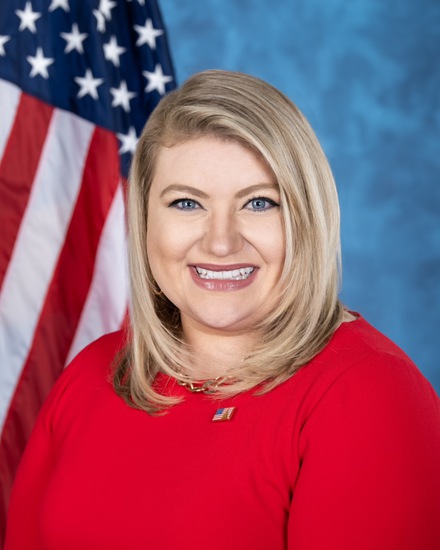
Rep. Kat Cammack
Sponsored bills
Maddy summaryHR 196, the Family and Small Business Taxpayer Protection Act, rescinds unobligated funds previously allocated to the Internal Revenue Service (IRS) under the Inflation Reduction Act of 2022. Specifically, it directs the cancellation of unused balances from six specific funding categories within the IRS's budget as of the bill's enactment date. This action reduces the IRS's available funding without creating new tax policies or altering taxpayer obligations. The bill is procedural, focusing solely on redirecting existing, unspent government funds rather than changing tax laws or affecting individual taxpayers directly.
Maddy summaryThis bill renames a U.S. Postal Service facility at 518 North Ridgewood Drive in Sebring, Florida, as the "U.S. Army Air Corps Major Thomas B. McGuire Post Office Building." It updates all official federal references to this specific location to reflect the new name. The bill has no policy impact - it does not change postal services, funding, or operations, and only affects the building's official designation.
Maddy summaryThis bill (HR 6633) renames a U.S. Postal Service facility at 9355 113th Street in Seminole, Florida, as the "Army SSG Ryan Christian Knauss Memorial Post Office Building." It directly affects the postal service location and all official federal references to it. The bill requires all government documents, maps, and records to use the new name moving forward. As a commemorative resolution, it has no policy or funding impact - it solely honors Army Specialist Ryan Christian Knauss through the building name.
Maddy summaryThis bill designates the U.S. Postal Service facility at 14280 South Military Trail in Delray Beach, Florida, as the "Benjamin Berell Ferencz Post Office Building." It is a ceremonial naming resolution with no substantive policy changes or impacts on residents, services, or regulations. The bill simply updates official references (such as maps or documents) to use the new name for this specific post office location. It was enacted on January 2, 2025, following passage by both House and Senate in December 2024.
Maddy summaryThis bill designates the U.S. Postal Service facility at 109 Live Oaks Boulevard in Casselberry, Florida, as the "Colonel Joseph William Kittinger II Post Office Building." It directly affects the postal facility and all official U.S. government references to it. The key provision changes the building's official name in all federal laws, documents, maps, and records to reflect this designation. The bill does not create new policies or funding; it is purely a ceremonial naming action.
Maddy summaryThis bill (HR 1823) officially renames the U.S. Postal Service facility at 207 East Fort Dade Avenue in Brooksville, Florida, as the "Specialist Justin Dean Coleman Memorial Post Office Building." It directly affects the building's official name and all future references to it in government documents, maps, or records. The key provision is a simple name change to honor Specialist Justin Dean Coleman, a U.S. Army veteran. This is a procedural bill with no new policies or funding, solely commemorating an individual through the building's designation.
Maddy summaryThis bill allows Medicaid programs to enter into value-based purchasing (VBP) arrangements with drug manufacturers for innovative treatments like gene therapies. It codifies these arrangements by requiring states to report pricing structures based on patient outcomes and best prices for drugs sold under these agreements. The bill enables payments to be tied to treatment effectiveness, potentially reducing long-term healthcare costs by decreasing hospitalizations and other medical expenses. It also creates a requirement for a GAO study to evaluate how these arrangements impact patient access, outcomes, and healthcare system costs. The bill will sunset after 5 years, though existing VBP arrangements will continue beyond that date.
Maddy summaryThe FOCA Act of 2023 requires federal agencies to stop mandating or banning contractor agreements with labor organizations (like union contracts) in construction project bids and contracts. It directly affects federal contractors, subcontractors, and agencies managing construction projects funded by the government. The bill prohibits favoring or penalizing contractors based on their labor affiliation status, aiming to promote fair competition and reduce costs. It also mandates updates to federal contracting rules within 60 days of enactment to implement these changes.
Maddy summaryThe IVF with HSAs Act of 2024 would amend federal tax law to allow individuals with any health insurance coverage (not just high deductible health plans) to contribute to a Health Savings Account (HSA). This change would expand access to HSAs, enabling more people to use these accounts for qualified medical expenses like in vitro fertilization (IVF) treatments. The bill also increases annual HSA contribution limits to $8,600 for individuals and $17,100 for families. These provisions would take effect for tax years beginning after December 31, 2024.