Dr. Li Wenliang Congressional Gold Medal Act This bill directs Congress to make arrangements for the posthumous presentation of a gold medal in commemoration of Dr. Li Wenliang's efforts to save lives by drawing awareness to COVID-19 (i.e., coronavirus disease 2019) and his call for transparency in China.
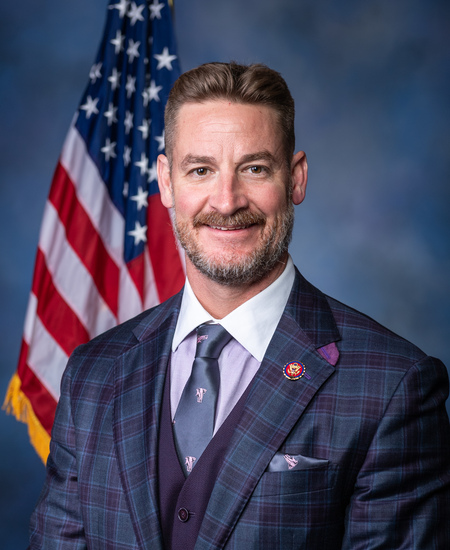
Rep. W. Gregory Steube
Sponsored bills
No Tax Breaks for Sanctuary Cities Act This bill denies a tax exclusion for the interest on bonds issued by sanctuary jurisdictions. A sanctuary jurisdiction is a governmental entity that has a statute in effect that restricts cooperation with the federal government regarding the citizenship or immigration status of any individual or that prohibits compliance with a request by the Department of Homeland Security with a detainer for, or notification about the release of, an individual.
This bill terminates the Department of Education on December 31, 2022.
Freedom from Regulating Edible Supplies and Horticulture Trucking Act or the FRESH Trucking Act This bill modifies service hour requirements for drivers transporting perishable agricultural, horticultural, or floricultural commodities. The bill requires the Department of Transportation to establish that loading and unloading of commercial motor vehicles shall be excluded from on-duty time requirements, there shall be no requirement of a 30-minute rest break within the first 8 hours of the hours of service on-duty requirements and the carrier or driver may take breaks at any time during the trip, and such carrier or driver may complete a scheduled trip if they are over the hours of service maximum on-duty drive schedule and are within 150 miles of their scheduled delivery point.
Protecting Local Communities from Harmful Algal Blooms Act This bill amends the Robert T. Stafford Disaster Relief and Emergency Assistance Act to include algal blooms in the definition of a major disaster .
This resolution expresses support for women nationwide to have access to comprehensive, convenient, compassionate, life-affirming, and high-quality health care.
Reopen Schools Act This bill requires a local educational agency (LEA) to reopen its elementary and secondary schools as a condition for receiving certain supplemental education emergency relief funding. Specifically, an LEA must provide in-person instruction to at least 50% of its students in order to receive the full funding. An LEA that provides in-person instruction to at least some of its students shall have its funding reduced on a pro rata basis.
Ultrasound Informed Consent Act This bill requires abortion providers to conduct an ultrasound before performing an abortion. Specifically, before a woman gives informed consent to any part of an abortion, the abortion provider must perform an obstetric ultrasound on the pregnant woman; provide a simultaneous explanation of what the ultrasound is depicting; display the ultrasound images so the woman may view them; and provide a complete medical description of the images, including the dimensions of the embryo or fetus, cardiac activity if present and visible, and the presence of external members and internal organs if present and viewable. Providers are subject to civil actions and penalties for violations. The bill's ultrasound requirements do not apply in cases where a physical disorder, illness, or injury caused by the pregnancy endangers a woman's life. A woman is also not required to view the ultrasound images; nor may she or the provider be penalized if she declines to do so.

Second Chance at Life Act of 2021 This bill requires abortion providers to disclose information about the possibility of reversing a medication abortion. This is a procedure that uses a medication regimen to terminate a pregnancy, typically with a two-drug protocol. Providers must inform patients that it may be possible to reverse the effects of a medication abortion after taking the first drug. They must also let patients know that more information and assistance is available on the Department of Health and Human Services (HHS) website. At least 24 hours before the procedure, the provider must share this information with the patient in person or by telephone. The provider must also include the information in written discharge instructions after the first drug is dispensed. The bill sets out an exception to these notification requirements when an abortion is necessary to resolve a physical injury or condition that threatens the life of the woman. The provider must document the circumstances giving rise to the exception in the patient's medical file. Furthermore, providers must post signs with this information in their offices or facilities, and HHS must maintain information about reversing medication abortions on its website.
Dignity for Aborted Children Act This bill sets out requirements for the disposition of human fetal tissue from an abortion. Specifically, it requires abortion providers to obtain a patient's informed consent for one of two specified methods of disposition. First, patients may choose to retain possession of the tissue. A patient may choose to transfer the tissue to an entity that provides interment or cremation services. Second, in cases where the tissue is expelled on the provider’s premises, the patient may elect to release the tissue to the provider. Providers must ensure any tissue released to them is interred or cremated within seven days of the procedure in a manner consistent with state law regarding the disposal of human remains. Abortion providers must report annually about these requirements and other specified information. The bill provides civil or criminal penalties for violations of disposal, informed consent, and reporting requirements.