

Maddy summaryHRES 305 is a symbolic resolution (not a law) that expresses the U.S. House of Representatives' support for designating April 18, 2024, as "National Amateur Radio Operators Day." It recognizes amateur radio operators' role in community communication, emergency response (like during hurricanes), and promoting technological skills, without creating any new legal requirements or affecting specific groups. The resolution has no binding effect and serves solely to honor the hobby's contributions, citing its historical significance and community value. It was introduced by multiple House members in April 2023.
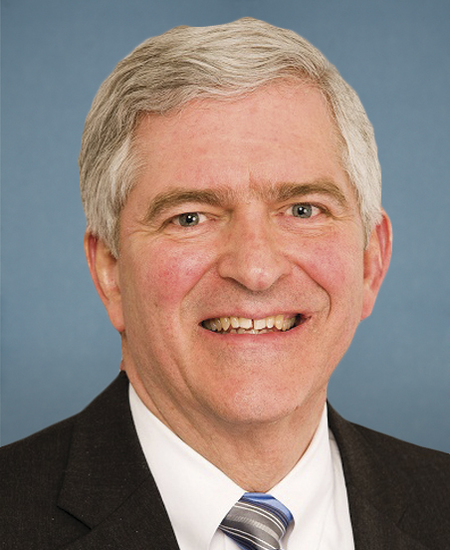
Rep. Daniel Webster
Sponsored bills
Maddy summaryThe VA Same-Day Scheduling Act of 2023 requires the Department of Veterans Affairs to schedule appointments for enrolled veterans during the same phone call when they request care. This applies to veterans enrolled in the VA healthcare system who contact the VA by phone to request appointments. The law mandates that the VA must complete the scheduling during the call - without delay or future scheduling - regardless of the appointment date. The requirement takes effect 120 days after the bill is enacted.
Maddy summaryThe PLUS for Veterans Act of 2023 clarifies and updates rules for veterans' benefit claims under the Department of Veterans Affairs. It sets a $12,500 annual fee cap (adjusted for inflation) for agents or attorneys representing veterans, prohibits charging fees for medical exams, and prohibits unauthorized fees with penalties including fines or up to one year in prison. The bill directly affects veterans seeking benefits, their legal representatives, and the VA by standardizing fee agreements, requiring VA reports on agent/attorney suspensions, and ensuring veterans can access free services from VA-recognized organizations. Key provisions include banning fees for medical reports and requiring clear fee disclosures to veterans.
Maddy summaryHR 2630, the Safe Step Act, requires group health plans and health insurance issuers to establish a clear, transparent process for patients or their doctors to request exceptions to medication step therapy protocols. These protocols typically force patients to try cheaper drugs first before covering more expensive alternatives. The bill mandates that plans must approve exceptions when prior treatments failed, delay would cause serious harm, a treatment is unsafe, or a patient is stable on a previously approved drug, with strict 72-hour (or 24-hour in emergencies) decision timelines. It also requires plans to publish the exception process online and limit documentation requests to only necessary medical information. This law directly affects health insurers, employers offering health plans, and patients using step therapy for prescription drugs.
Maddy summaryHR 1740 amends the Water Infrastructure Finance and Innovation Act (WIFIA) to require payment and performance security for projects receiving WIFIA assistance. It directly affects water infrastructure projects funded through WIFIA loans or grants by mandating that construction must have security covering at least 50% of the contract value, or accept equivalent state/local requirements. The bill specifies that if state or local law already requires such security, it may be used instead, but the amount must still meet the 50% minimum. This adds a new financial safeguard to ensure project completion without requiring new funding or changing WIFIA’s core structure.
Maddy summaryThis bill requires the Veterans Affairs Secretary to expand or modify an existing national cemetery (under National Cemetery Administration control) before Arlington National Cemetery reaches capacity, ensuring it provides full military honors using the same standards and eligibility criteria that applied to Arlington as of March 31, 2023. It directly affects veterans and their families seeking burial with full military honors at national cemeteries nationwide. The bill also mandates a joint report within one year to Congress on expanding cemetery capacity and assessing whether interment criteria should recognize exceptional service, including impacts on women, non-combat veterans, and other groups. The key mechanism is preserving current military honors standards at alternative cemeteries to prevent Arlington's capacity limits from disrupting existing burial practices.
Maddy summaryHR 1139, the GUARD VA Benefits Act, amends federal law to strengthen penalties for individuals or organizations charging veterans unauthorized fees when helping with VA benefit claims. It directly affects veterans seeking assistance with VA claims and the representatives (like advocates or attorneys) who might charge them fees. The bill adds a new provision making it a violation to solicit, charge, or receive any fee for preparing, presenting, or prosecuting VA claims, punishable by fines under Title 18. This change specifically targets unauthorized fee-charging while excluding fees covered under existing exceptions in sections 5904 or 1984 of the law.
Maddy summaryHR 1818, the Aviation Workforce Development Act, expands tax-advantaged savings plans (529 plans) to cover costs for specific aviation training programs. It allows funds from these plans to pay for tuition, fees, and required materials at FAA-certified aviation maintenance technician schools (Part 147) or commercial pilot training programs (Part 61 or 141). This directly affects students pursuing careers as aircraft maintenance technicians or commercial pilots by making these training costs more affordable through existing tax-advantaged savings. The bill amends the tax code to include these programs under "qualified higher education expenses" for 529 plan distributions.
Maddy summaryHR 1777 establishes a $50 million annual fund (2024-2028) for collaborative defense research between the U.S. and Israel in emerging technologies like artificial intelligence, cybersecurity, directed energy, and automation. The bill directly supports U.S. and Israeli military forces by enabling joint development of new warfare capabilities to address current and future defense challenges. Key provisions include authorizing $50 million per year for collaborative projects, building on existing U.S.-Israel defense partnerships like counter-tunnel and counter-drone systems. This funding aims to strengthen bilateral defense innovation without altering existing military aid structures.
Let Experienced Pilots Fly Act of 2023 This bill raises the mandatory retirement age for pilots engaged in commercial aviation operations from 65 to 67 years of age, unless the operation takes place in (1) the territorial airspace of a foreign county where such operations are prohibited by the foreign country, or (2) international airspace where such operations are not in compliance with the Annexes to the Convention on International Civil Aviation. The Federal Aviation Administration must also submit a report to Congress on further increasing the age limitation for pilots engaged in commercial aviation operations.