

Maddy summaryThis bill, titled the "Special Operations Forces Concealed Carry Act," amends federal law to allow current and honorably discharged military special operations personnel to carry concealed firearms nationwide. It directly affects those who served in specific special operations roles across the Army, Navy, Marine Corps, and Air Force. The bill expands the existing Law Enforcement Officers Safety Act (LEOSA) to include these "qualified special operators," granting them similar concealed carry privileges. Unlike law enforcement officers under LEOSA, these individuals would not be subject to annual firearms qualification requirements, and their authority would be permanent, contingent on maintaining honorable discharge status and federal firearm eligibility. To exercise this authority, they must carry proof of identity and qualification, which can include a new Department of Defense or Veterans Affairs photo identification or official service documentation.
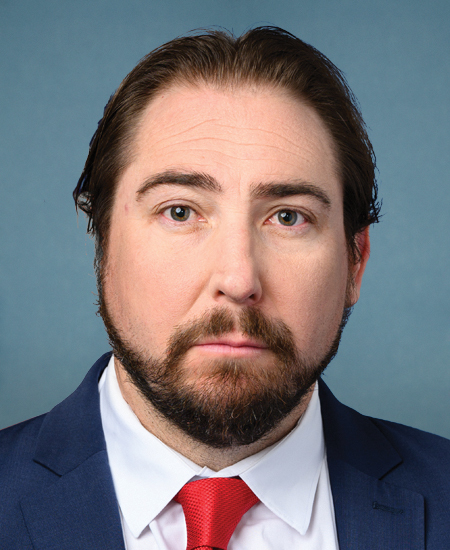
Rep. Elijah Crane
Sponsored bills
Maddy summaryThis resolution expresses support for designating May 5, 2026, as the National Day of Awareness for Missing and Murdered Indigenous Women and Girls. It calls on the public and organizations to honor the victims and show solidarity with their families. The bill also recommends that the Department of Justice commission a new study to gather updated statistics on the crisis, noting that previous data is nearly a decade old.
Maddy summaryThe End U Visa Abuse Act proposes to completely eliminate the U visa program, which currently provides immigration benefits and work authorization to alleged crime victims and their family members. The bill is based on findings that the program has been exploited through fraud, including staged crimes and forged law enforcement certifications, leading to a massive backlog of over 400,000 pending applications. By repealing the specific sections of the Immigration and Nationality Act that create the U visa category, the legislation would remove the legal pathway for these individuals to obtain lawful status through this specific mechanism. The text argues that existing alternatives, such as S visas for witnesses or humanitarian parole, are sufficient to assist genuine victims without the risks of abuse associated with the current system.
Maddy summaryThe Safeguarding Honest Speech Act of 2026 prohibits federal agencies from using taxpayer money to enforce rules that require employees or contractors to use a person's preferred pronouns if they conflict with that person's biological sex or to use names other than legal names. The bill defines sex strictly based on biological characteristics, such as the reproductive system used for fertilization, to determine these requirements. It also establishes a process where affected workers can file complaints, receive a formal response within 30 days, and sue their agency for violations if the response is unsatisfactory. If a worker wins a lawsuit, the court can order the agency to stop the practice, pay damages up to $100,000, and cover legal fees.
Maddy summaryThis bill proposes a comprehensive overhaul of the H-1B visa program by pausing new issuances for three years and capping the annual limit at 25,000 visas. It would eliminate the current lottery system, replacing it with a process that prioritizes employers offering the highest wages, while also restricting visa holders to a maximum stay of three years and banning them from holding multiple jobs simultaneously. The legislation further mandates that all H-1B workers be paid at least $200,000 annually, prohibits staffing agencies from sponsoring these visas, and bars federal agencies from hiring or petitioning for H-1B workers. Additionally, the bill would end employment authorization for foreign students and interns, and generally prevent most nonimmigrants from adjusting their status to become permanent residents while in the United States.
Maddy summaryThe DEPORT Act of 2026 proposes changes to U.S. immigration law regarding terrorism-related offenses. It would require all naturalization applicants to attest under oath that they have not committed, have charges pending for, or intend to commit specific terrorism-related crimes. The bill also establishes new procedures for denaturalizing U.S. citizens, allowing convictions or credible evidence of these offenses to be used as grounds for revoking citizenship, with certain presumptions of illegal procurement. Furthermore, it would make individuals convicted of such offenses inadmissible to the U.S., deportable if denaturalized, ineligible for most immigration benefits, and permanently barred from future admission. These provisions directly affect naturalization applicants, naturalized citizens, and aliens seeking admission or other immigration benefits.
Maddy summaryThe Great American Healthcare Plan is a comprehensive bill that modifies tax rules for Health Savings Accounts, expands access to health insurance through new marketplace pools, and strengthens price transparency for hospitals and medical providers. It allows individuals to use HSAs for wellness expenses like healthy food and gym memberships, lets parents and children access each other's HSA funds, and requires hospitals to publicly list their standard charges and negotiated rates. The legislation also mandates that administrative service providers share detailed pricing data with health plans and creates a mechanism for pharmacists and nurses to dispense certain low-risk prescription drugs under expanded access.
Maddy summaryThis bill creates a publicly accessible database to track private vendors that supply, support, or maintain components of election systems used in federal elections. It requires states and local election officials to submit information about these vendors within 30 days after each federal election, including vendor identity, contract terms, and ownership details such as parent companies and foreign interests. The legislation prohibits federal funding for election administration in any state that fails to comply with these reporting requirements. The database aims to increase transparency by making vendor information available to the public, with provisions to withhold certain details for security reasons. These changes would take effect for federal elections held in 2026 and subsequent years.
Maddy summaryHR 6618, the Wildfire Aerial Response Safety Act, requires the Federal Aviation Administration to study how private drones interfere with wildfire suppression efforts on federal lands managed by the Interior Department or Agriculture Department. The study will count drone incursions over the past five years and assess their impact on firefighting timelines, response delays, and government costs. It will also evaluate prevention methods like counter-drone technology, public education, and drone seizure techniques. The findings must be reported to Congress within 18 months of the bill's enactment.
Bill to Outlaw Wounding of Official Working Animals Act or the BOWOW Act This bill establishes that a non-U.S. national ( alien under federal law) convicted of, or who admits to having committed, an offense related to harming animals used in law enforcement is inadmissible and deportable.