Maddy summaryThis bill suspends payment limits for agricultural subsidies for the 2025 crop year, removing caps on payments to farmers. It also establishes a new option for farmers to receive 50% of their expected 2025 crop payments as an advance by December 1, 2025, if they opt in. The remaining balance is paid later after the marketing year ends, with farmers required to repay any overpayment if the final amount exceeds the advance. The bill directly affects farmers growing covered commodities (like corn, soybeans) who choose to participate in the advance payment program.
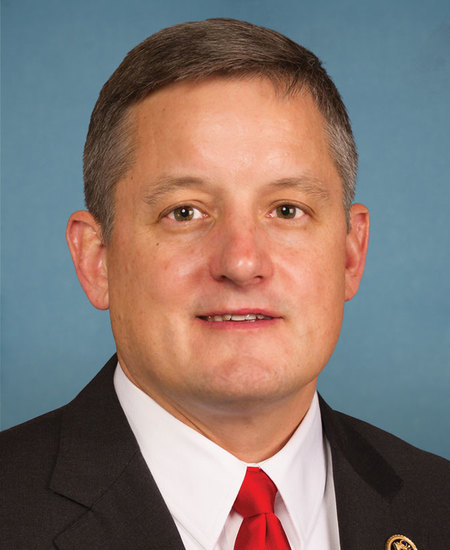
Rep. Bruce Westerman
Sponsored bills
Give Kids a Chance Act of 2025 This bill expands the Food and Drug Administration’s (FDA’s) authority with respect to research on rare pediatric diseases, including by permitting the FDA to take enforcement action against drug sponsors that fail to satisfy pediatric study requirements and by reauthorizing programs that support pediatric research. Specifically, the bill modifies requirements relating to molecularly targeted pediatric cancer investigations to permit research on new drugs in combination with active ingredients that have already been approved, provided certain conditions are met; permits the FDA to take enforcement action against drug sponsors that fail to comply with pediatric study requirements, if such sponsors demonstrated a lack of due diligence in satisfying the requirement; renews the FDA’s authority to award priority review vouchers to sponsors of new products intended to treat rare pediatric diseases through September 30, 2029; and reauthorizes through FY2027 certain funding for the National Institutes of Health to support priority pediatric research. The bill also provides statutory authority for the FDA’s interpretation of the orphan drug exclusivity period. The bill specifies, consistent with FDA regulations, that the seven-year market exclusivity period for drugs for rare diseases or conditions (i.e., orphan drugs) prohibits the approval of the same drug for the same approved use or indication with respect to the disease or condition. (In Catalyst Pharmaceuticals, Inc. v. Becerra , a court rejected the FDA’s interpretation and held that orphan drug exclusivity extends to all uses or indications for the disease or condition.)
Maddy summaryThe BUILD Act creates a federal grant program to support economic development in low-income communities through partnerships with qualifying colleges and universities. It provides planning grants (up to $100,000 annually for 2 years) to help institutions develop community revitalization plans, followed by implementation grants ($25-50 million over 5 years) for approved projects. Eligible projects include renovating community-accessible facilities (like housing, cultural centers, or health clinics), launching business incubators, creating local apprenticeships, and building public broadband networks. To qualify, institutions must be located in areas where median income is at least 25% below state or national averages, excluding high-research universities and military academies.
Maddy summaryHR 5563, the DRIVE-SAFE Act, creates a structured apprenticeship program for commercial drivers under age 21. It requires employers to provide a two-phase training program: a 120-hour probationary period focused on basic driving skills (like traffic navigation and safety awareness), followed by a 280-hour period covering advanced tasks (such as pre-trip inspections and load management). During both phases, apprentices must operate vehicles equipped with automatic transmissions, collision mitigation systems, and video capture, and must be accompanied by an experienced driver (26+ years old with no recent accidents or violations). The bill does not change existing commercial driver’s license requirements and mandates employers to maintain records and provide remediation for preventable accidents or violations during training.
Student Compensation and Opportunity through Rights and Endorsements Act or the SCORE Act This bill provides a framework for the compensation of student athletes for the use of their name, image, or likeness (NIL). This includes addressing certain elements of the court approved agreement to settle the In re College Athlete NIL Litigation (i.e., House settlement ). Specifically, the bill statutorily prohibits institutions, conferences, or interstate intercollegiate athletic associations (e.g., the National Collegiate Athletic Association (NCAA)) from restricting the ability of a student athlete to enter an NIL agreement. The bill also requires institutions of higher education that generate $20 million or more in annual revenue from the institution's intercollegiate athletics activities to (1) provide counseling and medical benefits to student athletes, and (2) establish and maintain at least 16 varsity sports teams. Further, the bill authorizes interstate intercollegiate athletic associations to establish rules with respect to athletic eligibility, transfers, recruitment, and the disclosure of NIL agreements. Under the bill, student athletes may not be considered employees of an institution, conference, or interstate intercollegiate athletic association. The bill also preempts state laws with respect to compensation, payments, benefits, employment status, eligibility, and academic standards applicable to student athletes. Compliance with the provisions of this bill is considered lawful under federal and state antitrust laws.

Maddy summaryHR 6167, the HEALTH Act of 2025, creates a new tax deduction for physicians providing unreimbursed charity care to patients enrolled in Medicaid (Title XIX) or CHIP (Title XXI) programs. The deduction equals the Medicare fee schedule amount for such care, but excludes services like sex reassignment surgeries and hormone treatments for gender transition. Additionally, the bill adds liability protection for physicians providing this charity care, shielding them from civil lawsuits for non-intentional harm during such services, and preempts conflicting state laws. This directly affects physicians who serve low-income patients through public health programs.
Maddy summaryThis bill requires all new passenger vehicles manufactured for sale in the U.S. to include AM radio as standard equipment (not an optional add-on) by 2027-2028, depending on manufacturer size. It mandates that AM radio receivers must be easily accessible to drivers and allows compliance through digital AM broadcast technology. During a transition period, manufacturers must clearly label vehicles without AM radio but cannot charge extra for this feature. The bill also mandates a GAO study on AM radio's role in emergency alerts and includes a 10-year sunset provision for the rule. It preempts state laws regarding AM radio access in vehicles.
Maddy summaryHRES 864 is a ceremonial resolution honoring U.S. veterans on Veterans Day 2025. It does not create new laws or policies but formally recognizes veterans' service and sacrifice, calling on all Americans to observe Veterans Day. The resolution references historical context about Veterans Day's origins (from Armistice Day to honoring all veterans) but contains no concrete policy changes. It directly addresses the general public, urging them to participate in the observance. As a non-binding resolution, it affects no specific individuals or groups through legislative action.
Maddy summaryThis is a procedural resolution (HRES 860), not a bill with legislative effect. It expresses the U.S. House of Representatives' support for former President Trump's 2020 decision to redesignate Nigeria as a "Country of Particular Concern" (CPC) under religious freedom laws. The resolution commends this action due to documented religious persecution in Nigeria, including violence against Christians and minority religious groups. It does not create new policy or alter U.S. assistance; it solely states congressional support for holding Nigeria accountable for religious freedom violations.
Maddy summaryHR 3484, the Business Owners Protection Act of 2025, terminates unused regulatory powers held by the Securities and Exchange Commission (SEC) under the Dodd-Frank Act. Specifically, it ends SEC authorities that grant discretion to create new requirements for businesses but were not actively used - meaning no proposed rules or guidance was issued by January 1, 2025. The bill requires the SEC to publish a list of all terminated authorities within 180 days of enactment. This directly affects business owners by preventing potential future regulatory burdens that were never implemented. The law focuses on eliminating dormant SEC powers, not creating new rules.