Issue · Budget & Taxes

Budget & Taxes (Business Taxes)

Every budget & taxes bill, vote, and legislator stance in Washington, automatically classified by Maddy, our AI policy reader.

Total bills
122
2025-2026 Regular Session
Top supporter
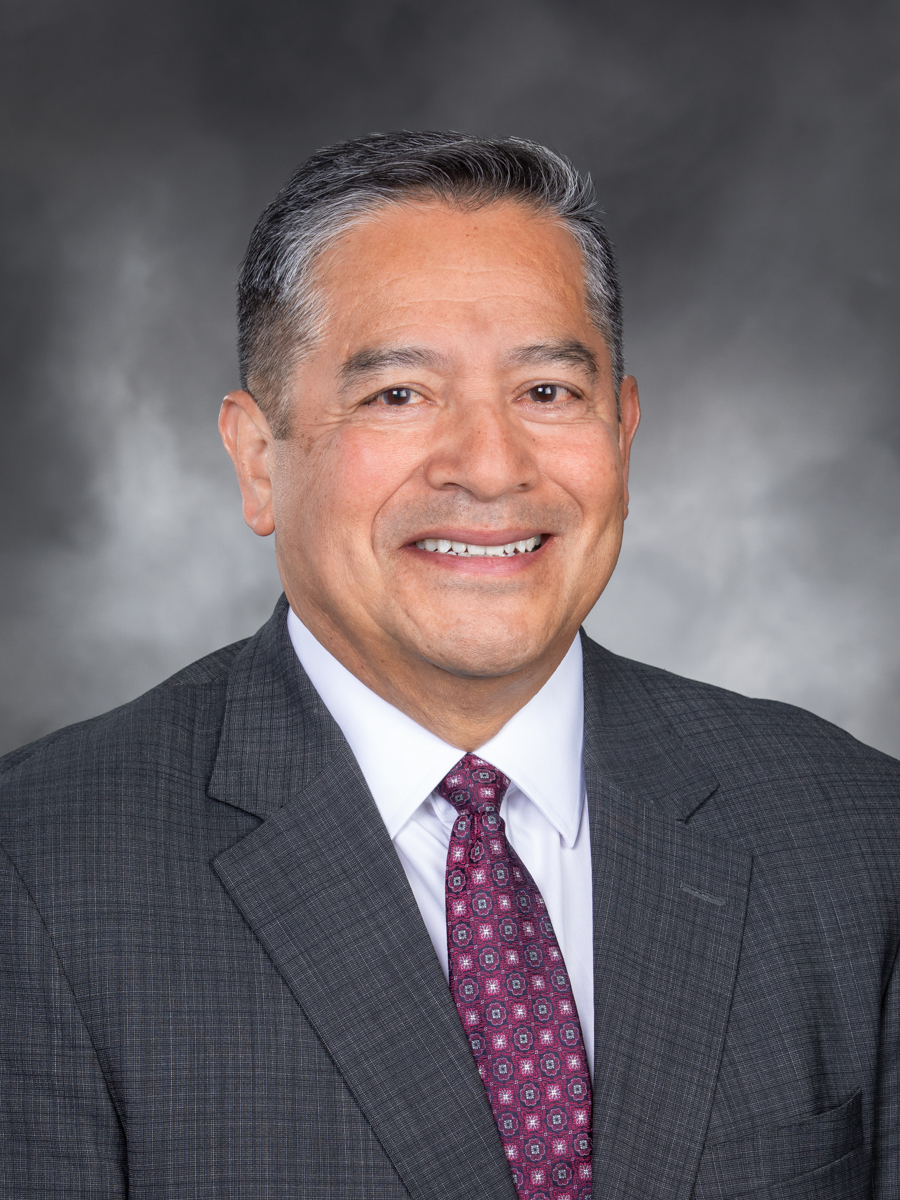
Alex Ybarra
86% support rate
Top opponent
Zach Hall
15% support rate
Ranked legislators
10
5 support · 5 oppose
Key legislators

Who's moving business taxes in Washington

Legislators moving business taxes in Washington
Legislator Party Stance Support rate Votes
Alex Ybarra
Alex Ybarra House · District 13
R
Strong +
86% 91
Hunter Abell
Hunter Abell House · District 7
R
Strong +
86% 91
Mark Klicker
Mark Klicker House · District 16
R
Strong +
86% 91
Dave Stuebe
Dave Stuebe House · District 17
R
Strong +
86% 90
Tom Dent
Tom Dent House · District 13
R
Strong +
85% 89
Zach Hall
Zach Hall House · District 5
D
Strong −
15% 78
David Hackney
David Hackney House · District 11
D
Strong −
17% 86
Gerry Pollet
Gerry Pollet House · District 46
D
Strong −
18% 91
Shaun Scott
Shaun Scott House · District 43
D
Strong −
18% 91
Shelley Kloba
Shelley Kloba House · District 1
D
Strong −
18% 91
Showing 31–40 of 122 bills

All budget & taxes bills

passed · Washington · Senate Mar 12, 2026

SB 6129: Concerning the taxation of cigarettes and other nicotine products.

SB 6129 expands Washington State's tobacco tax to include all nicotine products (excluding cigarettes and FDA-approved cessation products) by redefining "nicotine product" to cover any item containing nicotine or nicotine analogues, regardless of form. It introduces new categories like "flavored nicotine product" (defined by non-tobacco tastes/smells or cooling sensations) and creates specific tax rules for manufacturers, distributors, and retailers. The bill amends multiple tax statutes to apply these rules consistently across the supply chain, requiring businesses to pay tax based on the actual price of nicotine products sold. This directly affects businesses selling e-cigarettes, vapes, nicotine pouches, and other non-cigarette nicotine products within the state.
Sub-Topics Business Taxes
in committee · Washington · House Feb 6, 2026

HB 2584: Providing a sales and use tax exemption for qualifying farm machinery and equipment.

HB 2584 exempts Washington farmers with annual gross sales or harvested value under $2 million from sales and use taxes on qualifying farm equipment costing $10,000 or more used directly for crop production. It covers machinery like tractors, harvesters, and irrigation tools but excludes road vehicles and motorcycles. Farmers must provide exemption certificates to sellers and maintain records, with the exemption expiring October 1, 2036. This policy reduces tax burdens for small and medium-sized farms to support agricultural competitiveness.
in committee · Washington · Senate Jan 13, 2026

SB 6099: Providing basic taxpayer fairness by delaying department of revenue action with regard to tax changes until rule making is finalized.

SB 6099 delays the Department of Revenue's enforcement or collection of new tax liabilities resulting from recently passed tax laws. It requires the department to suspend these actions from the effective date of the tax change until the first day of the calendar quarter after finalizing related rules. This directly affects taxpayers who would otherwise face immediate tax bills under new laws before administrative rules are established. The bill aims to provide temporary relief by ensuring tax changes are fully implemented through finalized rules before enforcement begins. The legislation is currently in committee referral after its first reading.
Sub-Topics Business Taxes Revenue
passed · Washington · House Mar 12, 2026

HB 2650: Concerning notifications and effective dates for department of revenue administration of certain excise taxes.

HB 2650 creates a tax deferral program for property owners developing affordable housing on underdeveloped land (like surface parking lots) in qualifying cities. It requires owners to complete construction within three years, offer housing to low/moderate-income households (costing ≤30% of income), and submit verification to cities within 30 days of a certificate of occupancy. Cities must then confirm compliance with affordability and construction standards before the Department of Revenue finalizes the sales/use tax deferral. The bill directly affects property developers, local cities administering the program, and the Department of Revenue. If requirements aren’t met, cities can deny the deferral or require interest on nonqualifying taxes.
in committee · Washington · House Feb 24, 2026

HB 2382: Concerning excise taxes on cigarettes, vapor products, and tobacco products.

HB 2382 adds a $0.10 tax per cigarette and updates tax rates for vapor and tobacco products. It directs new tax revenue to three specific accounts: the first $10 million yearly funds emergency medical services (like stroke and heart attack care), the next $2 million supports tobacco enforcement efforts, and 10% of remaining revenue after 2028 goes to public health services. This affects cigarette manufacturers, vapor product sellers, and tobacco retailers who pay the taxes. The bill also modifies vapor product tax rates to 95% of sales price and adjusts tobacco tax calculations for certain products.
in committee · Washington · House Feb 6, 2026

HB 2615: Codifying the voluntary disclosure tax program and authorizing temporary tax amnesty.

HB 2615 codifies Washington’s voluntary tax disclosure program and creates a temporary tax amnesty period for eligible taxpayers. It allows businesses to disclose past tax liabilities (for business and occupation, sales, and use taxes) due before July 1, 2026, by filing all required returns and paying full tax amounts by August 17, 2026, with penalties and interest waived. To qualify, taxpayers must not have committed fraud, evasion, or misrepresentation, must not be under audit or in bankruptcy, and must have no prior evasion penalties or criminal tax prosecutions. The program does not waive penalties for tax evasion (RCW 82.32.090) or reseller permit misuse (RCW 82.32.291), and requires full payment of all tax liabilities by October 1, 2026.
in committee · Washington · Senate Feb 5, 2026

SB 6033: Providing a limited waiver of interest and penalties for taxpayers inadvertently failing to collect and remit sales and use taxes on select services.

This bill creates a limited waiver for businesses that accidentally failed to collect and remit sales taxes on specific services defined in a 2025 law (chapter 422). To qualify, taxpayers must pay all owed taxes, file amended returns, maintain a clean 36-month tax compliance record, and have no prior evasion penalties. The waiver expires January 1, 2030, and does not apply to tax periods beginning after 2027 or to errors involving reseller permits. It directly affects businesses that made honest administrative errors on designated services, not the tax liability itself.
in committee · Washington · House Feb 3, 2026

HB 2559: Providing a local government option for the funding of essential affordable housing programs.

HB 2559 allows Washington counties, cities, and towns to impose a local 4% tax on short-term rental lodging (like Airbnb stays) to fund affordable housing programs. The tax revenue must go to a dedicated state account and can be used for acquiring, rehabilitating, or constructing affordable housing, rental assistance, or related support services like job training. Local governments must report annually on how funds are spent and cannot implement the tax before April 2027. This bill directly affects short-term rental operators (who pay the tax) and local governments (which can choose to adopt the tax and manage housing funds).
in committee · Washington · House Jan 28, 2026

HB 2697: Expanding the eligibility for historic preservation property tax special valuation.

HB 2697 expands eligibility for a property tax break that helps owners maintain historic properties by allowing two additional 7-year extensions (totaling 24 years) for properties in cities under 20,000 population, removing the prior requirement for "distressed area" designation. It requires owners to apply 90 days before expiration for extensions, which local review boards may approve or deny at their discretion. The bill directly affects owners of qualifying historic properties in smaller cities, aiming to promote revitalization of historic districts. Extensions cannot be granted after January 1, 2057, and the tax break ends with the property's cost considered as new construction upon termination.
in committee · Washington · Senate Jan 22, 2026

SB 6280: Concerning the taxation of smoking cessation products.

SB 6280 redefines taxable "tobacco products" to explicitly include nicotine pouches (used for cessation), expanding the tax scope beyond traditional tobacco. It directly affects retailers, distributors, and manufacturers selling these products by requiring them to pay state tax on nicotine pouches, which were previously not clearly covered under tobacco tax rules. The bill amends tax calculation rules (Section 20) to clarify how taxable sales prices are determined for affiliated businesses. This changes the tax treatment of nicotine pouches - common smoking cessation aids - from being potentially untaxed to subject to state sales tax under Washington’s tobacco tax system. The bill does not exempt cessation products, as it defines "tobacco products" to include any nicotine-containing product for oral consumption.
Showing 31 to 40 of 122 bills
Previous 1 3 4 5 13 Next