

Pedestrian crossing violation monitoring systems and stop sign violation monitoring systems; speed safety cameras; violation enforcement; civil penalty. Authorizes state and local law-enforcement agencies to place and operate pedestrian crossing violation and stop sign violation monitoring systems in school crossing zones, highway work zones, and high-risk speed corridors for purposes of recording pedestrian crossing and stop sign violations, as those terms are defined in the bill. The bill changes the term "photo speed monitoring device" to "speed safety camera" and "high-risk intersection segment" to "high-risk speed corridor" in provisions related to vehicle speed violations. The bill makes various changes to the requirements for the use of speed safety cameras and extends most of those requirements to the use of pedestrian crossing and stop sign violation monitoring systems. The bill requires local law-enforcement agencies implementing or expanding the use of pedestrian crossing violation and stop sign violation monitoring systems, prior to the implementation or expansion of such systems, to conduct a public awareness program for such implementation or expansion.
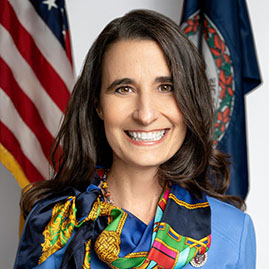
Sponsored bills
Department of Medical Assistance Services; appeals of agency determinations. Allows health care providers to appeal any adverse action or determination by the Department of Medical Assistance Services (DMAS) or a DMAS contractor. Under current law, such appeal is allowed for a determination of overpayment to a provider by DMAS. The bill adds provisions allowing for DMAS and an appealing provider to stay the deadline for their appeal decision to facilitate settlement discussions. The bill further specifies that DMAS contractors are required to represent themselves during appeal proceedings. This bill is identical to HB 2082.
Board of Education; driver education programs; computer-based driver education courses; requirements. Clarifies that the classroom training portion of the standardized program of driver education in the safe operation of motor vehicles, established by the Board of Education pursuant to applicable law, may be administered in-person or online, except in the case of the parent/student driver education component of the classroom training portion administered in Planning District 8, which pursuant to applicable law must be administered in person. The bill contains technical amendments.
Elections; conduct of election; ranked choice voting; report. Makes the decision to conduct an election by ranked choice voting subject to a determination of feasibility by the State Board of Elections. The bill provides procedures for tabulating and reporting results of elections conducted using ranked choice voting, including procedures for duplicating damaged or defective ballots. The bill requires the State Board of Elections to provide standards for and to approve vote tabulating software for use with existing voting systems in elections conducted by ranked choice voting and to produce generalized voter education materials on ranked choice voting. The bill permits the State Board of Elections to create and modify recount procedures to the extent necessary to accommodate a recount of an election conducted by ranked choice voting. Finally, the bill directs the Department of Elections to review the testing and approval framework for voting equipment in the Commonwealth and submit a report of such review no later than the first day of the 2026 Regular Session of the General Assembly.
Prohibiting employer seeking wage or salary history of prospective employees; wage or salary range transparency; cause of action. Prohibits a prospective employer from (i) seeking the wage or salary history of a prospective employee; (ii) relying on the wage or salary history of a prospective employee in determining the wages or salary the prospective employee is to be paid upon hire; (iii) relying on the wage or salary history of a prospective employee in considering the prospective employee for employment; (iv) refusing to interview, hire, employ, or promote a prospective employee or otherwise retaliating against a prospective employee for not providing wage or salary history; and (v) failing or refusing to disclose in each public and internal posting for each job, promotion, transfer, or other employment opportunity the wage, salary, or wage or salary range. The bill establishes a cause of action for an aggrieved prospective employee or employee and provides that an employer that violates such prohibitions is liable to the aggrieved prospective employee or employee for statutory damages between $1,000 and $10,000 or actual damages, whichever is greater, reasonable attorney fees and costs, and any other legal and equitable relief as may be appropriate.
Affirmative defense or reduced penalty for a neurocognitive disorder or intellectual or developmental disability. Provides an affirmative defense to prosecution of a person for assault or assault and battery against certain specified persons for which the enhanced Class 6 felony and six-month mandatory minimum apply if such person proves, by a preponderance of the evidence, that at the time of the assault or assault and battery (i) the person's behaviors were a result of (a) mental illness or (b) a neurocognitive disorder, including dementia, or an intellectual disability or a developmental disability such as autism spectrum disorder, as defined in the most recent edition of the Diagnostic and Statistical Manual of Mental Disorders of the American Psychiatric Association, or (ii) the person met the criteria for issuance of an emergency custody order.The bill requires such person or his counsel to give notice in writing to the attorney for the Commonwealth at least 60 days prior to his trial in circuit court, or at least 14 days if the trial date is set within 21 days of his last appearance, of his intention to present such evidence. Additionally, if such notice is not given, and the person proffers such evidence at his trial as a defense, then the court may in its discretion either allow the Commonwealth a continuance or, under appropriate circumstances, bar such person from presenting such evidence; any such continuance shall not be counted for speedy trial purposes pursuant to relevant law.Lastly, the bill provides that if such person does not prove that his behaviors were a result of his mental illness, intellectual disability, developmental disability, or neurocognitive disorder but the evidence establishes that his mental illness, intellectual disability, developmental disability, or neurocognitive disorder otherwise contributed to his behaviors, the finder of fact may find such person guilty of a misdemeanor assault or assault and battery. The bill also provides that such affirmative defense shall not be construed to allow an affirmative defense for voluntary intoxication.
Maddy summaryHJ 759 is a ceremonial resolution commending Dr. Heisung Lee for his contributions. It was approved by both the House and Senate via voice vote and now serves as an official expression of legislative appreciation, with no policy changes or direct impact on laws or constituents.
Maddy summaryHJ 697 is a formal commendation resolution honoring Claire Collins. It does not create new laws or affect any policies, programs, or individuals. The bill passed unanimously in both the House and Senate via voice vote in early March 2025. This type of resolution serves only to express official recognition and appreciation.
Maddy summaryHJ 692 is a ceremonial resolution commending Spring Hill Elementary School for its contributions to education. It does not create new policies, alter laws, or affect any individuals or entities through regulatory changes. The bill formally recognizes the school’s work through a symbolic legislative gesture. It passed unanimously in both chambers and was enrolled as a formal resolution on March 24, 2025.
Maddy summaryHJ 710 is a ceremonial resolution formally expressing appreciation for Barry Eugene DuVal's contributions. It does not impose any legal requirements or change policies, as it is solely a symbolic gesture of recognition. The resolution directly honors DuVal but affects no individuals or entities through binding actions. This type of bill is common for acknowledging community service or achievements without altering legislation.