

Celebrating the life of the Honorable Mary T. Christian.
Celebrating the life of the Honorable Mary T.Christian.
Passed Feb 3, 2020
1 co-sponsor
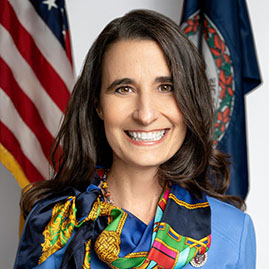
Celebrating the life of the Honorable Mary T.Christian.
Prevailing wage; public works contracts; penalty.Requires contractors and subcontractors under any public contractwith a state agency for public works to pay wages, salaries, benefits,and other remuneration to any mechanic, laborer, or worker employed,retained, or otherwise hired to perform services in connection withthe public contract for public works at the prevailing wage rate.The Commissioner of Labor and Industry is required to determine theprevailing wage rate for such public contracts on the basis of applicableprevailing wage rate determinations made by the U.S. Secretary ofLabor under the provisions of the federal Davis-Bacon Act. A contractoror subcontractor who knowingly or willfully employs any mechanic, laborer, or worker to perform work contracted to be done under thepublic contract at a rate that is less than the prevailing wage rateis guilty of a Class 1 misdemeanor. In addition, such a contractoror subcontractor shall be liable to such individuals for the paymentof all wages due plus interest and shall be disqualified from biddingon public contracts with any public body until full restitution hasbeen paid to the individuals.
Collective bargaining for public employees.Repeals the existing prohibition on collective bargaining by publicemployees. The bill creates the Public Employee Relations Board,which will determine appropriate bargaining units and provide forcertification and decertification elections for exclusive bargainingrepresentatives of state employees and local government employees.The measure requires public employers and employee organizationsthat are exclusive bargaining representatives to meet at reasonabletimes to negotiate in good faith with respect to wages, hours, andother terms and conditions of employment. The measure repeals a provisionenacted in 2013 that declares that, in any procedure providing for the designation, selection, or authorization of a labor organizationto represent employees, the right of an individual employee to voteby secret ballot is a fundamental right that shall be guaranteedfrom infringement.
Allowing access to firearms by minors; penalty. Provides that any person who recklessly leaves a loaded, unsecured firearm in such a manner as to endanger the life or limb of any person under the age of 18 is guilty of a Class 6 felony. Current law provides that any person who recklessly leaves a loaded, unsecured firearm in such a manner as to endanger the life or limb of any child under the age of 14 is guilty of a Class 3 misdemeanor.
Presidential electors; National Popular Vote Compact. Enters Virginia into an interstate compact known as the Agreement Among the States to Elect the President by National Popular Vote. Article II of the Constitution of the United States gives the states exclusive and plenary authority to decide the manner of awarding their electoral votes. Under the compact, Virginia agrees to award its electoral votes to the presidential ticket that receives the most popular votes in all 50 states and the District of Columbia. The compact goes into effect when states cumulatively possessing a majority of the electoral votes have joined the compact. A state may withdraw from the compact; however, a withdrawal occurring within six months of the end of a President's term shall not become effective until a President or Vice President has qualified to serve the next term. This bill was incorporated into HB 177.
Department of Motor Vehicles; issuance of certain documents; citizenship requirement. Removes the citizenship and legal presence requirements for obtaining a driver's license or special identification card. The bill requires the Department of Motor Vehicles to cancel any (i) REAL ID-compliant driver's license or special identification card and (ii) commercial driver's license or commercial learner's permit if the Department is notified by a federal agency that the individual to whom such document was issued is not in compliance with the citizenship and lawful residency requirements for such license, card, or permit. The bill has a delayed effective date of October 2, 2020, and contains technical amendments. This bill was incorporated into SB 34.
Minimum wage. Increases the minimum wage from its current federally mandated level of $7.25 per hour to $10.10 per hour effective January 1, 2021, unless a higher minimum wage is required by the federal Fair Labor Standards Act (FLSA). Effective January 1, 2022, the minimum wage shall be adjusted biennially to reflect annual increases in the consumer price index over the two most recent calendar years. The measure also provides that the Virginia minimum wage applies to persons whose employment is covered by the FLSA and to persons employed by the Commonwealth, its agencies or political subdivisions, or a public body. This bill was incorporated into HB 395.
Right to reproductive choice. Provides thatevery individual has a fundamental right to choose or refuse contraceptionand that a pregnant person has a fundamental right to choose to carrya pregnancy to term, give birth to a child, or terminate a pregnancy.The bill states that the Commonwealth shall not, in the regulationor provision of benefits, facilities, services, or information, denyor interfere with an individual's fundamental rights, including individualsunder state control or supervision. The bill states that any stateor local official who is charged with violating provisions of thissection shall be subject to an action in federal or state court forinjunctive relief and damages. Such action may be brought by any person or entity that may be aggrieved by such official's actions.
Single-use plastic and expanded polystyreneproducts; local prohibition; local tax. Authorizes a localityto prohibit by ordinance the purchase, sale, or provision, whetherfree or for a cost, of certain single-use products that are not recyclableor compostable and for which there is a suitable and cost-effective compostable or recyclable alternative product available, with certain exceptions. The bill also authorizes any locality to impose a five-centper item tax on single-use plastics and polystyrene products providedto customers by certain retailers, with certain products being exemptfrom the tax. The bill directs revenue from the local tax to be usedby the locality imposing the tax for cleanup or education programsdesigned to reduce waste. The bill allows every restaurant or retailerthat collects the tax to retain one cent of the five-cent tax ifthe tax is paid in a timely manner.
Disposable plastic shopping bags; local option. Allows any locality by ordinance to prohibit the distribution, sale, or offer for sale of disposable plastic shopping bags to consumers. The bill exempts from any such prohibition reusable bags of a certain thickness, bags that are used to carry certain products, such as ice cream or newspapers, and garbage bags that are sold in multiples. This bill was incorporated into SB 11.