

In committee Feb 7, 2023
0 co-sponsors
Total votes
20,490
all sessions
Attendance
77%
4,992 missed
Near the chamber average
With party
98%
of cast votes
Near the chamber average
Bipartisan score
1%
crosses aisle rarely
Lower than 77% of chamber peers
Sponsored
663
bills & resolutions
Near the chamber average
Committees
5
assignments
663 bills and resolutions
Sponsored bills
Total
663
Primary
222
Co-sponsor
441
This page
663
matching current filters
In committee Feb 7, 2023
0 co-sponsors
In committee Feb 7, 2023
0 co-sponsors
died Feb 7, 2023
0 co-sponsors
In committee Feb 7, 2023
0 co-sponsors
In committee Nov 22, 2022
0 co-sponsors
SOL; work group to revise summative assessments, etc.
Middle and high school end-of-course assessments; number and type. Requires, except for those middle and high school students with significant cognitive disabilities who participate in an alternate assessment, each student in middle and high school to take only those end-of-course Standards of Learning assessments necessary to meet federal accountability requirements and Virginia high school graduation requirements. The bill requires the Department of Education, in addition to such assessments, to develop or adopt and require each high school student to take, during junior year or at such other time as may be appropriate, statewide skills-based and performance-based end-of-course assessments in biology and U.S. history that are aligned to the Standards of Learning for each such subject. The bill requires each such assessment to be graded by the Department of Education according to statewide grading rubrics. The bill requires student performance on each such assessment to account for 10 percent of the student's final grade in each such course. The foregoing provisions of the bill have a delayed effective date of July 1, 2027, and the bill provides that the first such assessments shall be administered during the spring of the 2027–2028 school year. The bill further requires the Department of Education to (i) semiannually publish on a publicly accessible portion of its website sample statewide skills-based and performance-based end-of-course assessments in biology and U.S. history during the 2022–2023 through 2026–2027 school years and (ii) annually administer a pilot program during the 2023–2024 through 2026–2027 school years whereby it administers skills-based and performance-based end-of-course assessments in biology and U.S. history to high school juniors in select school divisions to determine the validity of such assessments and make such adjustments as may be necessary before the first such assessments are administered statewide during the spring of the 2027–2028 school year.
Signed into law Apr 27, 2022
0 co-sponsors
Student Advisory Board; established.
Board of Education; appointment of nonvotingstudent advisor. Requires the Governor to appoint to the Board of Education a high school student who will enter his senior yearduring the following school year as a nonvoting student advisor toserve for a term of one year. The bill provides that no such studentis eligible to be reappointed.
Signed into law Apr 27, 2022
1 co-sponsor
Higher educational institutions, public; notice to students, SNAP benefits.
Public institutions of higher education; Supplemental Nutrition Assistance Program; notice to students; SNAP benefits.Requires each public institution of higher education to ensure thatall students have access to accurate information about the SupplementalNutrition Assistance Program (SNAP), including eligibility and howto apply. The bill also directs each institution to advertise theapplication and process for applying for SNAP prominently on the institution's website, in orientation materials that are distributedto each new student, in at least one campus-wide email per academicyear to all students at such institution, and through other means.
Signed into law Apr 11, 2022
1 co-sponsor
Virginia Literacy Act; early student literacy, evidence-based literacy instruction, etc.
Virginia Literacy Act; early student literacy; evidence-based literacy instruction; science-based reading research. Makes several changes relating to early student literacy, including requiring (i) each education preparation program offered by a public institution of higher education or private institution of higher education or alternative certification program that provides training for any individual seeking initial licensure with an endorsement in a certain area, including as a reading specialist, to demonstrate mastery of science-based reading research and evidence-based literacy instruction, as such terms are defined in the bill; (ii) the literacy assessment required of individuals seeking initial teacher licensure with endorsements in certain areas to include a rigorous test of science-based reading research and evidence-based literacy instruction; (iii) each local school board to establish a divisionwide literacy plan; (iv) each local school board to employ one reading specialist for each 550 students in kindergarten through grade three; and (v) each local school board to provide a program of literacy instruction whereby, among other things, (a) the program provides reading intervention services to students in kindergarten through grade three who demonstrate deficiencies based on their individual performance on the Standards of Learning reading assessment or an early literacy screener provided or approved by the Department of Education; (b) a reading specialist, in collaboration with the teacher of any student who receives such reading intervention services, develops, oversees implementation of, and monitors student progress on a student reading plan; and (c) each student who receives such reading intervention services is assessed utilizing either the early literacy screener provided or approved by the Department or the grade-level reading Standards of Learning assessment again at the end of that school year. The provisions of the bill become effective beginning with the 2024–2025 school year. This bill is identical to SB 616.
Signed into law Apr 11, 2022
1 co-sponsor
Ask Maddy
·
AI policy assistant
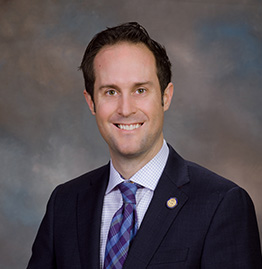
Ask Maddy about Schuyler VanValkenburg
Scope: virginia
Hi! I can help you understand Schuyler VanValkenburg's legislative record. What would you like to know?
Try one of these
i
Maddy answers using official bill text and legislative records. Always verify before sharing.
Sources cited inline