Commercial use of public places; civil penalty. Allows cities and towns by ordinance to establish a uniform schedule of civil penalties for commercial use of a street, avenue, park, bridge, or any other public place or public property or any public easement of a city or town, in a manner not permitted to the general public, without having first legally obtained the consent of the city or town. The bill provides that the schedule of civil penalties shall be uniform for each type of specified violation, and the penalty for any one violation, unless elsewhere authorized, shall not exceed (i) $500 for the initial violation, (ii) $1,000 for the second violation, or (iii) $1,500 for the third or subsequent violation.
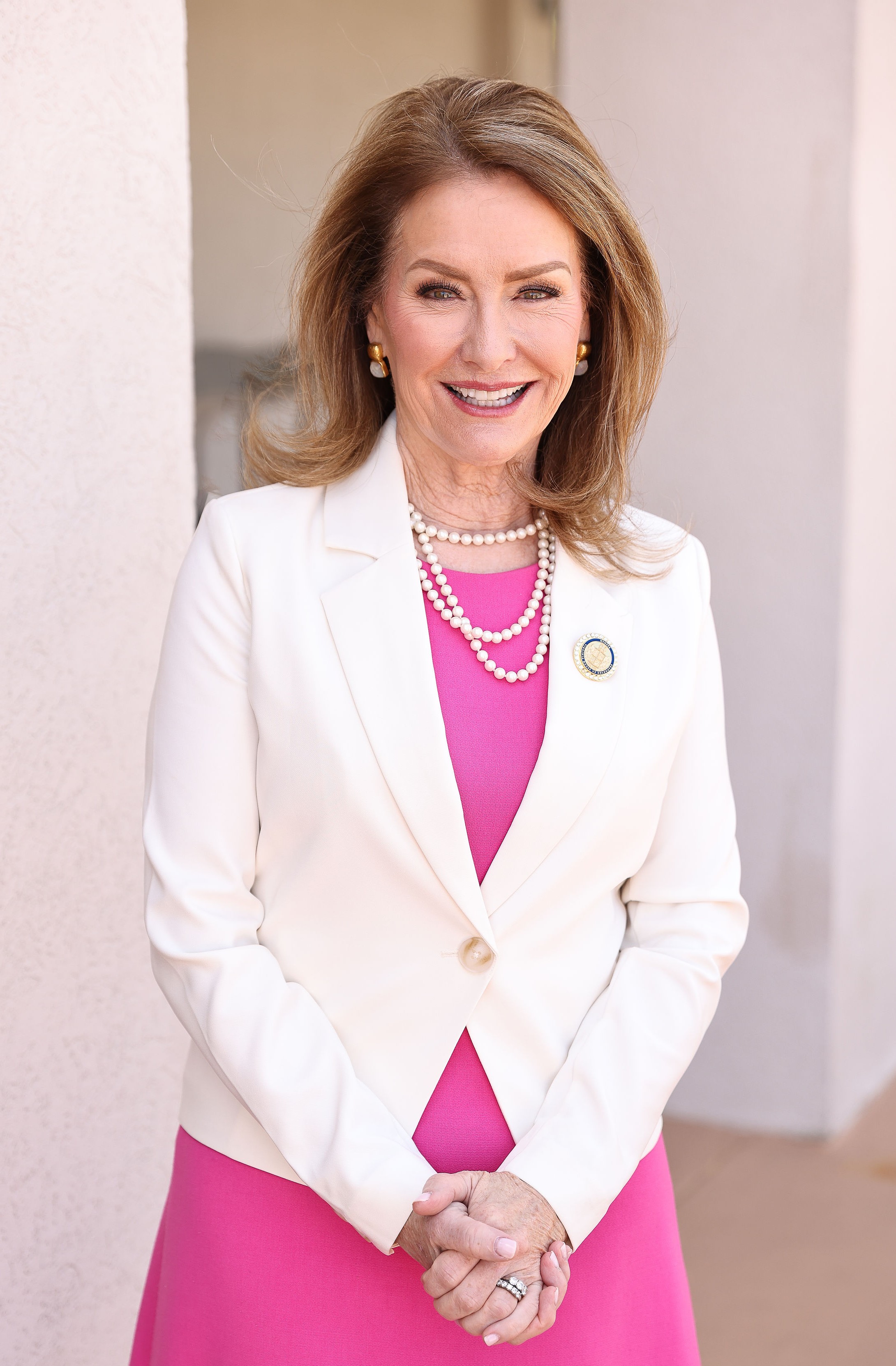
Del. Anne Ferrell Tata
Sponsored bills
K-12 schools and institutions of higher education; student participation in women's sports; civil cause of action. Requires each interscholastic, intercollegiate, intramural, or club athletic team or sport sponsored by a public school, or any other school that is a member of the Virginia High School League, or by a public institution of higher education to be expressly designated as one of the following based on the biological sex of the students who participate on the team or in the sport: (i) males, men, or boys; (ii) females, women, or girls; or (iii) coed or mixed if participation on such team or sport is open to both males and females. The bill requires that the biological sex of any student seeking to participate on such an expressly designated team be affirmed by a signed physician's statement. The bill prohibits any such team or sport that is expressly designated for females from being open to students whose biological sex is male. The bill prohibits any government entity, licensing or accrediting organization, or athletic association or organization from entertaining a complaint, opening an investigation, or taking any other adverse action against any such school or institution of higher education based on a violation of the provisions of the bill and creates a cause of action for any school or institution of higher education that suffers harm as a result of a violation of the bill. Finally, the bill creates a civil cause of action for any student who suffers harm as a result of a knowing violation of a provision of the bill by a school or institution or as a result of the student's reporting a violation of a provision of the bill by a school, institution, athletic association, or organization.

Income tax deduction; tips and overtime compensation. Provides, for taxable years beginning on and after January 1, 2026, an income tax deduction for the amount of tips received during the taxable year that are included on statements furnished to the employer for federal tax purposes. The bill also establishes, for taxable years beginning on and after January 1, 2026, an income tax deduction for any overtime compensation, defined in the bill, received by an employee who is not exempt from overtime compensation rules pursuant to the federal Fair Labor Standards Act.
Real property tax exemption; surviving spouses of members of the armed forces who died in the line of duty. Authorizes localities by ordinance to provide a total exemption from real property taxes regardless of assessed value beginning in tax years beginning on and after January 1, 2025, for surviving spouses of members of the armed forces who died in the line of duty. Under law effective January 1, 2025, a total exemption is only allowed for such surviving spouses for those dwellings in the locality with assessed values in the most recently ended tax year that are not in excess of the average assessed value for such year of a dwelling situated on property that is zoned as single family residential.
Maddy summaryThis bill (SJ 305) is a ceremonial resolution commending Colonel James B. Cogbill, USA, Ret., for his military service. It does not create new laws or affect any policies, programs, or individuals beyond this formal recognition. The resolution passed both the Senate and House by voice vote in early February 2025 and is now pending final action. It serves solely to honor an individual's service, with no substantive policy impact.
High school graduation requirements; passing score on select questions from U.S. Naturalization Test. Requires the Board of Education, in establishing high school graduation requirements, to require, except in the case of a high school student whose individualized education program indicates otherwise, each high school student to take and correctly answer at least 70 percent of the questions on a test composed of at least 25 but not more than 50 of the questions on the civics portion of the U.S. Naturalization Test in order to graduate high school with a standard or advanced studies diploma, provided that such student may take such test at any time during grades nine through 12 and as many times during such period as necessary to achieve the minimum 70 percent passing score.
Income tax; nonfamily adoption tax credit. Creates the nonfamily adoption tax credit as a $4,000 nonrefundable tax credit for taxable years 2025 through 2029 for an individual or married persons who, during the taxable year, finalize a legal nonfamily adoption as defined in the bill. The bill limits the aggregate amount of credits allowable to $5 million per taxable year with credits allocated by the Department of Taxation on a first-come, first-served basis.
Establishment of recovery high schools; authorization in certain Superintendent's regions. Authorizes any school board that governs a school division located in Superintendent's Region 2, 4, or 7 to establish a recovery high school in the relevant school division as a year-round high school (i) for which enrollment is open to any high school student who resides in the relevant Superintendent's region and is in the early stages of recovery from substance use disorder or dependency and (ii) for the purpose of providing such students with the academic, emotional, and social support necessary to make progress toward earning a high school diploma and reintegrating into a traditional high school setting.
Human trafficking investigators; licensing by the Department of Criminal Justice Services. Authorizes the Department of Criminal Justice Services to register and issue licenses for human trafficking investigators. The bill provides that a human trafficking investigator is a private investigator who is GSA compliant and engages in the business of, or accepts employment to make, investigations to obtain information on sex trafficking or severe forms of trafficking as defined in the federal Trafficking Victims Protection Act of 2000 and in the federal Justice for Victims of Trafficking Act of 2015.
Kinship as Foster Care Prevention Program established. Establishes the Kinship as Foster Care Prevention Program to promoteand support placements of children with relatives by local boardsof social services in order to avoid foster care. The bill providesthat a child is eligible to participate in the Program if the localboard determines that (i) the child is at imminent risk of beingremoved from his home and a preliminary protective order is insufficientto address the child's immediate safety concerns and (ii) the child'sparent or guardian consents to the placement of the child with arelative pursuant to an agreement with the local board developedin accordance with the provisions of the bill.