

Celebrating the life of Robert S. Miller III.
Celebrating the life of Robert S. Miller III.
Introduced Jan 18, 2021
0 co-sponsors
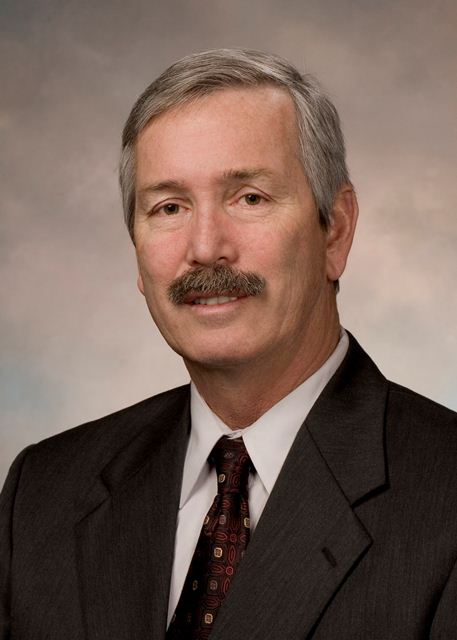
Celebrating the life of Robert S. Miller III.
Celebrating the life of the Honorable RobertS. Bloxom, Sr.
Celebrating the life of William Franklin HudginsIII.
Health insurance; mandated coverage for hearing aids for minors. Requires health insurers, health maintenance organizations, and corporations providing health care coverage subscription contracts to provide coverage for hearing aids and related services for children 18 years of age or younger when a licensed audiologist prescribes such hearing aids and related services. The coverage includes one hearing aid per hearing-impaired ear, up to a cost of $1,500, every 24 months. The measure applies to policies, contracts, and plans delivered, issued for delivery, or renewed on and after January 1, 2021.
Corporate income tax; sourcing of sales otherthan sales of tangible personal property. Implements market-basedcorporate income tax sourcing for attributing sales, other than salesof tangible personal property, to Virginia beginning with taxableyear 2021.
Workers' compensation; post-traumatic stress disorder; law-enforcement officers and firefighters. Provides that post-traumatic stress disorder incurred by a law-enforcement officer or firefighter is compensable under the Virginia Workers' Compensation Act if a mental health professional examines a law-enforcement officer or firefighter and diagnoses the individual as suffering from post-traumatic stress disorder as a result of the individual's undergoing a qualifying event, which includes an event occurring in the line of duty on or after July 1, 2020, in which a law-enforcement officer or firefighter views a deceased minor, witnesses the death of a person or an incident involving the death of a person, witnesses an injury to a person who subsequently dies, has physical contact with and treats an injured person who subsequently dies, transports an injured person who subsequently dies, or witnesses a traumatic physical injury that results in the loss of a vital body part or a vital body function that results in permanent disfigurement of the victim. Other conditions for compensability include (i) if the post-traumatic stress disorder resulted from the law-enforcement officer or firefighter acting in the line of duty and, in the case of a firefighter, such firefighter complied with certain federal Occupational Safety and Health Act standards; (ii) if the law-enforcement officer's or firefighter's undergoing a qualifying event was a substantial factor in causing his post-traumatic stress disorder; (iii) if such qualifying event, and not another event or source of stress, was the primary cause of the post-traumatic stress disorder; and (iv) if the post-traumatic stress disorder did not result from any disciplinary action, work evaluation, job transfer, layoff, demotion, promotion, termination, retirement, or similar action of the officer or firefighter. The measure establishes procedural requirements on employers that contest a claim for such benefits. The measure also establishes requirements for resilience and self-care technique training.
Illegal gambling; skill games; exception. Includes the playing or offering for play of any skill game in the definition of "illegal gambling." The bill also includes skill games within the definition of "gambling devices." The bill defines a "skill game" as an electronic, computerized, or mechanical contrivance, terminal, machine, or other device that requires the insertion of a coin, currency, ticket, token, or similar object to operate, activate, or play a game, the outcome of which is determined by any element of skill of the player and that may deliver or entitle the person playing or operating the device to receive cash; cash equivalents, gift cards, vouchers, billets, tickets, tokens, or electronic credits to be exchanged for cash; merchandise; or anything of value whether the payoff is made automatically from the device or manually. The bill exempts family entertainment centers from the prohibition against the playing or offering of any skill game, provided the prize won or distributed to a player by the skill games offered by such centers is a noncash, merchandise prize or a voucher, billet, ticket, token, or electronic credit redeemable only for a noncash, merchandise prize that also meets certain other requirements.The provisions related to the prohibition of skill games have a delayed effective date of July 1, 2021. The bill provides for a one-year phase-out of currently existing skill games. Each distributor, defined as a person who distributes skill games to Virginia Alcoholic Beverage Control Authority (ABC) licensees and truck stops, would pay a monthly tax of $1,200 for each skill game provided for play during the previous month. Revenues would accrue two percent to the Problem Gambling Treatment and Support Fund, two percent to the ABC for administering the bill's provisions, 12 percent to localities in which the skill games are located, and 84 percent to the COVID-19 Relief Fund, created by the bill. The COVID-19 Relief Fund would be used by the Governor solely for the purposes of responding to the Commonwealth's needs related to the Coronavirus Disease of 2019 pandemic.Distributors would be required to report monthly to the ABC the number of skill games provided for play. Distributors would be prohibited from increasing the number of machines above the number provided for play as of July 1, 2020 and would be prohibited from operating new skill games. Distributors would be subject to a civil penalty of up to $50,000 for violations the provisions of the bill.The remaining provisions of the bill, which prohibit skill games, would become effective on July 1, 2021. This bill is identical to SB 971.
Milk; definition; misbranding; prohibition. Defines "milk" as the lacteal secretion of a healthy hooved mammal and provides that a food product is unlawfully misbranded if its label states that it is milk and it fails to meet such definition, except for human breast milk. The bill directs the Board of Agriculture and Consumer Services to implement a plan to ban all products misbranded as milk. The bill does not become effective until six months after the enactment, on or before October 1, 2029, of a similar act in any 11 of 14 specified states.
Lottery Board; regulation of casino gaming. Authorizes casino gaming in the Commonwealth to be regulated by the Virginia Lottery Board. The bill specifies the requirements for licensure of casino gaming operators and the conduct of casino gaming and imposes criminal and civil penalties for violations of the casino gaming law. The location of casino gaming establishments shall be limited to eligible host cities that meet specified criteria: the Cities of Portsmouth, Richmond, Norfolk, Danville, and Bristol. The bill requires each eligible host city to hold a referendum on the question of whether to allow casino gaming in the city and, with the exception of the City of Richmond, to hold such referendum at the November 2020 general election. The bill imposes a tax ranging from 18 to 30 percent of the adjusted gross receipts of licensees, based upon a licensee's annual adjusted gross receipts, and provides for disbursement of the tax revenues. The bill requires the Board to establish a voluntary exclusion program allowing individuals to voluntarily list themselves as being barred from entering a casino gaming establishment or other facility under the jurisdiction of the Board. The bill establishes the Problem Gambling Treatment and Support Fund, administered by the Commissioner of Behavioral Health and Developmental Services, and the Virginia Indigenous People's Trust Fund, both of which are funded by proceeds from the casino gaming tax revenues. The bill also establishes the Regional Improvement Commission, consisting of a representative of each jurisdiction composing the transportation district in which the City of Bristol is located, to receive disbursements of gaming tax revenues and to prioritize and fund improvements in those jurisdictions. The bill requires the Virginia Racing Commission to authorize an additional 600 historical horse racing terminals each time a local referendum held by an eligible host city is approved, provided that the total number of additional machines does not exceed 2,000 statewide, and includes other provisions relating to the placement of historical horse racing terminals in the Commonwealth. The bill incorporates HB 374, HB 428, HB 560, HB 1343, and HB 1661 and is identical to SB 36.
Workers' compensation; post-traumatic stress disorder;law-enforcement officers and firefighters. Provides that post-traumaticstress disorder incurred by a law-enforcement officer or firefighter iscompensable under the Virginia Workers' Compensation Act if a mental healthprofessional examines a law-enforcement officer or firefighter and diagnosesthe individual as suffering from post-traumatic stress disorder as a result ofthe individual's undergoing a qualifying event, which includes an event occurringin the line of duty on or after July 1, 2020, in which a law-enforcementofficer or firefighter views a deceased minor, witnesses the death of a personor an incident involving the death of a person, witnesses an injury to a personwho subsequently dies, has physical contact with and treats an injured personwho subsequently dies, transports an injured person who subsequently dies, orwitnesses a traumatic physical injury that results in the loss of a vital bodypart or a vital body function that results in permanent disfigurement of thevictim. Other conditions for compensability include (i) if the post-traumaticstress disorder resulted from the law-enforcement officer or firefighter actingin the line of duty and, in the case of a firefighter, such firefightercomplied with certain federal Occupational Safety and Health Act standards;(ii) if the law-enforcement officer's or firefighter's undergoing a qualifyingevent was a substantial factor in causing his post-traumatic stress disorder;(iii) if such qualifying event, and not another event or source of stress, wasthe primary cause of the post-traumatic stress disorder; and (iv) if thepost-traumatic stress disorder did not result from any disciplinary action,work evaluation, job transfer, layoff, demotion, promotion, termination,retirement, or similar action of the officer or firefighter. The measureestablishes procedural requirements on employers that contest a claim for suchbenefits. The measure also establishes requirements for resilience and self-caretechnique training.