Maddy summaryHR 470 is a non-binding resolution commending Doris B. Land for her contributions. It does not create new laws or affect any policies, as it is purely ceremonial. The bill was passed by the House via voice vote on January 20, 2025, and serves only to honor Doris B. Land without imposing any obligations or changes to existing law.
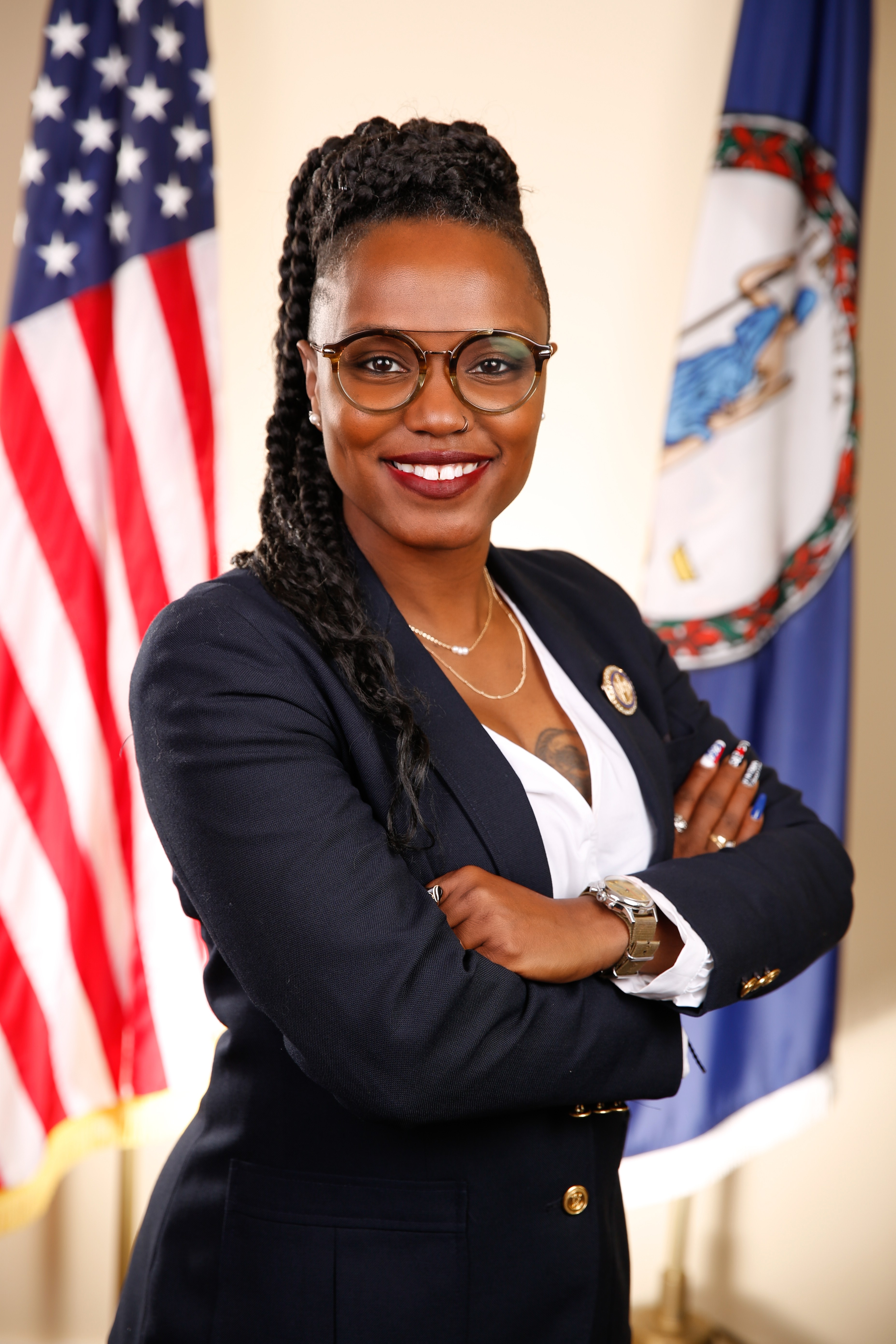
Del. Jackie Glass
Sponsored bills
Maddy summaryThis is a commemorative resolution honoring Matthew Charles Obenshain. It does not create any new laws or affect policies; it simply expresses legislative recognition of his life. The resolution was passed unanimously by both the Senate and House on February 20-21, 2025. It has no binding effect beyond ceremonial acknowledgment.
Maddy summarySJ 408 is a ceremonial resolution formally honoring the United States Army for its service. It does not create new laws or affect specific individuals or policies; instead, it expresses legislative recognition through a symbolic gesture. The bill passed unanimously in both the Senate and House in February 2025, with no substantive policy changes or implementation mechanisms. As a commemorative resolution, it has no legal effect beyond the expression of praise.
Maddy summaryThis is a ceremonial resolution (SJ 434), not a policy bill. It formally commends Dr. William Ferguson Reid for his service, with no legal effect or impact on any individuals or policies. The resolution passed both the Senate and House by voice vote in February 2025. As a symbolic gesture, it expresses legislative recognition but does not create any new requirements or change existing law.
Unauthorized use of name, portrait, voice, likeness, or picture of any person; digital replica; civil liability; statute of limitations. Expands the existing ability for any person to maintain a suit in equity, including the accompanying remedies available, for the unauthorized use of his name, portrait, or picture for advertising purposes or for the purposes of trade to include the unauthorized use of his voice or likeness. The bill also creates civil liability for a person who produces, distributes, or makes available the digital replica, defined in the bill, of a person's voice or likeness in an expressive audiovisual work or sound recording without prior written consent, with exceptions enumerated in the bill. The bill also extends the current statute of limitations for such civil suits from 20 years to 100 years after the death of such person.
Maddy summaryThis resolution (SJ 366) formally commends Leanne Eyler for her contributions, without imposing any legal requirements or altering policies. It directly affects no individuals or entities beyond expressing legislative recognition. The bill passed both the Senate and House by voice vote in February 2025 and is now enrolled as a formal commendation. As a ceremonial resolution, it has no substantive policy impact.
Maddy summaryThis bill (SJ 371) is a ceremonial resolution commending Hoda Kotb, a well-known television host and co-anchor, for her contributions. It does not create any legal requirements or affect any individuals, organizations, or policies. The resolution simply expresses the legislature's appreciation through a formal statement. As a commemorative measure, it has no binding effect and passed unanimously in both chambers.
Public education; early childhood care and education; funding formula calculations; Early Childhood Care and Education Fund established; report. Requires the Department of Education to (i) establish and maintain a funding formula for the provision of early childhood care and education services that establishes the minimum funding and number of slots per biennium for such providers based on a cost of quality rate per child, actual data from the prior year, unserved waitlists, and a multiplier based on enrollment and parent demand growth in prior biennia; (ii) make disbursements from the Early Childhood Care and Education Fund, established in the bill, to support the provision of early childhood care and education services in accordance with the funding formula set forth in the bill; and (iii) submit to the Commission on Early Childhood Care and Education a report on the status of the Fund, including the data used to calculate the minimum funding and number of slots per biennium established pursuant to the funding formula. The bill requires the Superintendent of Public Instruction to submit to the General Assembly by November 1 of each year a report on Fund revenues, distributions, and balances. The bill contains a reenactment clause.
Department of Medical Assistance Services; presumptive eligibility for pregnant individuals; qualified entities; performance standards for qualified entities. Directs the Department of Medical Assistance Services to seek federal authority to implement presumptive eligibility for pregnant individuals, in addition to the existing hospital presumptive eligibility program and, if the Department receives such authority, allows the Department to authorize qualified entities to make determinations of presumptive eligibility for pregnant individuals. The bill directs qualified entities to provide (i) the necessary applications for medical assistance on the day in which the presumptive eligibility decision is made and (ii) assistance with completing such applications through available modalities. Under the bill, qualified entities are authorized to make determinations of presumptive eligibility for pregnant individuals who meet eligibility criteria for certain medical assistance programs and have not had a presumptive eligibility period during the current pregnancy. The bill also sets forth certain performance standards that qualified entities must meet to remain a qualified entity, described in the bill.
Department of Education; Child Care Subsidy Program waiting list; additional priority group; target timeline for assigning slots to priority groups. Requires the Department of Education to amend its Child Care Subsidy Program Guidance Manual to add a seventh priority group to the Child Care Subsidy Program waiting list that consists of any family that meets all other Program eligibility criteria and includes a parent who is employed for at least 30 hours per week by a publicly funded child care provider in the Commonwealth that serves children from birth to age five, excluding employment by a local school division but including employment by a Head Start program that is located within a public school building. The bill also directs the Department of Education to require local departments of social services to target a maximum of 30 days for moving priority group families from the waiting list into services; regularly assess, in coordination with the Department of Social Services, the length of time it takes for priority groups to be assigned slots; and provide quarterly updates, beginning October 1, 2025, to the Commission on Early Childhood Care and Education on such timeline and any other barriers experienced by families in priority groups on the waiting list in accessing services.