

Employment; determining wage of tipped employee.Provides that an employer shall increase the amount paid to itstipped employees by an amount determined by the employer in accordancewith the federal Fair Labor Standards Act and that, notwithstandingany other provision of law, a tipped employee who regularly performsservices in the course of his employment for which there is no reasonableexpectation of receiving tips shall receive an amount not less thanthe minimum wage for the time that he performs such services. Thebill provides that tipped employees shall receive a cash wage ofnot less than $3.50 per hour starting on January 1, 2025. Startingon January 1, 2026, a tipped employee shall receive a cash wage ofnot less than $4.75 per hour, and starting on January 1, 2027, theamount of cash wage shall be not less than $6.00 per hour. StartingJanuary 1, 2028, tips shall be excluded from any determination ofwage paid to a tipped employee and the amount paid to such employeeshall be not less than the minimum wage.
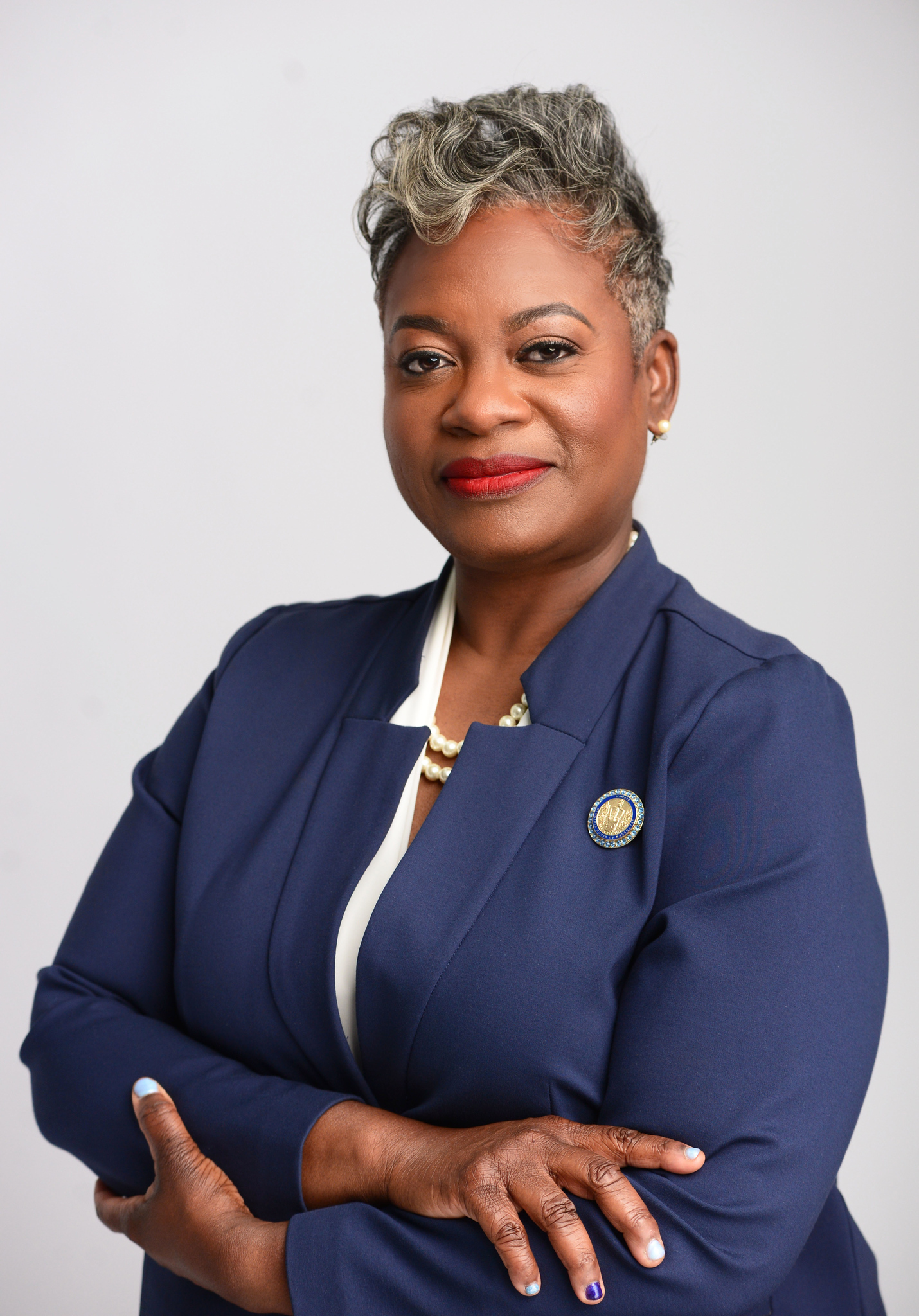
Del. Bonita Anthony
Sponsored bills
Manufacture, import, sale, transfer, or possession of plastic firearms and unfinished frames or receivers and unserialized firearms prohibited; penalties. Creates a Class 5 felony for any person who knowingly manufactures or assembles, imports, purchases, sells, transfers, or possesses any firearm that, after removal of all parts other than a major component, as defined in the bill, is not detectable as a firearm when subjected to inspection by the types of detection devices, including X-ray machines, commonly used at airports, government buildings, schools, correctional facilities, and other locations for security screening. The bill updates language regarding the types of detection devices that are used at such locations for detecting plastic firearms. Under current law, it is unlawful to manufacture, import, sell, transfer, or possess any plastic firearm and a violation is punishable as a Class 5 felony. The bill also creates a Class 1 misdemeanor, which is punishable as a Class 4 felony for a second or subsequent offense, making it unlawful for any person to knowingly possess a firearm or any completed or unfinished frame or receiver that is not imprinted with a valid serial number or to knowingly import, purchase, sell, offer for sale, or transfer ownership of any completed or unfinished frame or receiver, unless the completed or unfinished frame or receiver (i) is deemed to be a firearm pursuant to federal law and (ii) is imprinted with a valid serial number. The bill creates a Class 1 misdemeanor, which is punishable as a Class 4 felony for a second or subsequent offense, making it unlawful for any person to manufacture or assemble, cause to be manufactured or assembled, import, purchase, sell, offer for sale, or transfer ownership of any firearm that is not imprinted with a valid serial number. The portions of the bill prohibiting unfinished frames or receivers and unserialized firearms have a delayed effective date of January 1, 2025; however, the portions of the bill prohibiting the knowing possession of a firearm or any completed or unfinished frame or receiver that is not imprinted with a valid serial number have a delayed effective date of July 1, 2025. This bill is identical to SB 100.
Additional local sales and use tax to support schools; referendum. Authorizes all counties and cities to impose an additional local sales and use tax at a rate not to exceed one percent with the revenue used only for capital projects for the construction or renovation of schools if such levy is approved in a voter referendum. The bill removes the requirement that such a tax must have an expiration date on either (i) the date of the repayment of any bonds or loans used for such capital projects or (ii) a date chosen by the governing body. Under current law, only Charlotte, Gloucester, Halifax, Henry, Mecklenburg, Northampton, Patrick, and Pittsylvania Counties and the City of Danville are authorized to impose such a tax. This bill incorporates HB 60, HB 193, HB 458, HB 600, HB 616, HB 1159, and HB 1437 and is identical to SB 14.
Board of Medicine; unprofessional conduct. Prohibits the Board of Medicine from taking disciplinary action against a doctor based on the alleged provision or receipt of abortion care that is not prohibited under the laws of the Commonwealth, regardless of where such abortion care was provided or received. The bill also specifies that grounds for refusal to issue a certificate or license to any applicant or to take disciplinary action for procuring or performing an abortion apply to such action only as it is prohibited by the laws of the Commonwealth. Under current law, such grounds for refusal or disciplinary action apply for procuring or performing a criminal abortion. This bill is identical to SB 716.
Firearm locking device required for purchase of a firearm; warning against accessibility to children; penalty. Requires any person who purchases a firearm to either (i) obtain or purchase from a licensed dealer a locking device for such firearm if a minor is present in such person's residence for 14 days or more in a calendar month or (ii) complete a certification statement on a form provided by the Department of State Police certifying that a minor is not present in such person's residence for 14 days or more in a calendar month, with exceptions enumerated in the bill. Accordingly, the bill provides that it is unlawful for any licensed manufacturer, licensed importer, or licensed dealer to sell, deliver, or transfer any firearm to any person, other than a licensed manufacturer, licensed importer, or licensed dealer, unless (a) the firearm is accompanied by a warning, in conspicuous and legible type in capital letters printed on a separate sheet of paper included within the packaging enclosing the firearm, that firearms should be locked and kept away from children and that there may be civil and criminal liability for failing to do so and (b) the transferee (1) obtains or purchases a locking device for such firearm if a minor is present in such person's residence for 14 days or more in a calendar month or (2) completes the certification statement. A violation of either provision is a Class 3 misdemeanor.
Fines, costs, forfeitures, penalties, and restitution; collection fees; assessment against incarcerated defendant; deferred payment agreement. Extends from 90 days without payment to 180 days without payment the period of delinquency necessary for an account to be included on the required monthly report of delinquent accounts made by the clerk of the circuit court and district court. The bill also provides that for any defendant sentenced to an active term of incarceration and ordered to pay any fine, cost, forfeiture, or penalty related to the charge that such defendant is incarcerated for, or any other charge for which such defendant was sentenced on the same day, the court shall enter such defendant into a deferred payment agreement for such fines, costs, forfeitures, or penalties. The bill requires the due date for such deferred payment agreement to be set no earlier than the defendant's scheduled release from incarceration on the charge for which such defendant received the longest period of active incarceration. The bill has a delayed effective date of January 1, 2025. This bill is identical to HB 612.
Purchase, possession, sale, transfer, etc.,of assault firearms and certain ammunition feeding devices prohibited;penalty. Creates a Class 1 misdemeanor for any person who imports,sells, manufactures, purchases, possesses, transports, or transfersan assault firearm, as that term is defined in the bill, and prohibitsa person who has been convicted of such violation from purchasing,possessing, or transporting a firearm for a period of three yearsfrom the date of conviction. The bill provides that an assault firearmdoes not include any firearm that is an antique firearm, has been rendered permanently inoperable, is manually operated by bolt, pump,lever, or slide action, or was manufactured before July 1, 2024.The bill also prohibits the sale of a large capacity ammunition feedingdevice, as that term is defined in the bill. The bill provides thatany person who willfully and intentionally (i) sells an assault firearmto another person or (ii) purchases an assault firearm from anotherperson is guilty of a Class 1 misdemeanor and that any person whoimports, sells, barters, or transfers a large capacity ammunition feeding device is guilty of a Class 1 misdemeanor. The bill alsomakes it a Class 1 misdemeanor for any person younger than 21 yearsof age to import, sell, manufacture, purchase, possess, transport,or transfer an assault firearm regardless of the date of manufactureof such assault firearm.
Equity in public school funding; student need; English language learner, special education, and at-risk students. Places several parameters on Standards of Quality funding calculations performed by the Department of Education, including (i) requiring the Department, when calculating the cost of salaries under the Standards of Quality funding formula, to include facilities staff and transportation staff salaries in the calculation of any cost of competing adjustment to salaries for instructional and support positions that is provided as part of the state share of basic aid pursuant to the general appropriation act; (ii) requiring the Department, when estimating the cost of any compensation supplement for instructional and support positions under the Standards of Quality funding formula, to include and estimate the cost of such a compensation supplement for facilities staff; (iii) prohibiting the Department from applying any cap on inflation rate adjustments to non-personal cost categories during the biennial process of rebenchmarking the direct aid to public education budget; and (iv) requiring the Department to utilize a three-year average of the most recently available data to calculate the composite index of local ability-to-pay for each school division. The bill also amends Standard of Quality 2 by (a) including in the definition of "support services position" any central office clerical position that is not otherwise set forth in such definition, (b) requiring a per-pupil Standards of Quality funding add-on to be provided for English language learner and special education students, (c) requiring, in addition to the positions supported by basic aid, state funding, pursuant to the general appropriation act, to be provided to cover the actual average school division cost to educate children with disabilities, and (d) establishing the At-Risk Program, defined in the bill as any state funding provided for programs of prevention, intervention, or remediation or pursuant to the at-risk add-on for the purpose of supporting programs for students who are educationally at risk. The bill requires (1) the determination of the amount of state funding for which a school division is eligible pursuant to such At-Risk Program to be based on the school division's identified student percentage, defined in the bill as the fraction, expressed as a percentage, that results from dividing the number of identified students enrolled in a school division by the total number of students enrolled in such school division, weighted by the factor of 1.5, and then adjusted by the addition of a percentage that corrects for undercounting English language learner students as identified students and (2) such funding to be distributed as follows: 60 percent on a flat per-student rate and 40 percent on a variable rate set out in the general appropriation act based on the concentration of poverty in the school division. The bill is a recommendation of the Joint Legislative Audit and Review Commission.
Affordable housing; assisted living facilities. Allows localities that have adopted an affordable housing program to require that in an application for a special exception or special use permit affordable rental units be included for any proposed development of an assisted living facility. Such ordinance shall apply to newly licensed assisted living facilities and permit applications approved on or after January 1, 2025.
Fines and costs; period of limitations on collection; deferred payment agreement. Changes the period of limitations for the collection of court fines and costs from within 60 years from the date of the offense or delinquency giving rise to imposition of such penalty if imposed by a circuit court or within 30 years if imposed by a general district court to within 10 years from the date of the judgment whether imposed by a circuit court or general district court. The bill provides that upon the expiration of the period of limitations, no action shall be brought to collect the debt.The bill also provides that for any defendant sentenced to an active term of incarceration and ordered to pay any fine, cost, forfeiture, or penalty related to the charge that such defendant is incarcerated for, or any other charge for which such defendant was sentenced on the same day, the court shall enter such defendant into a deferred payment agreement for such fines, costs, forfeitures, or penalties. The bill requires the due date for such deferred payment agreement to be set no earlier than the defendant's scheduled release from incarceration on the charge for which such defendant received the longest period of active incarceration. This bill is identical to SB 514.