

Synthetic media; penalty. Expands the applicability of provisions related to defamation, slander, and libel to include synthetic media, defined in the bill. The bill makes it a Class 1 misdemeanor for any person to use any synthetic media for the purpose of committing any criminal offense involving fraud, constituting a separate and distinct offense with punishment separate and apart from any punishment received for the commission of the primary criminal offense. The bill also authorizes the individual depicted in the synthetic media to bring a civil action against the person who violates such prohibition to recover actual damages, reasonable attorney fees, and such other relief as the court determines to be appropriate. The bill directs the Attorney General to convene a work group to study and make recommendations on the current enforcement of laws related to the use of synthetic media, including deepfakes, and any further action needed to address the issue of such use in fraudulent acts.
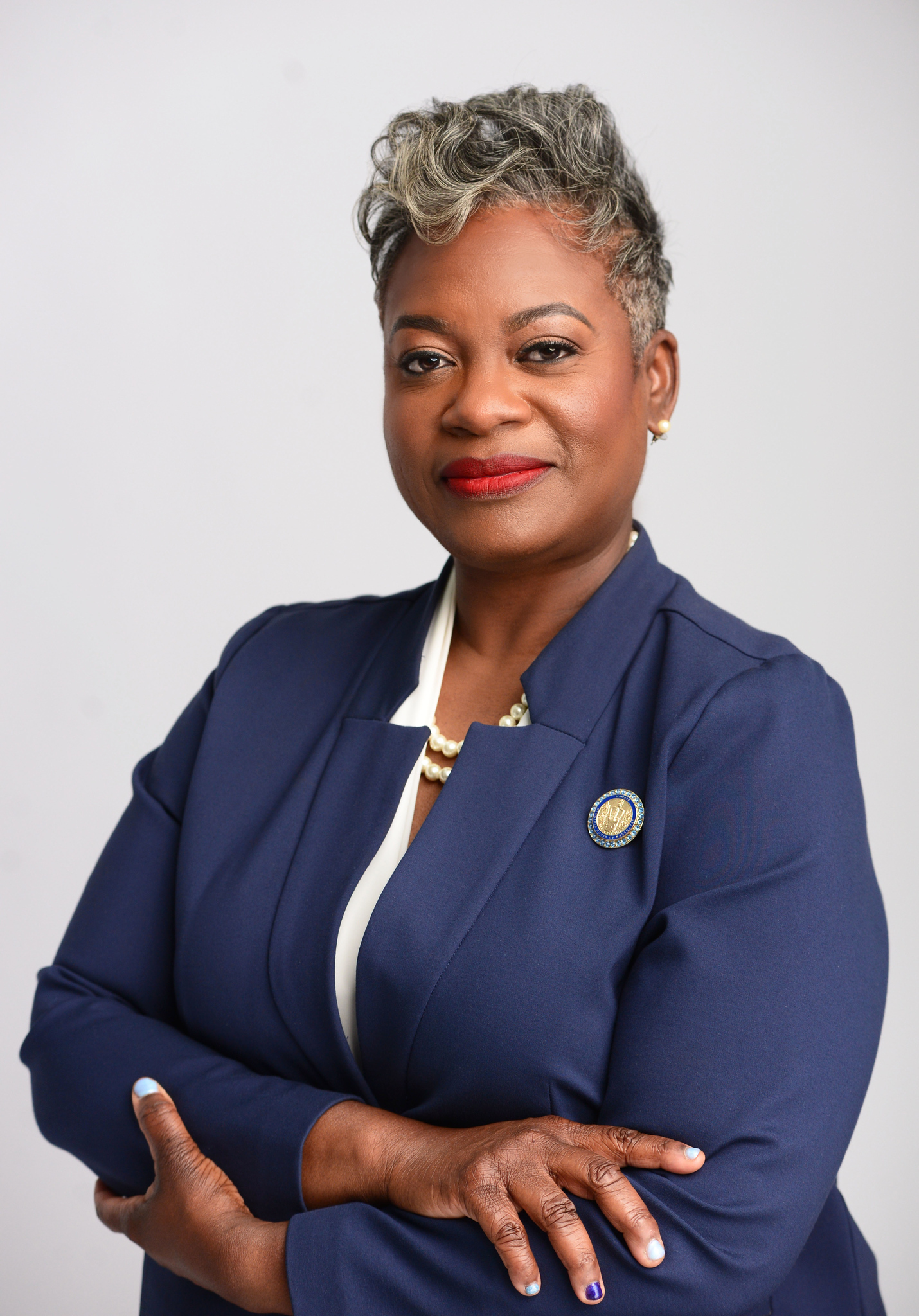
Del. Bonita Anthony
Sponsored bills
Absentee voting in person; voter satellite offices; days and hours of operation. Authorizes the governing body of any county or city establishing voter satellite offices for absentee voting in person to prescribe, by ordinance, the dates and hours of operation for such offices. The bill prohibits any reduction in the dates or hours of operation of such offices to be enacted within 60 days of any general election.
Study; joint committee of the House Committee on Education and the Senate Committee on Education and Health; challenges faced by and effective strategies for ensuring the sustainable, long-term success of the five historically black colleges and universities in the Commonwealth; report. Establishes a joint committee consisting of five members of the House Committee on Education and three members of the Senate Committee on Education and Health to study the challenges faced by and effective strategies for ensuring the sustainable, long-term success of the five historically black colleges and universities in the Commonwealth–Hampton University, Norfolk State University, Virginia State University, Virginia Union University, and Virginia University of Lynchburg–by discussing, adopting, and recommending to the Governor and the General Assembly for formal recognition and endorsement a comprehensive statewide HBCU Support Plan.
Absentee voting in person; voter satellite offices; establishment on the campus of certain public institutions of higher education. Requires, for any general election, at least one voter satellite office to be established on the campus of any baccalaureate public institution of higher education that has more than 3,000 enrolled students. The bill directs the State Council of Higher Education for Virginia to report each year to the State Board of Elections the number of enrolled students, as defined by the bill, at each baccalaureate public institution of higher education and requires the State Board to use this number to determine which institutions meet the enrollment threshold for requiring an on-campus voter satellite office for the general election held the following year. The governing body of a county or city where a baccalaureate public institution of higher education meeting the enrollment threshold is located, or the general registrar serving such county or city, shall collaborate with the State Council of Higher Education for Virginia to select a location for the establishment and operation of a voter satellite office on such institution's campus. The location selected shall be within the student activity center on the institution's campus, unless such placement creates an undue burden on the operation of such institution, in which case the location selected shall be centrally located on the institution's campus.
Virginia Retirement System; enhanced retirement benefits for 911 dispatchers. Allows local governments to provide enhanced retirement benefits for hazardous duty service to full-time salaried 911 dispatchers. The bill provides that such enhanced retirement benefits apply only to service earned as a full-time salaried 911 dispatcher on or after July 1, 2025, but allows an employer, as that term is defined in relevant law, to provide such enhanced retirement benefits for service earned as a full-time salaried 911 dispatcher before July 1, 2025, in addition to service earned on or after that date. The bill has a delayed effective date of July 1, 2025.
Public school staffing ratios; specialized student support positions. Increases the number of specialized student support positions required to be employed by each local school board from at least three to at least four such positions per 1,000 students in the local school division. Such specialized student support positions include school social workers, school psychologists, school nurses, licensed behavior analysts, licensed assistant behavior analysts, and other licensed health and behavioral positions.
Study; Department of State Police; Starr Alert Program; report. Requests the Department of State Police to study the need for an alert program, to be known as the Starr Alert Program, to notify vehicle repair shops of nearby hit-and-run incidents.
Child Care Subsidy Program vendors; basis for periodic reimbursement. Requires the Department of Education to periodically reimburse child care providers that are vendors through the Child Care Subsidy Program on the basis of authorized child enrollment but provides that if any such enrolled child is absent from the provider for 10 or more days during one month, the Department shall periodically reimburse such provider on the basis of such child's attendance.
Commissioner of Health; work group to study the occurrence of microplastics in the Commonwealth's public drinking water; report. Directs the Commissioner of Health to convene a work group to study the occurrence of microplastics in the Commonwealth's public drinking water and develop recommendations for the reduction of microplastics in the Commonwealth's public drinking water. The bill requires the work group to report its findings and recommendations to the Governor and the Chairmen of the House Committees on Agriculture, Chesapeake and Natural Resources and Health, Welfare and Institutions and the Senate Committees on Agriculture, Conservation and Natural Resources and Education and Health by December 1, 2024.
Divorce; cruelty, reasonable apprehension of bodily hurt, or willful desertion or abandonment; divorce from bed and board. Eliminates the one-year waiting period for being decreed a divorce on the grounds of cruelty, reasonable apprehension of bodily hurt, or willful desertion or abandonment by either party. The bill also repeals the provision allowing for a divorce from bed and board on the grounds of cruelty, reasonable apprehension of bodily hurt, or willful desertion or abandonment. The provisions of the bill apply to suits for divorce filed on or after July 1, 2024.