

Commending Major Wayne R. Lee, USA, Ret.
Commending Major Wayne R. Lee, Jr., USA, Ret.
Introduced Feb 8, 2021
1 co-sponsor
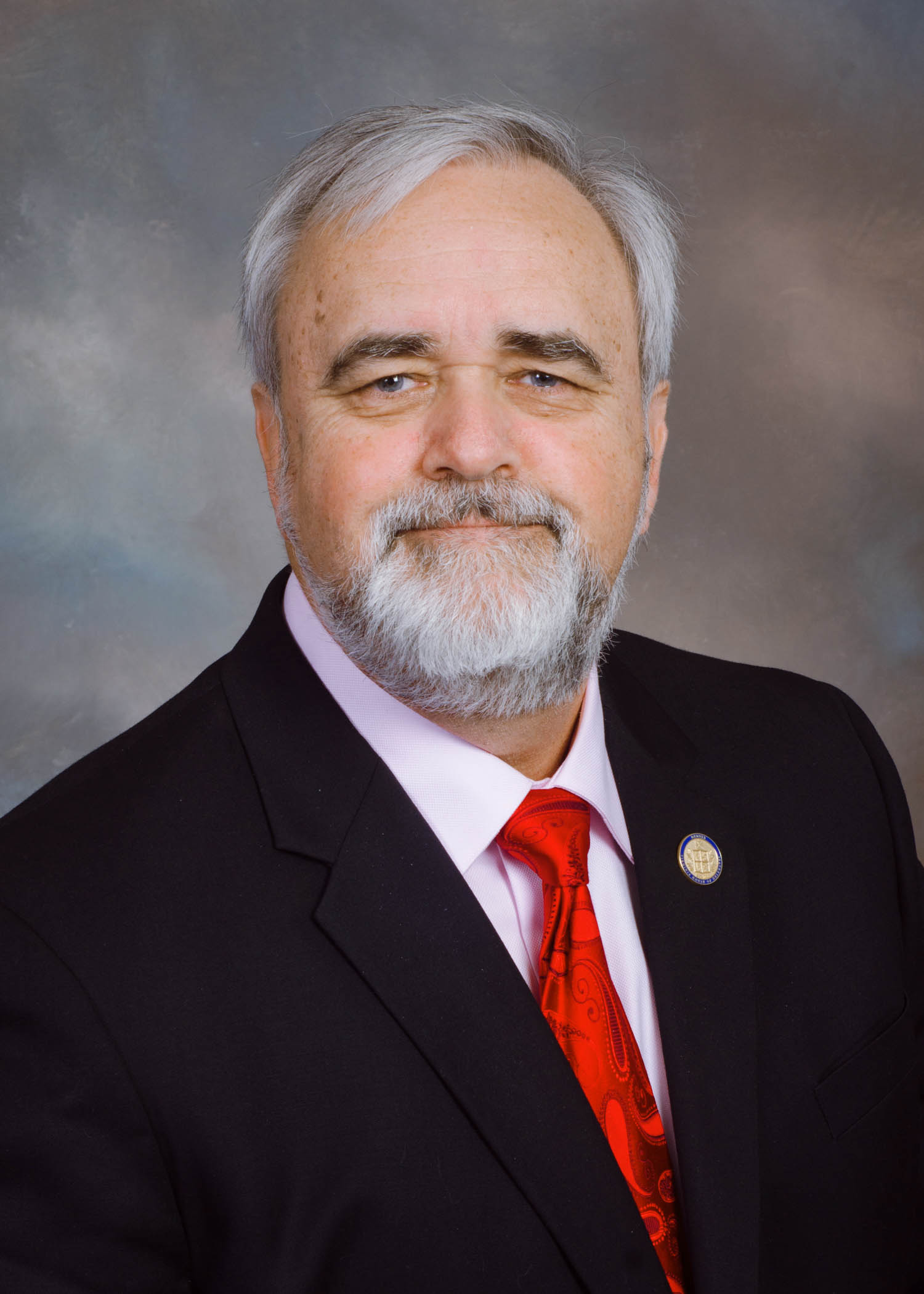
Commending Major Wayne R. Lee, Jr., USA, Ret.
Study: joint subcommittee to study recurrentinland and urban flooding across the Commonwealth; report. Establishesa two-year joint subcommittee, consisting of eight legislative membersand five nonlegislative citizen members, to study the developmentof a comprehensive and coordinated planning effort to address recurrentflooding in inland and urban areas across the Commonwealth. The joint subcommittee shall complete its work by November 30, 2022, and submitits findings and recommendations by the first day of the 2023 Sessionof the General Assembly.
Voter identification; identification containinga photograph required. Requires presentation of a form of identification containing a photograph in order to vote. The bill repeals the provisionsof law permitting a voter who does not have one of the required formsof identification to vote after signing a statement, subject to felony penalties for false statements, that he is the named registered voterhe claims to be. Instead, such voter would be entitled to cast aprovisional ballot.
Abolition Day. Designating December 6,in 2021 and in each succeeding year, as Abolition Day in Virginia.
Special license plates; NOT FORGOTTEN. Authorizesthe issuance of revenue-sharing special license plates for supportersof Americans listed as prisoners of war or missing in action bearingthe legend NOT FORGOTTEN. The bill requires that the design of suchplate incorporate the POW/MIA Flag as designated by the federal NationalPOW/MIA Flag Act. The bill exempts these special license plates fromthe requirement to obtain 450 prepaid applications for such plate.The bill provides that some of the license plate fees will be depositedin the POW/MIA Fund, established within the Department of Accounts,and paid annually to the National League of Families of American Prisonersand Missing in Southeast Asia and used to support its operation andprograms in Virginia.
Felony homicide; certain drug offenses; penalty. Provides that a person is guilty of felony homicide, punishable byconfinement for not less than five nor more than 40 years, if theunderlying felonious act that resulted in the accidental killingof another person involved the manufacture, sale, gift, or distributionof a Schedule I or II controlled substance and (i) such other person'sdeath results from his use of the controlled substance and (ii) the controlled substance is the proximate cause of the person's death.The bill provides that the venue for prosecution is the locality wherethe felony violation occurred, where the use of the controlled substanceoccurred, or where the death occurred. The bill serves to overrulethe decision of the Court of Appeals of Virginia in Woodard v.Commonwealth, 61 Va. App., 567, 739 S.E.2d 220 (2013),aff'd, 287 Va. 276, 754 S.E.2d 309 (2014).
In-person instruction; education vouchers; emergency. Requires, in the event that any school board does not provide theoption of in-person instruction as the sole method of instruction for any enrolled student, the parent of any such student who withdraws his child from attendance to receive, upon request, an educationvoucher in an amount equal to a prorated share of the applicableStandards of Quality per-pupil state funds appropriated for publicschool purposes and apportioned to the school division, includingthe per-pupil share of state sales tax funding in basic aid and anystate per-pupil share of special education funding for which thechild is eligible, to cover the expenses of providing in-person instructionin an alternative setting. The bill permits the Department of Educationto establish rules, regulations, or procedures for the issuance ofsuch education vouchers. The bill contains an emergency clause.
Voter registration; verification of social security numbers; provisional registration status. Requires the general registrars to verify that the name, date of birth, and social security number provided by an applicant on the voter registration application match the information on file in the Social Security Administration database or other database approved by the State Board of Elections (the State Board) before registering such applicant. If the information provided by the applicant does not match the information in such database, the applicant (i) is provisionally registered to vote and notified as to what steps are needed to be fully registered to vote and (ii) is permitted to vote by provisional ballot but such ballot shall not be counted until the voter presents certain information. The bill also requires the general registrars to verify annually no later than August 1 that the name, date of birth, and social security number in the registration record of each registered voter in the registrar's jurisdiction match the information on file with the Social Security Administration or other database approved by the State Board and, in accordance with current law, to initiate the cancellation of the registration of any voter whose registration record information does not match the database information. The State Board is authorized to approve the use of any government database to the extent required to enable each general registrar to carry out the provisions of this bill and to promulgate rules for the use of such database. The Department of Elections is required to provide to the general registrars access to the Social Security Administration database and any other database approved by the State Board. The Department of Elections is further required to enter into any agreement with any federal or state agency to facilitate such access. The bill has a delayed effective date of July 1, 2023.
Signs on certain highways; rotation of eligibleentities. Requires the Department of Transportation to establishand enforce a system to rotate every three years the entities displayedon directional or official signs pertaining to the availability offood, lodging, or vehicle service when there is a wait list of eligibleentities to be displayed on such signs.
Public institutions of higher education; perstudent enrollment-based funding; noncredit workforce training programs.Requires the per student enrollment-based funding provided to publicinstitutions of higher education to include funding for each Virginiastudent enrolled in a noncredit workforce training program. Undercurrent law, per student enrollment-based funding follows each Virginiaundergraduate student.