

Elections; prohibited discrimination in voting and elections administration; required process for enacting certain covered practices; civil causes of action. Prohibits any voting qualification or any standard, practice, or procedure related to voting from being imposed or applied in a manner that results in the denial or abridgment of the right of any United States citizen to vote based on his race or color or membership in a language minority group. The bill further prohibits at-large methods of election from being imposed or applied in a locality in a manner that impairs the ability of a protected class, defined in the bill, to elect candidates of its choice or to influence the outcome of an election, by diluting or abridging the rights of voters who are members of a protected class. Prior to enacting or administering a covered practice, defined in the bill, the governing body of a locality is required to publish the proposed covered practice and accept public comment for a minimum of 30 days on the proposed covered practice; after the public comment period, a 30-day waiting period is required. During this period, any person who will be subject to or affected by the covered practice may challenge the covered practice as (i) having the purpose or effect of denying or abridging the right to vote on the basis of race or color or membership in a language minority group or (ii) resulting in the retrogression in the position of members of a racial or ethnic group with respect to their effective exercise of the electoral franchise. The bill permits the local governing body to instead submit the proposed covered practice to the Office of the Attorney General for issuance of a certification of no objection and, once such certification is issued, to enact or administer the covered practice. Certain unlawful actions, including knowingly communicating false information to voters, that are currently subject to criminal penalties will create civil causes of action under the bill. The bill authorizes the Attorney General to commence civil actions when there is reasonable cause to believe that a violation of an election law has occurred and the rights of any voter or group of voters have been affected by the violation. Civil penalties assessed as a result of such action are payable to the Voter Education and Outreach Fund, established by the bill. Current provisions related to language minority accessibility are moved to a newly created chapter relating to the rights of voters.
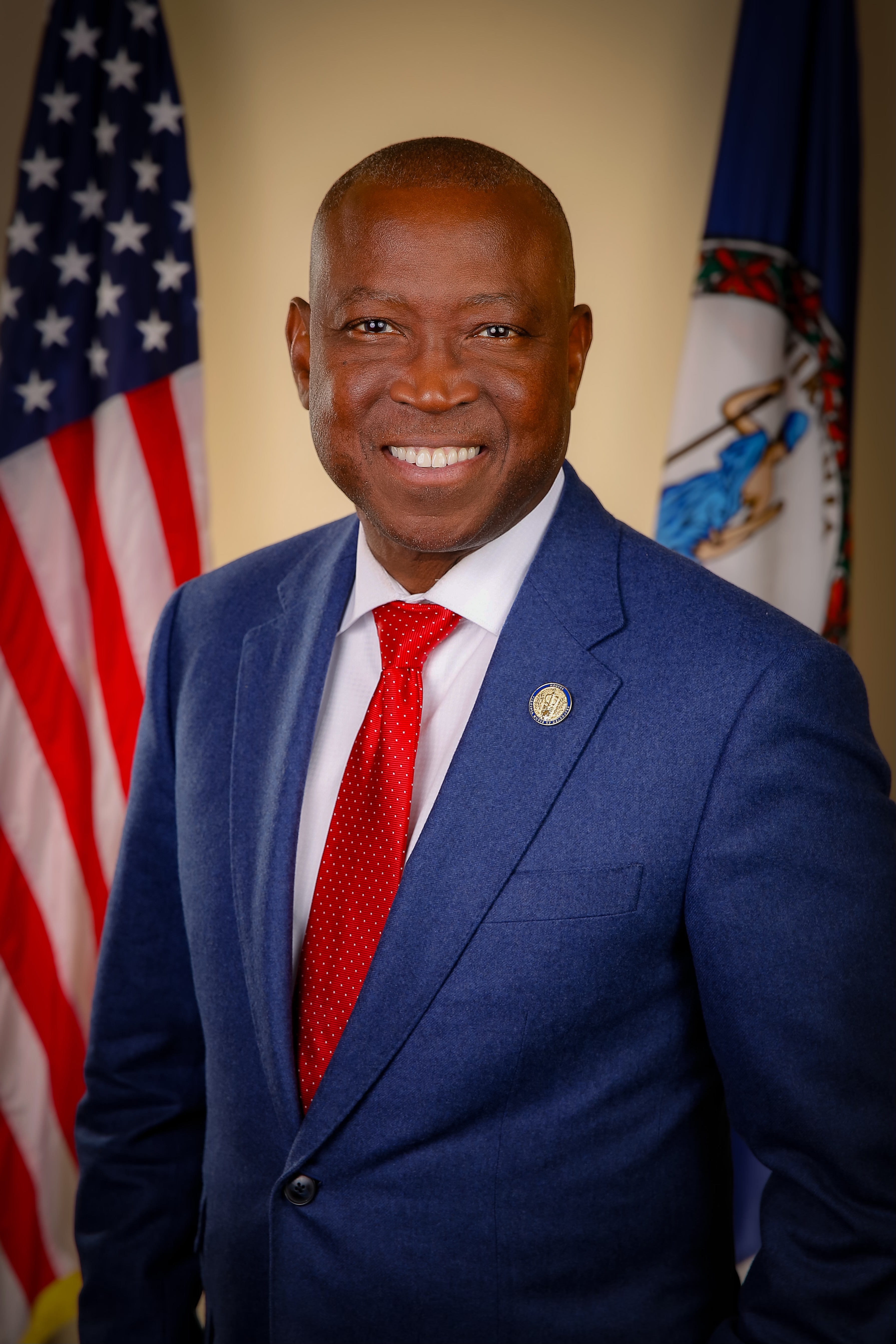
Del. Don Scott
Sponsored bills
Elections; prohibited discrimination in voting and elections administration; required process for enacting certain covered practices; civil causes of action. Prohibits any voting qualification or any standard, practice, or procedure related to voting from being imposed or applied in a manner that results in the denial or abridgment of the right of any United States citizen to vote based on his race or color or membership in a language minority group. The bill further prohibits at-large methods of election from being imposed or applied in a locality in a manner that impairs the ability of a protected class, defined in the bill, to elect candidates of its choice or to influence the outcome of an election, by diluting or abridging the rights of voters who are members of a protected class. Prior to enacting or administering a covered practice, defined in the bill, the governing body of a locality is required to publish the proposed covered practice and accept public comment for a minimum of 30 days on the proposed covered practice; after the public comment period, a 30-day waiting period is required. During this period, any person who will be subject to or affected by the covered practice may challenge the covered practice as (i) having the purpose or effect of denying or abridging the right to vote on the basis of race or color or membership in a language minority group or (ii) resulting in the retrogression in the position of members of a racial or ethnic group with respect to their effective exercise of the electoral franchise. The bill permits the local governing body to instead submit the proposed covered practice to the Office of the Attorney General for issuance of a certification of no objection and, once such certification is issued, to enact or administer the covered practice. Certain unlawful actions, including knowingly communicating false information to voters, that are currently subject to criminal penalties will create civil causes of action under the bill. The bill authorizes the Attorney General to commence civil actions when there is reasonable cause to believe that a violation of an election law has occurred and the rights of any voter or group of voters have been affected by the violation. Civil penalties assessed as a result of such action are payable to the Voter Education and Outreach Fund, established by the bill. Current provisions related to language minority accessibility are moved to a newly created chapter relating to the rights of voters.
Constitutional amendment (first reference); franchise and officers; felon disenfranchisement; automatic restoration of political rights. Provides that no person who has been convicted of a felony shall be qualified to vote until the completion of his sentence of imprisonment, at which time, without further action required of him, his political rights, including the right to vote, shall be restored. A person convicted of a felony may also have his civil rights restored by the Governor or other appropriate authority. This resolution incorporates HJ 546.
Nomination of candidates for elected offices;restrictions on nomination method selected by political party. Providesthat a method of nomination for elected office may not be selected if such method will have the practical effect of excluding participationin the nominating process by qualified voters who are unable to attendmeetings because they are (i) a member of a uniformed service onactive duty, (ii) temporarily residing outside of the United States,(iii) a student attending a school or institution of higher education,(iv) a person with a disability, or (v) a person who has a communicabledisease of public health threat or who may have come in contact witha person with such disease.. However, such restriction does not applywhen selecting a candidate for a special election or nominating acandidate, or in the event that no candidate files the required paperworkby the prescribed deadline. The bill has a delayed effective dateof January 1, 2024.
Department of Medical Assistance Services; testing for, treatment of, and vaccination against COVID-19; emergency services. Directs the Department of Medical Assistance Services to, during a public health emergency related to COVID-19 declared by the United States Secretary of Health and Human Services, deem testing for, treatment of, and vaccination against COVID-19 to be emergency services for which payment may be made pursuant to federal law for certain aliens not lawfully admitted for permanent residence.
Prohibited discrimination; status as activemilitary or a military spouse. Prohibits discrimination in publicaccommodations, employment, and housing on the basis of a person'sstatus as active military or a military spouse.
Virginia Housing Development Authority; workgroup to establish Virginia Good Neighbor Next Door program.Directs the Virginia Housing Development Authority to convene a stakeholderwork group to establish a plan for the creation of a Virginia GoodNeighbor Next Door program, similar to the Good Neighbor Next Doorprogram administered by the U.S. Department of Housing and UrbanDevelopment, to provide financial incentives for law-enforcementofficers, firefighters, emergency medical services personnel, andteachers to purchase homes within designated revitalization areasin the localities in which they are employed. The bill requires thework group to report its findings and recommendations, includingany legislative recommendations, to the Governor and the Chairmenof the House Committee on General Laws and the Senate Committee onGeneral Laws and Technology no later than July 1, 2022.
Historic resources; acquisition and lease of land. Exempts additional land acquisition activities of the Department of Historic Resources (the Department) and the Board of Historic Resources (the Board) from review by the Department of General Services and authorizes the Department and Board to undertake additional leasing and property acquisition activities related to battlefield properties, designated landmarks, and other properties of historic significance.
Fines and costs; accrual of interest; deferralor installment payment agreements. Provides that no interestshall accrue on any fine or costs imposed in a criminal case or ina case involving a traffic infraction (i) for a period of 180 daysfollowing the date of the final judgment imposing such fine or costs;(ii) during any period the defendant is incarcerated; and (iii) fora period of 180 days following the date of the defendant's releasefrom incarceration if the sentence includes an active term of incarceration.Current law prohibits interest from accruing on such fines or costsfor a period of 40 days from the date of the final judgement imposing such fine or costs or during any period the defendant is incarcerated. The bill also removes the requirement thata defendant be unable to make payment of a fine, restitution, forfeiture, or penalty and costs within 30 days of sentencing in order to beeligible to enter into a deferred or installment payment agreementand allows any defendant to enter such payment agreements. The billremoves the one-time fee not to exceed $10 that a court may assesswhen a defendant is unable to make payment within 90 days of sentencingand provides that no fee shall be assessed in connection with a defendant'sparticipation in a deferred or installment payment agreement. Thebill removes the requirement that a defendant make a down paymentupon entering a deferred, modified deferred, or installment paymentagreement.
Department of Veterans Services; Military Spouse Liaison; position created. Establishes the position of Military Spouse Liaison (the Liaison) in the Department of Veterans Services to conduct outreach and advocate on behalf of military spouses in the Commonwealth. The bill directs the Liaison to report by December 1 of each year through the Commissioner of the Department of Veterans Services to the Secretary of Veterans and Defense Affairs, the Governor, and the General Assembly on the work of the Liaison and any legislative recommendations. The provisions of the bill are contingent on funding in a general appropriation act.