Constitutional amendment (voter referendum); marriage between two adult persons; repeal of same-sex marriage prohibition. Provides for a referendum at the November 3, 2026, general election to approve or reject an amendment that requires the equal treatment under the law of a lawful marriage between two adult persons regardless of the sex, gender, or race of such persons. The amendment also repeals the current provision that defines marriage as only a union between one man and one woman. This bill is identical to SB 311.
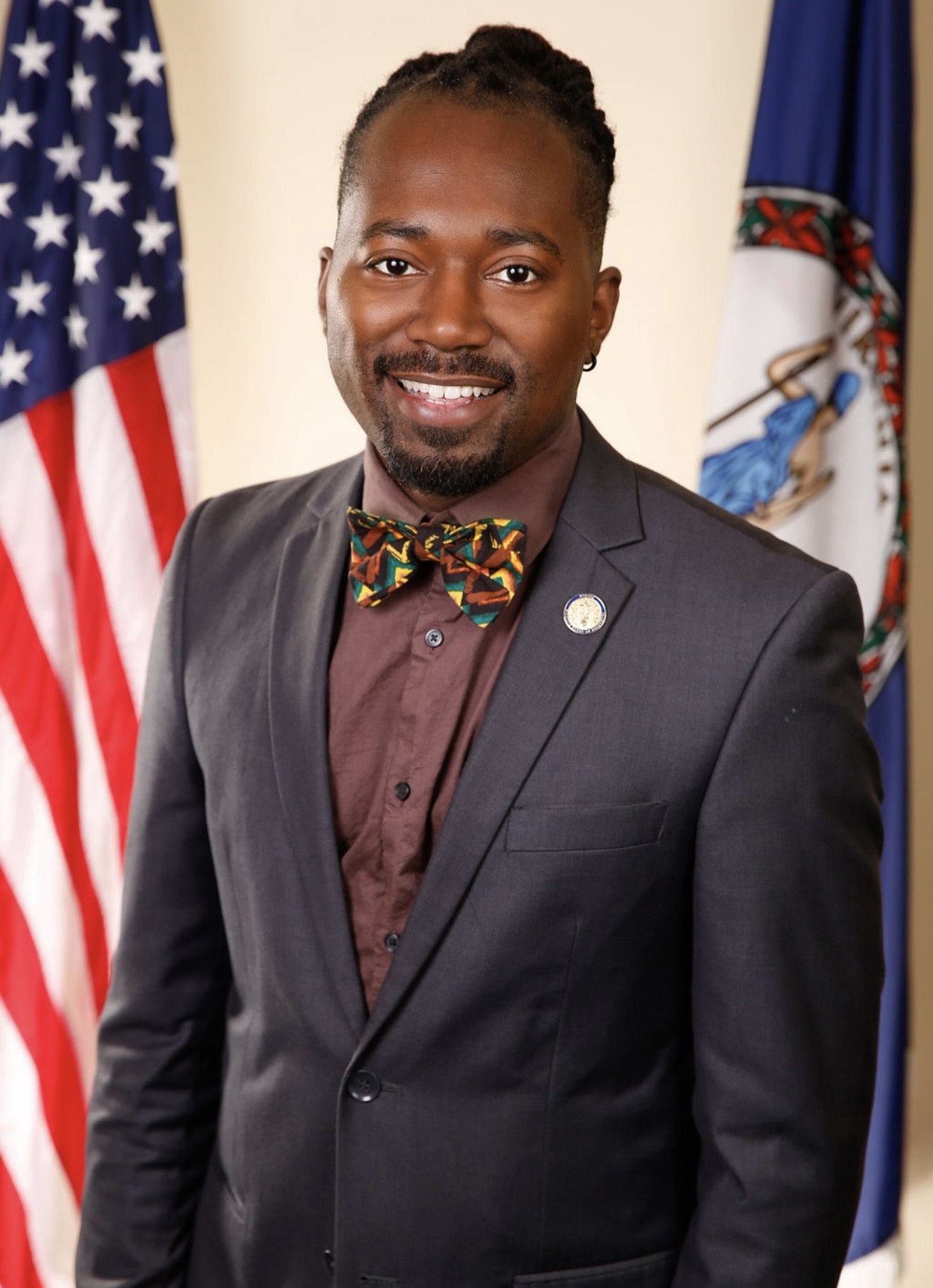
Del. Nadarius Clark
Sponsored bills
Constitutional amendment (voter referendum); qualifications of voters; right to vote; persons not entitled to vote. Provides for a referendum at the November 3, 2026, general election to approve or reject an amendment that would provide for the fundamental right to vote in the Commonwealth, revise the qualifications of voters so that a person convicted of a felony is not entitled to vote during his period of incarceration but is automatically invested with the right to vote upon release from incarceration, and update the existing prohibition on voting by persons found to be mentally incompetent to instead apply to persons who have been found to lack the capacity to understand the act of voting. This bill is identical to SB 6.
Admission to bail; fixing terms of bail; mental health considerations. Requires the judicial officer, prior to conducting any hearing on the issue of bail, release, or detention, to obtain the person's criminal history and any emergency custody or temporary detention order or involuntary admission issued for such person. The bill also requires the judicial officer to consider any emergency custody or temporary detention order or involuntary admission issued for the person when determining admission to bail. Lastly, the bill requires the judicial officer to take into account the following factors in fixing the terms of bail if such person is admitted to bail: (i) whether the person is likely to obstruct or attempt to obstruct justice, or threaten, injure, or intimidate, or attempt to threaten, injure, or intimidate a family or household member as defined in relevant law; (ii) the history of the accused or juvenile, including medical, mental health, including any emergency custody or temporary detention order or involuntary admission issued pursuant to relevant law, or substance abuse treatment; (iii) any evidence the person provided indicating that such person (a) is currently pregnant, (b) has recently given birth, or (c) is currently nursing a child; and (iv) whether such person will be an unreasonable danger to himself, family or household members as defined in relevant law, or the public.

Department of Workforce Development and Advancement; accreditation of nondegree workforce training programs. Directs the Department of Workforce Development and Advancement to establish an accreditation pathway for nondegree workforce training programs in order to align the skills of the Commonwealth's workforce with the needs of industry in the Commonwealth and to provide a workforce entrance pathway for underserved populations in the Commonwealth. The bill includes minimum standards, admissions requirements, and reporting requirements for such programs. Additionally, the bill includes provisions related to the eligibility of accredited programs for state and federal workforce funding, including the federal Workforce Pell Grant.
Elections; polling places; prohibited activities; acts in furtherance of federal immigration laws. Prohibits any person from performing any act for the purpose or in furtherance of enforcement of federal immigration laws within 40 feet of any building, or part thereof, used as (i) a polling place, (ii) a meeting place for the local electoral board while the electoral board meets to ascertain the results of an election, or (iii) the place for a recount.
School breakfast; availability at no cost to students. Requires each school board to require each public elementary and secondary school in the local school division to participate in the federal National School Lunch Program and the federal School Breakfast Program administered by the U.S. Department of Agriculture and to make breakfast available to any student who requests such a meal at no cost to the student, unless the student's parent has provided written permission to the school board to withhold such a meal from the student. The bill clarifies that the provision of a breakfast by a school to a student at no cost to the student shall not be construed as creating a disincentive for the school or local school division to participate in the federal Community Eligibility Provision program. Additionally, the bill provides that schools shall maximize the number of students who participate in the school breakfast program by implementing one or more suggested service models to increase access to such program. The bill requires the Department of Education to reimburse each public elementary and secondary school for each eligible school breakfast served to a student, with a maximum of one reimbursable breakfast per student per school day, and provides the formula for determining the state reimbursement rate for such meals. Finally, the bill repeals a provision of law relating to the federal School Breakfast Program that is rendered obsolete by the provisions of the bill. This bill is a recommendation of the Virginia Commission to End Hunger.
Protected areas; certain federal immigration enforcement prohibited; penalty. Prohibits any employee or agent acting on behalf of a protected area from knowingly permitting any person to enter a nonpublic area of such protected area for the purpose of federal immigration enforcement. The bill defines protected area as any place or facility that is owned or operated by the Commonwealth or any political subdivision thereof and is (i) a hospital or other facility providing health care services; (ii) a school, including a preschool, primary school, or secondary school, vocational or trade school, or public institution of higher education; (iii) an office of an attorney for the Commonwealth; or (iv) any other place or facility designated by the Attorney General. The bill creates a Class 1 misdemeanor for any violation of such provision, subject to certain exceptions. The bill also makes the performance of certain acts for the purpose of identifying, arresting, or otherwise imposing a penalty upon a person for federal immigration enforcement punishable by a Class 1 misdemeanor.
Electric Vehicle Rural Infrastructure Program and Fund created. Creates the Electric Vehicle Rural Infrastructure Program and Fund to assist private developers with non-utility costs associated with the installation of electric vehicle charging stations (i) in certain localities; (ii) on eligible public land, as defined in the bill; or (iii) within one mile of the boundary of eligible public land. The bill provides that a private developer may apply for a grant in an amount equal to 70 percent of the private developer's non-utility costs for the installation of such public electric vehicle charging stations. The awarding of a grant under the Program is conditional upon an agreement with the applicant that any cost of a project not funded by a grant awarded by the Program be funded by non-federal funds. The bill directs the Department of Energy to establish guidelines for the administration of the Program, including guidelines related to the application for and award of grants. The bill has an expiration date of July 1, 2031.
Agencies of the Commonwealth; law-enforcement agencies; employees and officers; agreements with federal authority for immigration enforcement; prohibitions and limitations. Prohibits a state agency or a law-enforcement agency, defined in the bill, from entering into a written agreement authorizing any employee or law-enforcement officer to perform a function of a federal immigration officer. The bill provides that federal immigration laws shall be enforced by a state or local law-enforcement agency of the Commonwealth pursuant to a valid judicial warrant, federal or statutory regulations, or as otherwise required by state law. The bill also prohibits an employee of a state agency or a law-enforcement officer, defined in the bill, from conducting certain actions or inquiries regarding a person's citizenship or immigration status while engaged in the performance of his duties and creates a cause of action for appropriate equitable, injunctive, or declaratory relief against such employee or law-enforcement officer who willfully conducts such actions or inquiries in violation of the provisions of the bill. Finally, the bill requires any state agency or law-enforcement agency that has an existing written agreement with a federal authority to perform federal immigration functions to terminate such written agreement by September 1, 2026.
Middle Eastern and North African Advisory Board established. Establishes the Middle Eastern and North African Advisory Board in the executive branch for the purpose of advising the Governor on ways to develop economic, professional, cultural, educational, and governmental links between the Commonwealth and the Middle Eastern and North African community in Virginia. The bill provides for the expiration of the advisory board on June 30, 2029.