

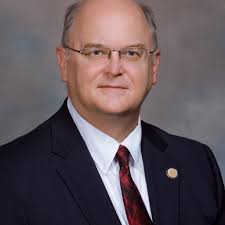
Maddy summaryThis bill is a commemorative resolution honoring the life of the Honorable Charles Douglas Poindexter. It does not create new laws or policies but serves to formally recognize his contributions and legacy. The measure has been passed by both the House and Senate and is awaiting final approval.
Sponsored bills
Maddy summaryThis bill is a commendation resolution honoring the Brunswick Academy football team. It does not create new laws, allocate funding, or change policy, but rather serves as a formal recognition of the team's achievements. The measure was passed by both the House and Senate through voice votes and has no substantive legal effect beyond expressing appreciation.
Maddy summaryThis bill formally recognizes the Virginia Hospital & Healthcare Association for its contributions to the state's healthcare system. It does not change laws, allocate funds, or create new regulations, but instead serves as an official commendation. The measure was passed by both the House and Senate through voice votes without requiring a formal ballot. This type of legislation is ceremonial and does not have direct policy impact on healthcare operations or funding.
Maddy summaryHJ 165 is a ceremonial resolution honoring Lieutenant Colonel Richard Thomas Bulova of the U.S. Army Reserve (USAR). It formally recognizes his service and life through a legislative expression of respect. This resolution directly affects no individuals or policies, as it has no legal effect beyond the symbolic act of commemoration. The bill passed both the House and Senate in early March 2026 as a non-binding gesture of tribute.
Maddy summaryHJ 131 is a ceremonial resolution commending the Honorable S. Bernard Goodwyn for his service. It does not create any new laws or affect policies, as it is a formal expression of recognition. The resolution passed unanimously in both the House (by voice vote) and Senate (by voice vote) in February 2026. This type of resolution honors individuals without implementing substantive changes.
Maddy summaryHJ 177 is a ceremonial resolution honoring the late Honorable Barry D. Knight, a former state official. It has no policy provisions or direct impact on constituents, as it solely commemorates his life and service. The resolution was unanimously adopted by the Senate on February 26, 2026, following standard procedural steps for commemorative measures. This type of resolution does not create law or affect any legal rights or obligations.
Drug Control Act; Schedule I; penalties. Adds certain chemicals to Schedule I of the Drug Control Act. The Board of Pharmacy has added these substances in an expedited regulatory process. A substance added via this process is removed from the schedule after 18 months unless a general law is enacted adding the substance to the schedule.
Collaborative agreements; practitioners; diagnosis. Removes registered nurses from the list of practitioners whose diagnoses may form the basis of drug therapy conducted pursuant to a collaborative agreement between a practitioner and a pharmacist.
Motor vehicles; use of safety belt systems; certain persons exempt. Exempts from the requirements for the use of safety belt systems emergency medical services personnel while in the patient compartment of an emergency medical services vehicle providing necessary care, as defined in the bill, to a patient. The bill provides that, for seats that are subject to such requirements for the use of safety belt systems, such personnel shall use safety belt systems while the vehicle is in motion and such personnel is not providing necessary care to a patient. The bill also changes the existing exemption for law-enforcement agency personnel driving motor vehicles to enforce laws governing motor vehicle parking to an exemption for law-enforcement officers driving motor vehicles to enforce laws governing motor vehicle parking. This bill incorporates HB 233.
Board of Medicine; office-based buprenorphine treatment; counseling. Directs the Board of Medicine to amend its regulations regarding office-based buprenorphine treatment to require providers to offer counseling or referral to counseling to each patient as clinically necessary and mutually agreed-upon. The bill specifies that a patient's refusal of counseling does not preclude the patient from receiving office-based buprenorphine treatment for opioid use disorder. This bill is a recommendation of the Joint Commission on Health Care and is identical to SB 641.