

In committee Jul 8, 2019
1 co-sponsor
Total votes
3,248
all sessions
Attendance
100%
of floor votes
Near the chamber average
With party
97%
of cast votes
Near the chamber average
Bipartisan score
1%
crosses aisle rarely
Lower than 82% of chamber peers
Sponsored
259
bills & resolutions
Near the chamber average
Committees
0
assignments
259 bills and resolutions
Sponsored bills
Total
259
Primary
58
Co-sponsor
201
This page
259
matching current filters
Felony homicide; certain drug offenses, penalty.
Provides that a person is guilty of felony homicide, which constitutes second degree murder and is punishable by confinement of not less than five nor more than 40 years, if the underlying felonious act that resulted in the killing of another involved the manufacture, sale, gift, or distribution of a Schedule I or II controlled substance to another and (i) such other person's death results from his use of the controlled substance and (ii) the controlled substance is the proximate cause of his death. The bill provides that venue for a prosecution of this crime shall lie in the locality where the underlying felony occurred, where the use of the controlled substance occurred, or where death occurred. The bill also provides that if a person gave or distributed a Schedule I or II controlled substance only as an accommodation to another individual who is not an inmate in a community correctional facility, local correctional facility, or state correctional facility, or in the custody of an employee thereof, and not with intent to profit thereby from any consideration received or expected nor to induce the recipient of the controlled substance to use or become addicted to or dependent upon such controlled substance, he is guilty of a Class 5 felony.
Vetoed May 2, 2019
1 co-sponsor
Constitutional amendment; Virginia Redistricting Commission (first reference).
Establishes the Virginia Redistricting Commission, a 16-member Commission tasked with establishing districts for the United States House of Representatives and for the Senate and the House of Delegates of the General Assembly. The Commission consists of eight legislative members and eight citizen members. The legislative members consist of four members of the Senate of Virginia and four members of the House of Delegates, with equal representation given to the political parties having the highest and next highest number of members in their respective houses. The citizen members are selected by a selection committee consisting of five retired judges of the circuit courts of Virginia, from lists submitted to the selection committee by the Speaker of the House of Delegates, the leader in the House of Delegates of the political party having the next highest number of members in the House of Delegates, the President pro tempore of the Senate of Virginia, and the leader in the Senate of the political party having the next highest number of members in the Senate. The Commission is required to submit to the General Assembly plans of districts for the Senate and the House of Delegates of the General Assembly no later than 45 days following the receipt of census data and plans of districts for the United States House of Representatives no later than 60 days following the receipt of census data, or July 1 of that year, whichever occurs later. The measure requires certain vote thresholds for plans, depending on the type of district, in order to be submitted to the General Assembly. No amendments may be made to a plan by the General Assembly or the Governor. The measure requires additional plans to be submitted, or additional time to be given to submit a plan, in certain circumstances, and further provides that districts will be drawn by the Supreme Court of Virginia if such efforts fail.
Failed Mar 26, 2019
1 co-sponsor
Motor vehicle dealers; manufacturers and factory branch transfers, etc.
Provides that if a motor vehicle manufacturer or factory branch discontinues, sells, or transfers its right to manufacture a line-make of motor vehicles, and the acquiring manufacturer or factory branch does not honor an existing franchise agreement with motor vehicle dealers in Virginia, such discontinuation, sale, or transfer shall constitute a termination of the franchise and such motor vehicle dealers shall be entitled to compensation pursuant to Virginia law. The bill provides that a manufacturer or distributor's right to first refusal in the event of a proposed sale or transfer of a dealership does not apply if such sale or transfer is not to a dealer licensed anywhere in the United States as a dealer holding a franchise from any manufacturer or to a distributor licensed as a manufacturer or distributor in the Commonwealth unless the exercise of such right of first refusal by a manufacturer or distributor with a program promoting minority dealers would lead to a minority dealer having a majority ownership of a dealership. The bill exempts certain manufacturers and distributors from the limitations on the right of first refusal.
Signed into law Mar 21, 2019
1 co-sponsor
Oyster planting grounds; municipal dredging projects.
Extends the duration of an exception, for municipal dredging, to the right of a person to lease oyster-planting grounds, and establishes a procedure for determining compensation to such a leaseholder when his grounds are disturbed by such a dredging project.
Signed into law Mar 21, 2019
0 co-sponsors
Corrections, Board of; minimum standards for health care services in local correctional facilities.
Authorizes the Board of Corrections (Board) to establish minimum standards for health care services in local, regional, and community correctional facilities and procedures for enforcing such minimum standards, with the advice of and guidance from the Commissioner of Behavioral Health and Developmental Services and State Health Commissioner. The bill provides that (i) such standards shall require that each local, regional, and community correctional facility submit a standardized quarterly continuous improvement report documenting the delivery of health care services, along with any improvements made to those services, to the Board and (ii) such reports shall be available to the public on the Board's website. The bill also authorizes the Board to determine that a local, regional, or community correctional facility accredited by the American Correctional Association or National Commission on Correctional Health Care meets such minimum standards solely on the basis of such accreditation; however, without exception, the requirement to submit standardized quarterly continuous quality improvement reports shall be a mandatory minimum standard. This bill is a recommendation of the Joint Commission on Health Care. This bill is identical to
Signed into law Mar 21, 2019
0 co-sponsors
Coal combustion residuals impoundment; closure of certain CCR units.
Requires the owner or operator of any coal combustion residuals (CCR) unit, defined in the bill to include a coal ash pond or landfill, within the Chesapeake Bay watershed at Bremo Power Station, Chesapeake Energy Center, Chesterfield Power Station, and Possum Point Power Station to close such CCR unit by removing all of the CCR for (i) recycling, known as encapsulated beneficial use, or (ii) deposition in a permitted and lined landfill that meets certain federal standards. The measure requires that any owner or operator beneficially reuse no less than 6.8 million cubic yards in aggregate of such removed CCR from no fewer than two of the sites. Such a closure project shall be completed within 15 years of its initiation and shall be accompanied by an offer by the owner or operator to provide connection to a municipal water supply for every residence within one-half mile, or if such connection is not feasible, the owner or operator shall offer to provide water testing for any such residence.
Signed into law Mar 19, 2019
1 co-sponsor
School board employees; discipline, private reprimand.
Requires the Board of Education to include, in its regulations that prescribe the requirements for the licensure of teachers and other school personnel required to hold a license, procedures for the a written reprimand of such license holders. The bill permits the Board of Education to issue written reprimand to any such license holder who knowingly and willfully commits a certain enumerated act relating to secure mandatory tests administered to students. The only express disciplinary actions that are permissible under current law in such a scenario are suspension or revocation of such individual's license. The bill also permits a school board or division superintendent to issue a written reprimand to a teacher who breaches his employment contract after the school board or division superintendent declines to grant such teacher's request for release from such contract on the grounds of insufficient or unjustifiable cause. The only express disciplinary action that is permissible under current law in such a scenario is revocation of such teacher's license.
Signed into law Mar 18, 2019
1 co-sponsor
School and Campus Safety, Virginia Center for; threat assessment, case management tool.
Requires the Virginia Center for School and Campus Safety to develop a case management tool for use by public elementary and secondary school threat assessment teams and requires such threat assessment teams to use such tool to collect and report to the Center quantitative data on its activities. This bill is identical to
Signed into law Mar 18, 2019
1 co-sponsor
New Economy Workforce Credential Grant Fund and Program; grant priority.
Requires the State Council of Higher Education for Virginia, in awarding grants pursuant to the New Economy Workforce Credential Grant Program, to give priority to institutions that offer noncredit workforce training programs in high-demand fields in which employer demand is currently unmet by the available workforce.
Signed into law Mar 18, 2019
0 co-sponsors
Ask Maddy
·
AI policy assistant
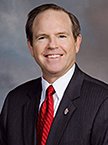
Ask Maddy about Christopher P. Stolle
Scope: virginia
Hi! I can help you understand Christopher P. Stolle's legislative record. What would you like to know?
Try one of these
i
Maddy answers using official bill text and legislative records. Always verify before sharing.
Sources cited inline