

Department of Environmental Quality; Department of Health; PFAS; identification; monitoring; PFAS Expert Advisory Council established; report. Requires, for every public water system, as defined in the bill, the Department of Health (VDH) to assist the Department of Environmental Quality (the Department) by transferring to the Department quarterly all validated monitoring results available to VDH that indicate PFAS maximum containment level, as defined in the bill, exceedances. In such circumstances, the bill provides that the Department is required to develop and implement a plan to prioritize and conduct PFAS assessments for identifying significant sources of PFAS in such public water system's raw water source or sources. The bill requires any facility, if deemed by the Department to be a potentially significant source of PFAS in the public water system's raw water source, (i) to perform and promptly report the results of quarterly discharge monitoring for one year and (ii) to report to the Department, within 90 days after being directed by the Department, its manufacture or use of PFAS. The bill establishes a PFAS Expert Advisory Committee to assist the Department and VDH in its PFAS-related efforts and requires the Committee to meet at least two times per year through June 30, 2027. The bill requires the Department to annually report certain information to the Governor and the General Assembly by October 1. This bill incorporates HB 245 and is identical to SB 243.
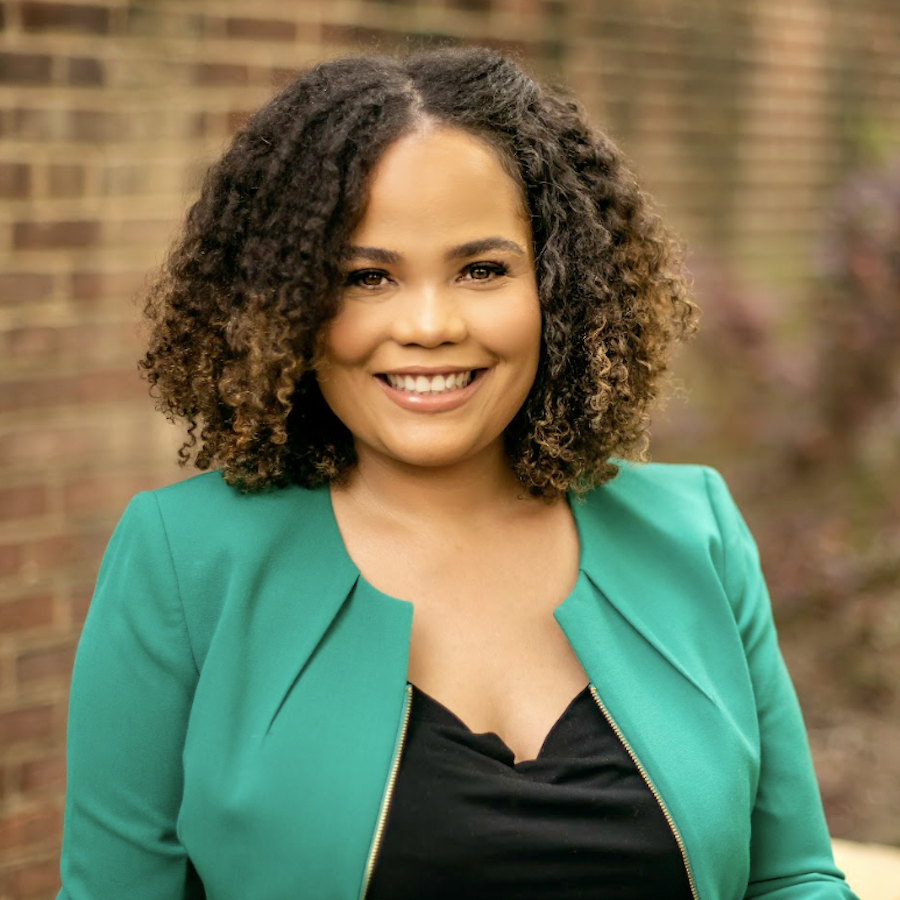
Del. Rae Cousins
Sponsored bills
Early childhood care and education; child day programs; use of office buildings; waiver of zoning requirements. Permits any locality to by ordinance provide for the waiver of any requirements for zoning permits for the operation of a child day program in an office building, as defined by the bill, provided that such facility satisfies the requirements for state licensure as a child day program. This bill is identical to SB 13.
Unemployment compensation; employer failure to respond torequests for information; claim determination; notice requirements.Provides that an employer's failure to respond timely or adequately to a writtenrequest for information relating to an unemployment claim results in a waiverof all of such employer's rights in connection with the claim, includingparticipation and appeal rights, unless such employer demonstrates that goodcause exists for such failure. The bill requires the Virginia EmploymentCommission to provide written notice for each instance of untimely orinadequate employer response to such requests and specifies that such noticemay be delivered through the Employer Self-Service Tax System websitemaintained by the Commission. The bill also requires the Commission to provideeach employer with information regarding deadlines for timely and adequateresponses to such requests. Such provisions of the bill apply to erroneouspayments established on or after July 1, 2024. The bill also prohibits a deputydesignated by the Commissioner to adjudicate unemployment claims from examiningor considering facts contained within an employer's untimely or inadequateresponse and requires that information or evidence from an employer or thirdparty must be shared with the claimant, who must also be provided a reasonableopportunity to review and respond to such information or evidence. The billrequires such deputy to provide the reasoning behind the decision, as describedin the bill, and a short statement of case-specific facts material to thedetermination together with any notice of determination upon a claim. This billis a recommendation of the Commission on Unemployment Compensation.
Center for Rural Virginia; name change. Renames the Center for Rural Virginia as the Senator Frank M. Ruff, Jr. Center for Rural Virginia. This bill is identical to SB 704.
Manufacture, importation, sale, etc., of auto sears; prohibition; penalty. Prohibits the manufacture, importation, sale or offer to sell, possession, transfer, or transportation of an auto sear, defined in the bill as a device, other than a trigger activator, for use in converting a semi-automatic firearm to shoot automatically more than one shot, without manual reloading, by a single function of the trigger. A violation is punishable as a Class 6 felony. The bill also provides for the forfeiture of any auto sear concealed, possessed, transported, or carried in violation of the prohibition. This bill is identical to SB 210.
Abuse and neglect of children; causing or enabling child to gain possession of a firearm; penalty. Creates a Class 5 felony for any parent, guardian, or other person who is 18 years of age or older and is responsible for the care of a child under the age of 18 whose willful act or omission causes or enables that child to gain possession of a firearm (i) after having received notice of a preliminary determination, pursuant to relevant law, that such child poses a threat of violence or physical harm to self or others or (ii) when such parent, guardian, or other person responsible for the care of the child knows or reasonably should know that such child has been charged with, either by warrant or petition, convicted of, or adjudicated delinquent of a violent juvenile felony. The bill provides that no person shall be subject to arrest or prosecution regarding knowledge of a preliminary threat determination if such person received notice that the threat assessment team concluded that the child does not indicate a threat of violence or physical harm to self or others or that any case or review opened or conducted by that threat assessment team as a result of such preliminary determination has been closed. The bill also provides that no person shall be subject to arrest or prosecution if such person has received notice that any pending charge for a violent juvenile felony has been dismissed or a nolle prosequi has been entered. The bill provides an affirmative defense to prosecution if the parent, guardian, or other person responsible for the care of a child caused or enabled such child to gain possession of a firearm while in a dwelling because of a reasonable belief that he or such child was in imminent danger of bodily injury. Lastly, the bill provides that the new offense is eligible for the enhanced earned sentence credits. This bill is identical to SB 44.
Use of canines in correctional and juvenile correctional facilities; prohibited acts. Makes it unlawful for any correctional officer or other employee of a state correctional facility who is permitted to handle canines to use a patrol or security canine in any state correctional facility unless such correctional officer or other employee (i) reasonably believes that the use of a patrol or security canine is immediately necessary to protect any prisoner or any officer or employee from the threat of serious bodily injury or death or (ii) has the prior approval of the warden or a supervisor to use a patrol or security canine to intervene in an altercation, fight, or other incident between three or more prisoners. The bill also makes it unlawful for any juvenile correctional officer or other employee of a juvenile correctional facility to use a patrol or security canine in any juvenile correctional facility. The bill specifies that such provisions shall not apply to the training or use of detector canines or detector canine handlers.
Public school funding; At-Risk Program established. Establishes the At-Risk Program, defined in the bill as any state funding provided for programs of prevention, intervention, or remediation or pursuant to the at-risk add-on for the purpose of supporting programs for students who are educationally at risk. The bill requires (i) the determination of the amount of state funding for which a school division is eligible pursuant to the At-Risk Program to be based on the school division's identified student percentage, defined in the bill as the fraction, expressed as a percentage, that results from dividing the number of identified students enrolled in a school division by the total number of students enrolled in such school division, weighted by the factor of 1.5, and then adjusted by the addition of a percentage that corrects for undercounting English language learner students as identified students and (ii) such funding to be distributed as follows: 60 percent on a flat per-student rate and 40 percent on a variable rate set out in the general appropriation act based on the concentration of poverty in the school division. The bill provides that any school division that would have received more state funds for the at-risk add-on and programs of prevention, intervention, or remediation than it would pursuant to the consolidation of such state funding sources under the At-Risk Program established in the bill shall be held harmless and shall not have its share of such state funding reduced, effective for the 2024–2025 school year through the 2026–2027 school year.
Commending the Honorable L. Kaye Kory.
Employee Child Care Assistance Program and Fund; established. Establishes the Employee Child Care Assistance Programand Fund to provide matching funds to in order to incentivize employersto contribute to the child care costs of their employees. To participatein the program, an employer is required to enter into an agreementwith its employee and an eligible mixed-delivery provider, definedin the bill, to make child care contributions to the eligible mixed-deliveryprovider on behalf of the employee, and the Department of Educationwill issue a state match directly to such eligible mixed-deliveryprovider or to a third-party administrator. The bill provides thatthe state match shall not exceed 100 percent of the employer contributionmade by an employer on behalf of an employee whose annual gross wagesare equal to or less than the local median household income, definedin the bill, and shall not exceed 80 percent of the employer contributionmade by an employer on behalf of an employee whose annual gross wagesare greater than the local median household income. The bill requiresthat 25 percent of the Fund be used to provide state matching fundsfor employees of small businesses.