

Replacement of trees during development process in localities; tree canopy fund. Allows localities by ordinance to establish a tree canopy fund to collect, maintain, and distribute fees collected from developers that cannot provide for full tree canopy requirements where the development project is situated. The bill requires the ordinance to establish cost units that are based on average costs of two-inch caliper nursery stock trees. The bill allows a locality to use moneys from the fund to (i) plant and maintain trees on public or private property or (ii) make disbursements to a community-based organization that is exempt from income tax pursuant to § 501(c)(3) of the Internal Revenue Code and is operated for tree planting, stewardship, or community-beautification missions that benefit the community at large. The bill requires any funds collected by localities to be spent within five years of the collection date.
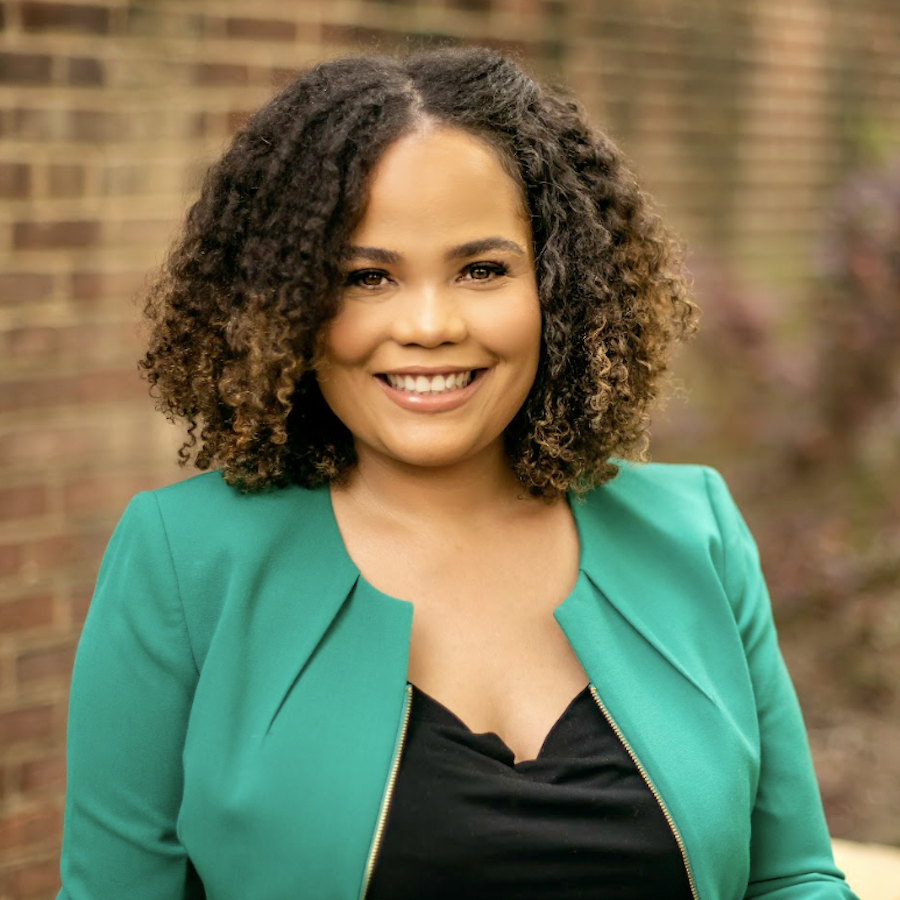
Del. Rae Cousins
Sponsored bills
Department of Human Resource Management; hiring on the basis of direct experience. Prohibits any state agency from requiring as a condition of eligibility for hire to a position in state employment that an applicant have a baccalaureate degree. The bill provides an exception to such prohibition if the knowledge, skills, or abilities required for the position for which an applicant is applying can only reasonably be obtained, as determined by the appointing authority, through a course of study in pursuit of, and culminating in the award of, a baccalaureate degree. This bill is identical to SB 1014.
Constitutional amendment (first reference); qualifications of voters; right to vote; persons not entitled to vote. Provides that every person who meets the qualifications of voters set forth in the Constitution of Virginia shall have the fundamental right to vote in the Commonwealth and that such right shall not be abridged by law, except for persons who have been convicted of a felony and persons who have been adjudicated to lack the capacity to understand the act of voting. A person who has been convicted of a felony shall not be entitled to vote during any period of incarceration for such felony conviction, but upon release from incarceration for that felony conviction and without further action required of him, such person shall be invested with all political rights, including the right to vote. Currently, in order to be qualified to vote a person convicted of a felony must have his civil rights restored by the Governor or other appropriate authority. The amendment also provides that a person adjudicated by a court of competent jurisdiction as lacking the capacity to understand the act of voting shall not be entitled to vote during this period of incapacity until his capacity has been reestablished as prescribed by law. Currently, the Constitution of Virginia provides that a person who has been adjudicated to be mentally incompetent is not qualified to vote until his competency is reestablished.
Use of restraints on juveniles in court prohibited; exceptions. Prohibits the use of instruments of restraint, as defined in the bill, on a juvenile appearing before the juvenile and domestic relations district court unless, upon motion of the attorney for the Commonwealth or on the court's own motion sua sponte, the court makes a finding that (i) the use of such restraints is necessary (a) to prevent physical harm to such juvenile or another person, (b) because such juvenile has a history of disruptive courtroom behavior that has placed others in potentially harmful situations or presents a substantial threat of serious harm to himself or others as evidenced by recent behavior, or (c) because such juvenile presents a substantial risk of flight from the courtroom and (ii) there are no less restrictive alternatives to such restraints that will prevent flight of or harm to such juvenile or another person, including court personnel or law-enforcement officers. The bill provides that the juvenile shall be entitled to an attorney prior to a hearing on the use of instruments of restraint. The bill also requires the court to provide the juvenile's attorney an opportunity to be heard before the court orders the use of instruments of restraint, and the juvenile's attorney may waive the juvenile's appearance at such hearing. Lastly, the bill requires the court, if such restraints are ordered, to communicate to the parties the basis of the decision either orally or in writing. This bill is identical to SB 1255.
Deferred or installment payment agreements; minimum payments. Provides that if the defendant requests to enter into an installment agreement, the court may offer installment payments of (i) $25 per month, or a higher amount, depending upon a defendant's ability to pay or (ii) less than $25 per month if the defendant is determined to be indigent.
Maddy summaryHJ 659 is a ceremonial resolution commending Mekhi Becton, Sr., for his contributions to the community. It does not create new laws, alter policies, or directly affect any individuals or groups beyond expressing legislative recognition. The resolution passed unanimously in the Senate via voice vote after being introduced and quickly advanced through procedural steps. As a non-binding resolution, it serves only to honor an individual and has no legal or practical impact on governance or public policy.
Campaign finance; prohibited personal use of campaign funds; complaints, hearings, civil penalty, and advisory opinions. Prohibits any person from converting contributions to a candidate or his campaign committee for personal use. Current law only prohibits such conversion of contributions with regard to disbursement of surplus funds at the dissolution of a campaign or political committee. The bill provides that a contribution is considered to have been converted to personal use if the contribution, in whole or in part, is used to fulfill any commitment, obligation, or expense that would exist irrespective of the person's seeking, holding, or maintaining public office but allows a contribution to be used for the ordinary and accepted expenses related to campaigning for or holding elective office, including the use of campaign funds to pay for the candidate's dependent care expenses that are incurred as a direct result of campaign activity. The bill provides that any person subject to the personal use ban may request an advisory opinion from the State Board of Elections on such matters. The foregoing provisions of the bill have a delayed effective date of July 1, 2026. The bill directs the State Board of Elections to adopt emergency regulations similar to those promulgated by the Federal Election Commission to implement the provisions of the bill and to publish an updated summary of Virginia campaign finance law that reflects the State Board of Elections' and Attorney General's guidance on the provisions of such law that prohibit the personal use of campaign funds and any new regulations promulgated by the State Board of Elections. This bill incorporates HB 1686 and is identical to SB 1002.
Use of Virginia crime code in documents for jailable offenses; Virginia Criminal Sentencing Commission. Provides that the Virginia Criminal Sentencing Commission shall develop, maintain, and modify the Virginia crime codes used in documents for jailable offenses as may be deemed necessary. This bill is a recommendation of the Virginia Criminal Sentencing Commission.
Institutions of higher education; Hunger-Free Campus Food Pantry Grant Program established; report. Establishes the Hunger-Free Campus Food Pantry Grant Program to address student food insecurity at public institutions of higher education and eligible private institutions of higher education, as defined by the bill. The bill provides that the Program shall be managed by the State Council of Higher Education for Virginia and available for participation by public institutions of higher education and eligible private institutions of higher education; however, participation in the Program is optional for such institutions. Under the bill, if a public institution of higher education or eligible private institution of higher education satisfies certain criteria set out in the bill, including creating initiatives on campus to address student food insecurity, it will receive a "Hunger-Free Campus Food Pantry" designation and the Council will award a grant to such institution. Any such institution that receives a grant under the bill is required to utilize the funds to support on-campus efforts and initiatives to eliminate student food insecurity at such institution through the maintenance and operation of the on-campus food pantry established pursuant to the Program. The bill requires the Council to submit a report to the Chairmen of the Senate Committee on Education and Health and the House Committee on Education no later than two years after the establishment of the Program. This bill is identical to SB 1016.
Public schools; temporarily employed teachers; rules and requirements; extension of time limitation. Extends from 90 to 180 teaching days the maximum period of time during one school year for which a school board may employ a temporarily employed teacher, as defined in relevant law, to fill a teacher vacancy, with certain conditions and restrictions. The bill contains technical amendments. The bill has an expiration date of July 1, 2027, and is identical to SB 1230.