Abolition Day. Designating December 6,in 2021 and in each succeeding year, as Abolition Day in Virginia.
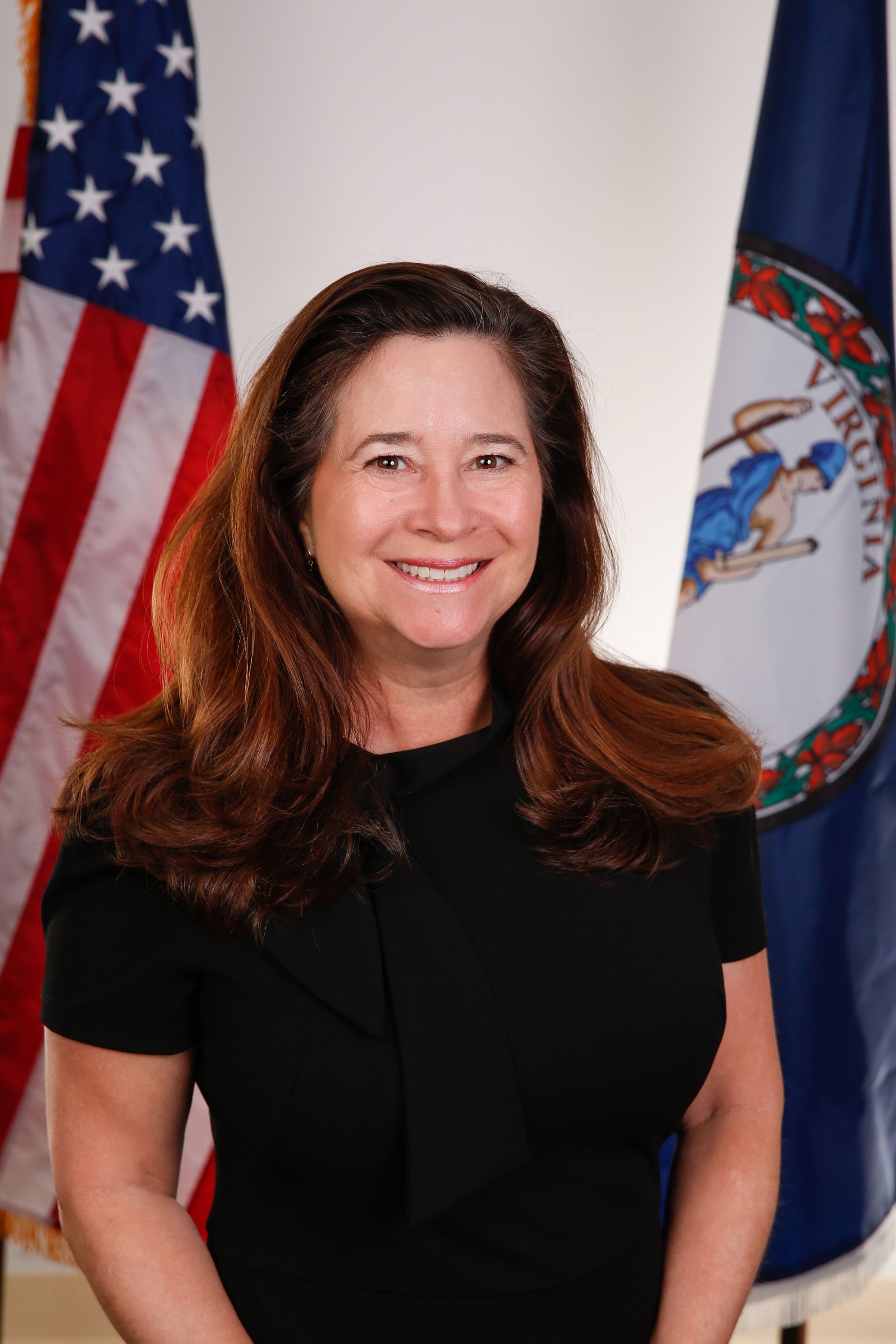
Del. Shelly Simonds
Sponsored bills
Study; efficacy of the Commonwealth's occupational licensing laws; construction trades; report. Establishesa joint subcommittee to (i) determine whether more requirements arenecessary to ensure all workers in relevant crafts are licensed,(ii) determine whether greater occupational licensing enforcementis necessary, (iii) determine whether the Commonwealth's occupationallicensing laws should apply to a broader scope of construction trades,and (iv) make recommendations for new laws or policies that wouldenhance the Commonwealth's occupational licensing regulations. Thejoint subcommittee is required to complete its meetings by November30, 2021, and to submit an executive summary of its findings andrecommendations no later than the first day of the 2022 Regular Sessionof the General Assembly.
Constitutional amendment (first reference);environmental justice. Establishes that it is the policy of theCommonwealth to follow the principles of environmental justice inthe development, implementation, and enforcement of environmentallaws, regulations, and policies and to ensure that no population,especially minority, low-income, or historically economically disadvantagedcommunities, faces higher levels or greater impacts of pollutionand climate change than other populations.
Alcoholic beverage control; local outdoor refreshment areas. Defines "outdoor refreshment area" and permits the governing body of any locality in the Commonwealth to designate, by ordinance, up to three outdoor refreshment areas within such locality. The bill provides that such ordinance would permit the consumption of alcoholic beverages within the outdoor refreshment area, provided that such alcoholic beverages are purchased from a permanent retail on-premises licensee located within such designated area and are contained in disposable containers with a maximum capacity of no more than 16 fluid ounces that clearly display the selling licensee's name or logo. The bill requires the locality, prior to adopting such an ordinance, to create a public safety plan for each outdoor refreshment area. This bill was incorporated into HB 2266.
Creation of Office of the Department of Corrections Ombudsman. Creates the Office of the Department of Corrections Ombudsman (the Office). The bill enumerates the duties and powers of the Office, which include (i) providing information, as appropriate, to inmates, family members, representatives of inmates, Department of Corrections employees and contractors, and others regarding the rights of inmates; (ii) monitoring conditions of confinement and assessing compliance with applicable federal, state, and local rules, regulations, policies, and best practices as related to the health, safety, welfare, and rehabilitation of inmates; (iii) providing technical assistance to support inmate participation in self-advocacy; (iv) providing technical assistance to local governments in the creation of correctional facility oversight bodies, as requested; (v) establishing a statewide uniform reporting system to collect and analyze data related to complaints received by the Department and data related to (a) deaths, suicides, and suicide attempts in custody; (b) physical and sexual assaults in custody; (c) the number of inmates placed in solitary confinement; (d) the number of facility lockdowns lasting longer than 24 hours; (e) the number of staff vacancies at each facility; (f) the inmate-to-staff ratios at each facility; (g) staff tenure and turnover; and (h) the number of in-person visits to inmates that were made and denied at each facility; (vi) establishing procedures to gather stakeholder input into the Office's activities and priorities, which must include, at a minimum, an annual 30-day period for receipt of and Office response to public comment; (vii) inspecting each state correctional facility at least once every three years and at least once every year for any maximum security facility and any facility where the Office has found cause for more frequent inspection or monitoring; and (viii) issuing publicly periodic facility inspection reports and an annual report with recommendations on the state correctional facilities and a summary of data and recommendations arising from any complaints investigated and resolved. The bill also establishes a Corrections Oversight Committee, which is responsible for selecting the Department of Corrections Ombudsman. The bill additionally outlines the Office's authority to conduct inspections of each Department or Board facility and requires the submission of an annual report to the Governor, the Attorney General, the Senate Committee on the Judiciary, the House Committee for Courts of Justice, and the Director of the Department. The bill also provides for the authority of the Office to conduct investigations of complaints made by inmates, family members or friends, and advocates.

School Equity and Staffing Act; Standards of Quality; work-based learning; teacher leaders and mentors; principal mentors; certain personnel positions and initiatives. Makes several changes to the Standards of Quality, including requiring the establishment of units in the Department of Education to oversee work-based learning and principal mentorship statewide in Standard 1 and requiring the Board of Education to establish and oversee the local implementation of teacher leader and teacher mentor programs in Standard 5. The bill also makes several changes relating to school personnel in Standard 2, including (i) establishing schoolwide ratios of students to teachers in certain schools with high concentrations of poverty and granting flexibility to provide compensation adjustments to teachers in such schools; (ii) requiring each school board to assign licensed personnel in a manner that provides an equitable distribution of experienced, effective teachers and other personnel among all schools in the local school division; (iii) requiring each school board to employ teacher leaders and teacher mentors at specified student-to-position ratios; (iv) requiring state funding in addition to basic aid to support at-risk students and granting flexibility in the use of such funds by school boards; (v) lowering the ratio of English language learner students to teachers; (vi) requiring each school board to employ reading specialists and establishing a student-to-position ratio for such specialists; (vii) requiring school boards to employ one full-time principal in each elementary school; (viii) lowering the ratio of students to assistant principals and school counselors in elementary, middle, and high schools; and (ix) requiring each school board to provide at least four specialized student support positions, including school social workers, school psychologists, school nurses, licensed behavior analysts, licensed assistant behavior analysts, and other licensed health and behavioral positions, per 1,000 students.
Virginia housing opportunity tax credit.Establishes, starting in taxable year 2021, a Virginia housing opportunitytax credit, which is equal to the amount of the federal low-incomehousing tax credit allocated or allowed by the Virginia Housing DevelopmentAuthority to a low-income building that is eligible for the federalcredit. The credit would be nonrefundable and could be carried forwardfor up to five years.
Cystic Fibrosis Awareness Month. DesignatesMay, in 2021 and in each succeeding year, as Cystic Fibrosis AwarenessMonth in Virginia.
Abolition of the death penalty. Abolishes the death penalty, including for those persons currently under a death sentence. This bill was incorporated into HB 2263.
Land banks; right of first refusal fortax delinquent parcels. Requires localities that have establisheda land bank to establish a procedure whereby the land bank shall have a right of first refusal for tax delinquent parcels prior tosuch property being sold at auction. The price for any such purchaseby the land bank shall be $1 and any court and transaction expenses.If a land bank exercises its right of first refusal to purchase aproperty from the locality and, in the judgment of the locality,fails to begin rehabilitation of the property or fails to take otheraction to cause reuse of the property within one year, such as transferringthe property to a nonprofit entity, ownership of the property shallrevert back to the locality. These provisions may be utilized forany parcel with a value that does not exceed 80 percent of the medianvalue of parcels in the locality.