

Environmental justice; interagency working group. Establishes the Interagency Environmental Justice Working Group as an advisory council in the executive branch of state government to further environmental justice in the Commonwealth and directs each of the Governor's Secretaries to designate at least one environmental justice coordinator to represent the secretariat as a member of the Working Group. The bill provides that the Working Group shall expire on July 1, 2031. The bill directs each state agency, no later than October 1, 2021, to adopt an agency-specific environmental justice policy that requires an evaluation of the environmental justice consequences of any covered agency action, requires a consideration of the environmental justice consequences or cumulative impacts of the administration of regulations, and contains other features, including robust public participation plans for residents of environmental justice communities and fenceline communities potentially affected by a covered agency action.
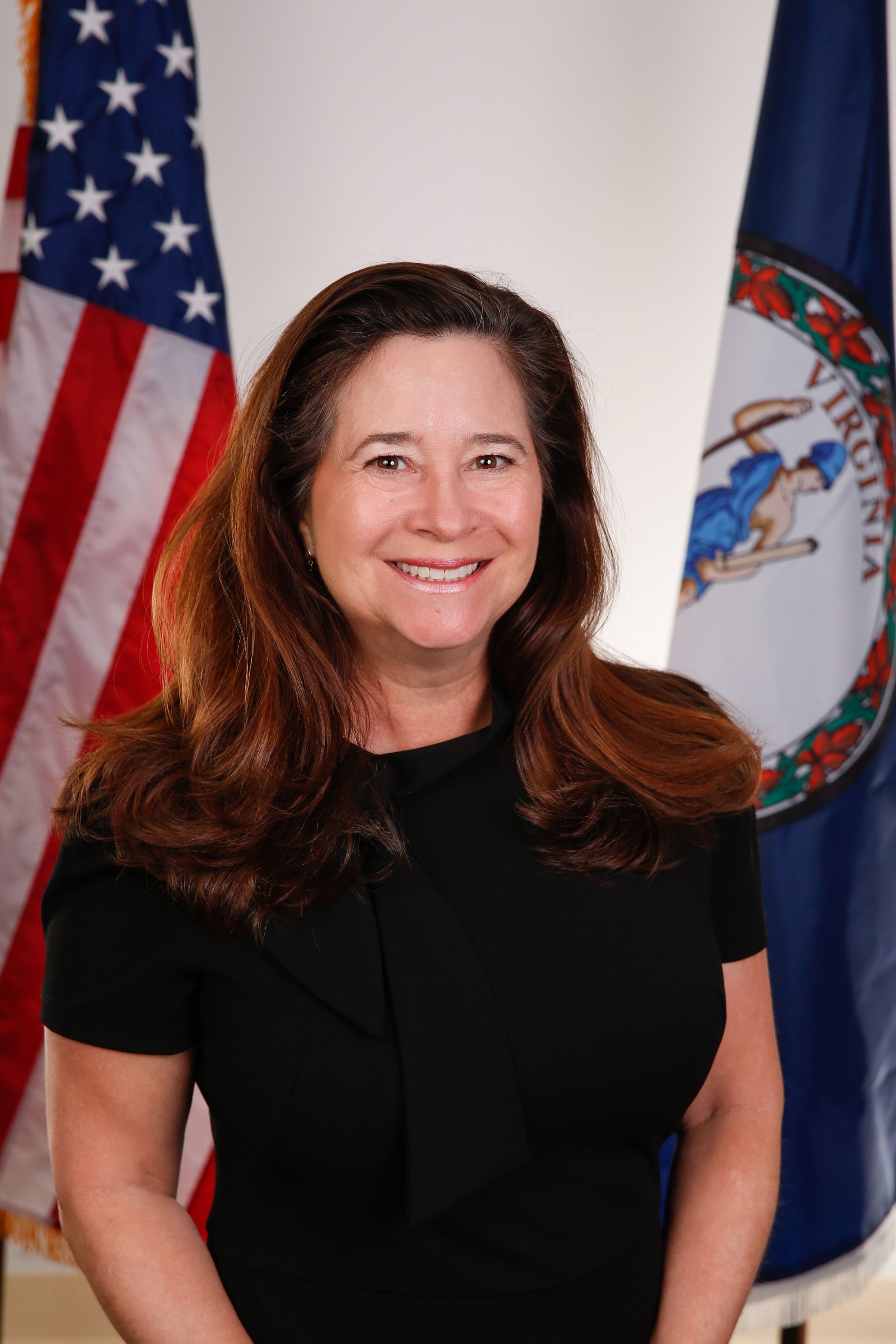
Del. Shelly Simonds
Sponsored bills
Virginia Public Procurement Act; construction contracts; requirement to submit list of subcontractors. Requires bidders or offerors on contracts for construction of $250,000 or more to submit along with their bid or proposal a list of all subcontractors, regardless of tier, that the bidder or offeror intends at the time of submitting the bid or proposal to use on the contract to perform work valued at $50,000 or more, including labor and materials. The bill requires such list to include certain information about each contractor. The bill also requires the bidder or offer to submit (i) a statement declaring that the bidder or offeror has reviewed the qualifications and performance history of each subcontractor and found such qualifications and performance history to be sufficient to qualify the subcontractor to perform the subcontract work and (ii) a statement indicating that the bidder or offeror has received a written statement from each subcontractor verifying that such subcontractor (a) has not defaulted on any projects within the last three years, (b) is not currently suspended or disbarred by any public body, and (c) is not currently in bankruptcy. The bill allows the public body to disqualify any listed subcontractors, but requires the public body to notify the bidder or offeror of such disqualification and allow the bidder or offeror reasonable time to find a qualified replacement. The bill provides that any bidder or offeror that does not submit the required list and statements may have its bid or proposal disqualified, and any bidder or offeror that is found to have knowingly provided false information pursuant to this section shall be debarred from contracting with any public body for a period of up to one year. The bill requires compliance with its provisions for bids or offers on contracts for construction of $250,000 or more with localities with a population in excess of 50,000, but provides that compliance is optional for bids or offers on contracts for construction of $250,000 or more with any other locality. The provisions of this bill do not become effective unless reenacted by the 2022 Session of the General Assembly.
Compensation Board determining staffing and salaries for an attorney for the Commonwealth. Provides that the Compensation Board shall consider workload totals comprehensively, including the use of diversion programs and specialty dockets, when determining staffing and funding levels for an attorney for the Commonwealth and the office. The provisions of the bill are contingent on funding in a general appropriation act.
Study; Department of Rail and Public Transportation; transit equity and modernization; report. Requests the Department of Rail and Public Transportation to conduct a two-year study of transit equity and modernization in the Commonwealth,with emphasis on transit services and engagement opportunities for underserved and underrepresented communities.
Campaign finance; prohibited personal use; child care exception. Prohibits any person from converting any moneys, securities, or like intangible personal property contributed to a candidate or a candidate's campaign committee to his personal use, the personal use of the candidate, or the personal use of a member of the candidate's immediate family. Current law prohibits such conversion of contributions to personal use specifically with regard to disbursement of surplus funds at the dissolution of a campaign or political committee. The bill provides that a contribution is considered to have been converted to personal use if the contribution, in whole or in part, is used to fulfill any commitment, obligation, or expense that would exist irrespective of the person's seeking, holding, or maintaining public office but excepts from "personal use" the ordinary and accepted expenses related to campaigning for or holding elective office, including the use of campaign funds to pay for the candidate's child care expenses that are incurred as a direct result of campaign activity. The bill directs the Attorney General to issue an advisory opinion explaining the provisions of the Campaign Finance Disclosure Act of 2006 (§ 24.2-945 et seq.) that prohibit the personal use of campaign funds. The bill directs the State Board of Elections to adopt emergency regulations to implement the provisions of the bill and to provide an updated summary of Virginia campaign finance law that reflects the Attorney General's opinion and any new regulations promulgated by the Board.
Virginia Freedom of Information Act; electronic meetings. Authorizes a public body to conduct through electronic communication means a meeting for which, on or before the day of the meeting, a member of the public body holding the meeting notifies the chair that such member is unable to attend the meeting due to a family member's medical condition that requires the member to provide care for such family member, thereby preventing the member's physical attendance. The bill also clarifies that participation in an electronic meeting by a member of a public body due to the inability to attend because of a personal matter is limited each calendar year to two such meetings, which is current law, or 25 percent of the meetings held that calendar year rounded up to the next whole number, whichever is greater. This bill is a recommendation of the Virginia Freedom of Information Advisory Council.
Public schools; lock-down drills; annual requirement. Reduces from three to two the minimum number of mandatory annuallock-down drills in each public elementary and secondary school inthe Commonwealth.
Nurse practitioners; practice without a practice agreement. Reduces from five to two the number of years of full-time clinical experience a nurse practitioner must have to be eligible to practice without a written or electronic practice agreement. The provisions of the bill expire on July 1, 2022.
Virginia Board of Workforce Development, Department of Labor and Industry, and Department of General Services; apprenticeship training programs; report. Directs the Virginia Board of Workforce Development (the Board), the Department of Labor and Industry (DOLI), and the Department of General Services (DGS) to review the availability of registered apprenticeship programs in the Commonwealth and evaluate the capacity to build a program that would require contractors engaged in construction contracts with public bodies to participate in apprenticeship training programs for each trade or classification of employees engaged in the construction contract. The bill also requires the Board, DOLI, and DGS to evaluate whether a requirement to limit public procurements to bidders with registered apprenticeship programs would assist the construction industry in meeting its workforce needs. The bill permits the Board, DOLI, and DGS to convene a stakeholder advisory group as part of its review. The bill requires the Board, DOLI, and DGS to complete its review and complete any advisory group meetings by September 1, 2021, and to submit to the Governor and the General Assembly an executive summary and a report of its findings and recommendations.
Casino gaming; requirements for issuance ofoperator's license; human trafficking training. Requires applicantsfor operator's licenses to have established a policy requiring alllicense and permit holders who interact directly with the publicin the casino gaming establishment to complete a training courseacceptable to the Virginia Lottery Department in how to recognizeand report suspected human trafficking in order to be eligible forthe issuance of an operator's license.