

Workers' compensation; prompt payment; limitation on claims. Prohibits an employer or workers' compensation carrier from seeking recovery of a payment made to a health care provider for health care services rendered to a claimant unless such recovery is sought less than one year from the date payment was made to the health care provider. Under current law, such prohibition only applies to services rendered after July 1, 2014. The bill also prohibits a health care provider from submitting a claim to the Virginia Workers' Compensation Commission contesting the sufficiency of payment for health care services rendered to a claimant unless such claim is filed within one year of the date the last payment is received by the health care provider. Under current law, such prohibition only applies to services rendered after July 1, 2014.
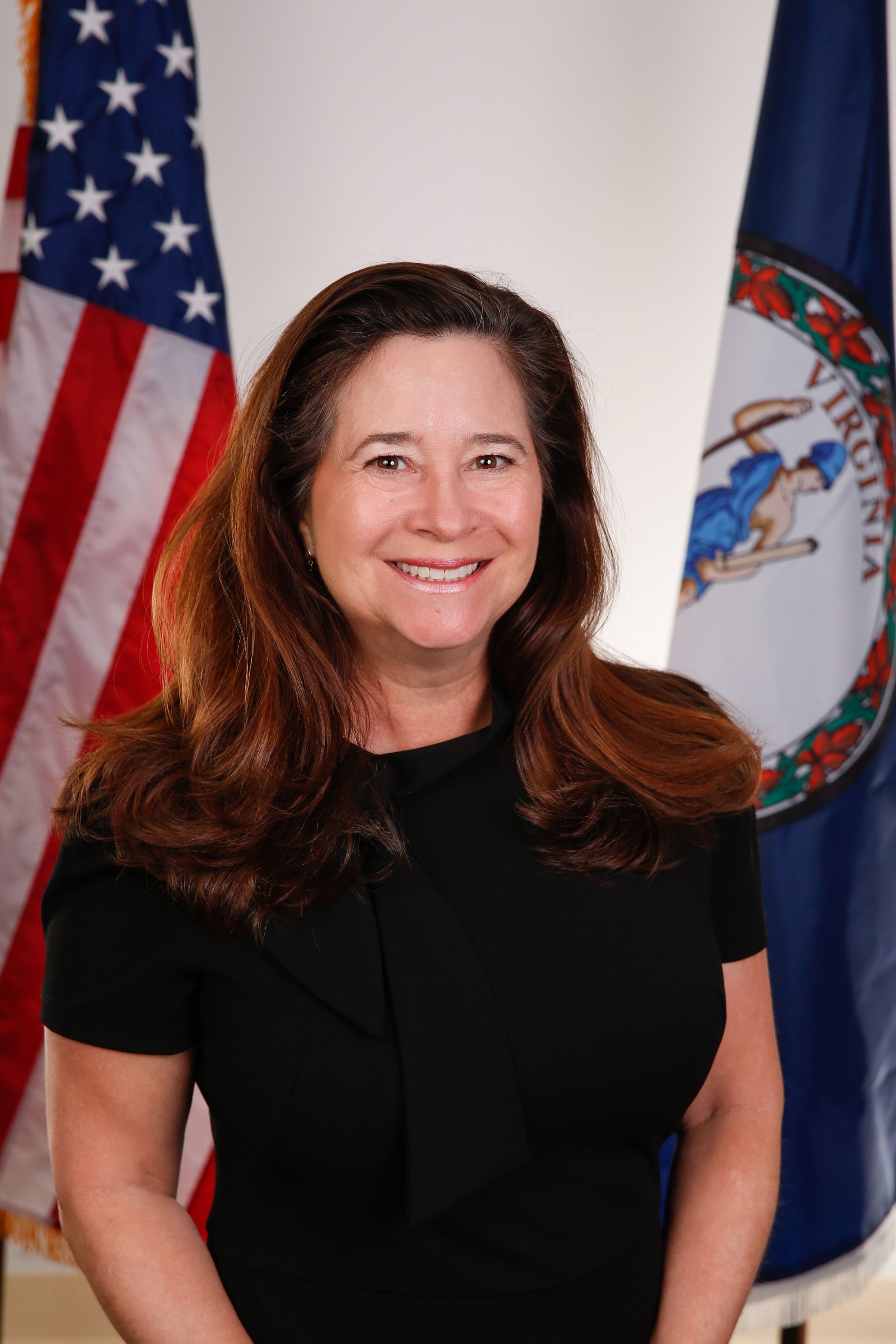
Del. Shelly Simonds
Sponsored bills
Center for Rural Virginia; name change. Renames the Center for Rural Virginia as the Senator Frank M. Ruff, Jr. Center for Rural Virginia. This bill is identical to SB 704.
Moving violations; highway work zones. Createsa traffic infraction for any moving violation in a highway work zonepunishable by a fine of not less than $300 for the first offenseand not less than $500 for any subsequent offense. The bill provides that for any subsequent offense that occurs within the same 12-monthperiod as another such offense such fine shall be not less than $750.
Mineral mining and processing; use of cyanideor a cyanide compound prohibited. Prohibits any miner or otherperson from using cyanide or a cyanide compound in any mineral miningor processing operation.
Use of canines in correctional and juvenile correctional facilities; prohibited acts. Makes it unlawful for any correctional officer or other employee of a state correctional facility who is permitted to handle canines to use a patrol or security canine in any state correctional facility unless such correctional officer or other employee (i) reasonably believes that the use of a patrol or security canine is immediately necessary to protect any prisoner or any officer or employee from the threat of serious bodily injury or death or (ii) has the prior approval of the warden or a supervisor to use a patrol or security canine to intervene in an altercation, fight, or other incident between three or more prisoners. The bill also makes it unlawful for any juvenile correctional officer or other employee of a juvenile correctional facility to use a patrol or security canine in any juvenile correctional facility. The bill specifies that such provisions shall not apply to the training or use of detector canines or detector canine handlers.
Prevailing wage rate for underground infrastructure works by public service companies. Directs the Department of Labor and Industry to determine and make available the prevailing wage rate for underground infrastructure work. Under the bill, each public service company shall ensure that its bid specifications or other contracts applicable to underground infrastructure works require payment at the prevailing wage rate. The bill requires contractors and subcontractors to post the prevailing wage rate in a prominent and accessible place at the work site. The bill also requires each public service company, contractor, or subcontractor subject to the provisions of the bill to comply with certain recordkeeping requirements. Provisions of the bill apply to contracts entered into on or after July 1, 2024.
Commending the Honorable L. Kaye Kory.
Employee Child Care Assistance Program and Fund; established. Establishes the Employee Child Care Assistance Programand Fund to provide matching funds to in order to incentivize employersto contribute to the child care costs of their employees. To participatein the program, an employer is required to enter into an agreementwith its employee and an eligible mixed-delivery provider, definedin the bill, to make child care contributions to the eligible mixed-deliveryprovider on behalf of the employee, and the Department of Educationwill issue a state match directly to such eligible mixed-deliveryprovider or to a third-party administrator. The bill provides thatthe state match shall not exceed 100 percent of the employer contributionmade by an employer on behalf of an employee whose annual gross wagesare equal to or less than the local median household income, definedin the bill, and shall not exceed 80 percent of the employer contributionmade by an employer on behalf of an employee whose annual gross wagesare greater than the local median household income. The bill requiresthat 25 percent of the Fund be used to provide state matching fundsfor employees of small businesses.
Department of Professional and Occupational Regulation; practice of geology; definitions. Expands the definition of the practice of geology to include the performance of any professional service or work wherein the principles and methods of geology are applied, including (i) investigating, evaluating, and consulting; (ii) geological mapping; (iii) describing the natural processes that act upon the earth's materials; (iv) predicting the probable occurrence of natural processes; and (v) inspecting, planning, and performing and supervising geological work in order to enhance and protect the health, safety, and welfare of the public and the environment. The bill also defines "geological mapping." The bill contains technical amendments. This bill is identical to SB 184.
Public institutions of higher education; admissions applications; legacy admissions and admissions based on donor status prohibited. Prohibits any public institution of higher education from providing any manner of preferential treatment in the admissions decision to any student applicant on the basis of such student's legacy status, defined in the bill, or such student's familial relationship to any donor to such institution. This bill is identical to SB 46.