

Establishment of recovery high schools; authorization in certain Superintendent's regions. Authorizes any school board that governs a school division located in Superintendent's Region 2, 4, or 7 to establish a recovery high school in the relevant school division as a year-round high school (i) for which enrollment is open to any high school student who resides in the relevant Superintendent's region and is in the early stages of recovery from substance use disorder or dependency and (ii) for the purpose of providing such students with the academic, emotional, and social support necessary to make progress toward earning a high school diploma and reintegrating into a traditional high school setting.
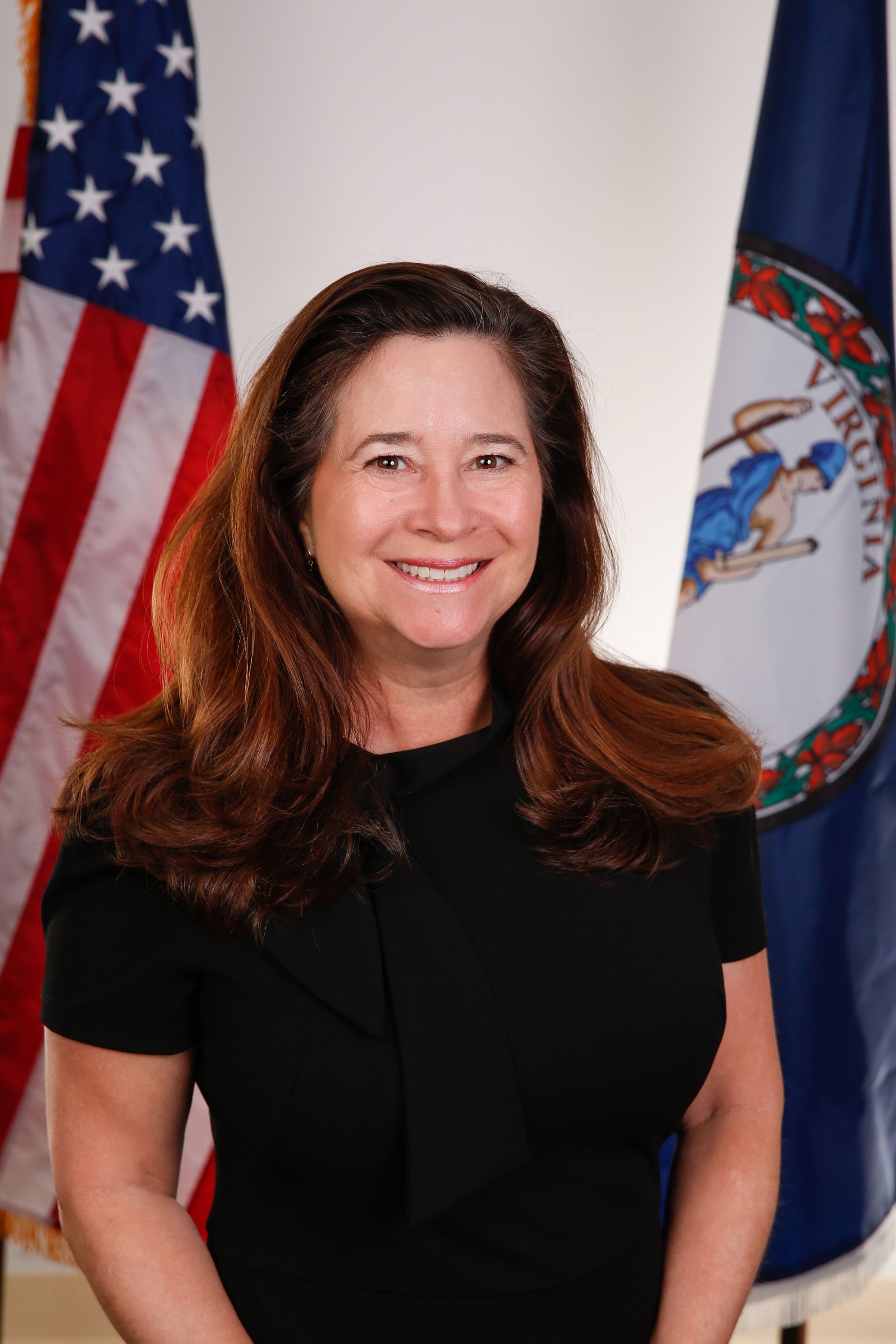
Del. Shelly Simonds
Sponsored bills
Public high schools; personnel; college and career specialist required. Requires each school board to employ at least one college and career specialist, as defined in the bill, in each public high school in the local school division. The bill provides that each such individual shall be employed in addition to and not as a replacement for the required school counselor positions, specialized student support positions, or support services positions.
Prisoners; Department of Corrections-issued and jailer-issued identification. Provides that the Department of Corrections shall establish a procedure for securing a government-issued identification card, birth certificate, or Social Security card through the Department of Motor Vehicles and that the Department of Motor Vehicles shall expedite the processing of an application submitted by a prisoner for such government-issued identification card and the issuance of such identification. The bill also requires the Department of Corrections, in coordination with the State Board of Local and Regional Jails, the Department of Motor Vehicles, and the State Registrar of Vital Records, to (i) review the processes involved in assisting a prisoner in applying for and obtaining a government-issued identification card, birth certificate, or Social Security card; (ii) identify any obstacles that may interfere with a prisoner obtaining such identification or documents prior to such prisoner's release or discharge; and (iii) issue a report of its findings and recommendations to the General Assembly no later than November 1, 2024.
Firearm locking device required for sale or transfer of firearm; warning against accessibility to children; penalty. Makes it a Class 3 misdemeanor for any licensed manufacturer, licensed importer, or licensed dealer to sell, deliver, or transfer any firearm to any person other than a licensed manufacturer, licensed importer, or licensed dealer unless the transferee is provided with a locking device for that firearm and the firearm is accompanied by a warning, in conspicuous and legible type in capital letters printed on a separate sheet of paper included within the packaging enclosing the firearm, that firearms should be locked and kept away from children and that there may be civil and criminal liability for failing to do so. The bill provides exceptions for law-enforcement and governmental agencies. This bill incorporates HB 12.
Virginia Public Procurement Act; additional public works contract requirements. Provides that public bodies shall require the contractor and its subcontractors for any capital outlay project, as defined in the bill, to complete certain safety training programs, maintain records of compliance with applicable laws, and participate in approved apprenticeship training programs. The bill provides exemptions from such requirements for reasons related to lack of availability of apprentices and high costs. The bill has a delayed effective date of July 1, 2025.
JLARC; Department of Human Resource Management; Grievance Procedure Manual; report. Directs the Joint Legislative Audit and Review Commission (JLARC) to conduct a review of the Department of Human Resource Management's Grievance Procedure Manual as it relates to the Department of Corrections and Department of Juvenile Justice. The bill requires that JLARC evaluate the effectiveness of such procedures and report its findings and recommendations to the Chairmen of the Senate Committee on General Laws and Technology and the House Committee on General Laws by November 1, 2024.
Study; joint committee of the House Committee on Education and the Senate Committee on Education and Health; challenges faced by and effective strategies for ensuring the sustainable, long-term success of the five historically black colleges and universities in the Commonwealth; report. Establishes a joint committee consisting of five members of the House Committee on Education and three members of the Senate Committee on Education and Health to study the challenges faced by and effective strategies for ensuring the sustainable, long-term success of the five historically black colleges and universities in the Commonwealth–Hampton University, Norfolk State University, Virginia State University, Virginia Union University, and Virginia University of Lynchburg–by discussing, adopting, and recommending to the Governor and the General Assembly for formal recognition and endorsement a comprehensive statewide HBCU Support Plan.
Study; State Council of Higher Education for Virginia; public institutions of higher education in the Commonwealth; guaranteed first-year admission; report. Requests the State Council of Higher Education for Virginia to study the feasibility of implementing a guaranteed first-year admission policy at each public institution of higher education for certain high school graduates in the Commonwealth and report its findings and recommendations no later than the first day of the 2025 Regular Session of the General Assembly.
Presidential electors; National Popular Vote Compact. Enters Virginia into an interstate compact known as the Agreement Among the States to Elect the President by National Popular Vote. Article II of the Constitution of the United States gives the states exclusive and plenary authority to decide the manner of awarding their electoral votes. Under the compact, Virginia agrees to award its electoral votes to the presidential ticket that receives the most popular votes in all 50 states and the District of Columbia. The compact goes into effect when states cumulatively possessing a majority of the electoral votes have joined the compact. A state may withdraw from the compact; however, a withdrawal occurring within six months of the end of a President's term shall not become effective until a President or Vice President has qualified to serve the next term.
Division of Early Childhood Care and Education; Department of Education; comprehensive review of certain findings and recommendations relating to the quality of early childhood care and education in the Commonwealth; report. Requires the Division of Early Childhood Care and Education of the Department of Education, in consultation with the Virginia Early Childhood Foundation and such other stakeholders as it deems appropriate, to (i) conduct a comprehensive review of the findings and recommendations contained in the 2017 report of the Joint Legislative Audit and Review Commission, Improving Virginia's Early Childhood Development Programs, to determine what barriers, gaps, and deficiencies continue to exist in the provision of high-quality early childhood education and care in the Commonwealth, with a particular focus on gaps and deficiencies in the ongoing monitoring of Virginia Preschool Initiative program quality, including the collection and analysis of data relating to outcomes and kindergarten readiness, and (ii) report its findings and any associated policy recommendations to the Board of Education, the Governor, and the General Assembly no later than November 1, 2024.