Maddy summaryThis is a ceremonial resolution (SJ 434), not a policy bill. It formally commends Dr. William Ferguson Reid for his service, with no legal effect or impact on any individuals or policies. The resolution passed both the Senate and House by voice vote in February 2025. As a symbolic gesture, it expresses legislative recognition but does not create any new requirements or change existing law.
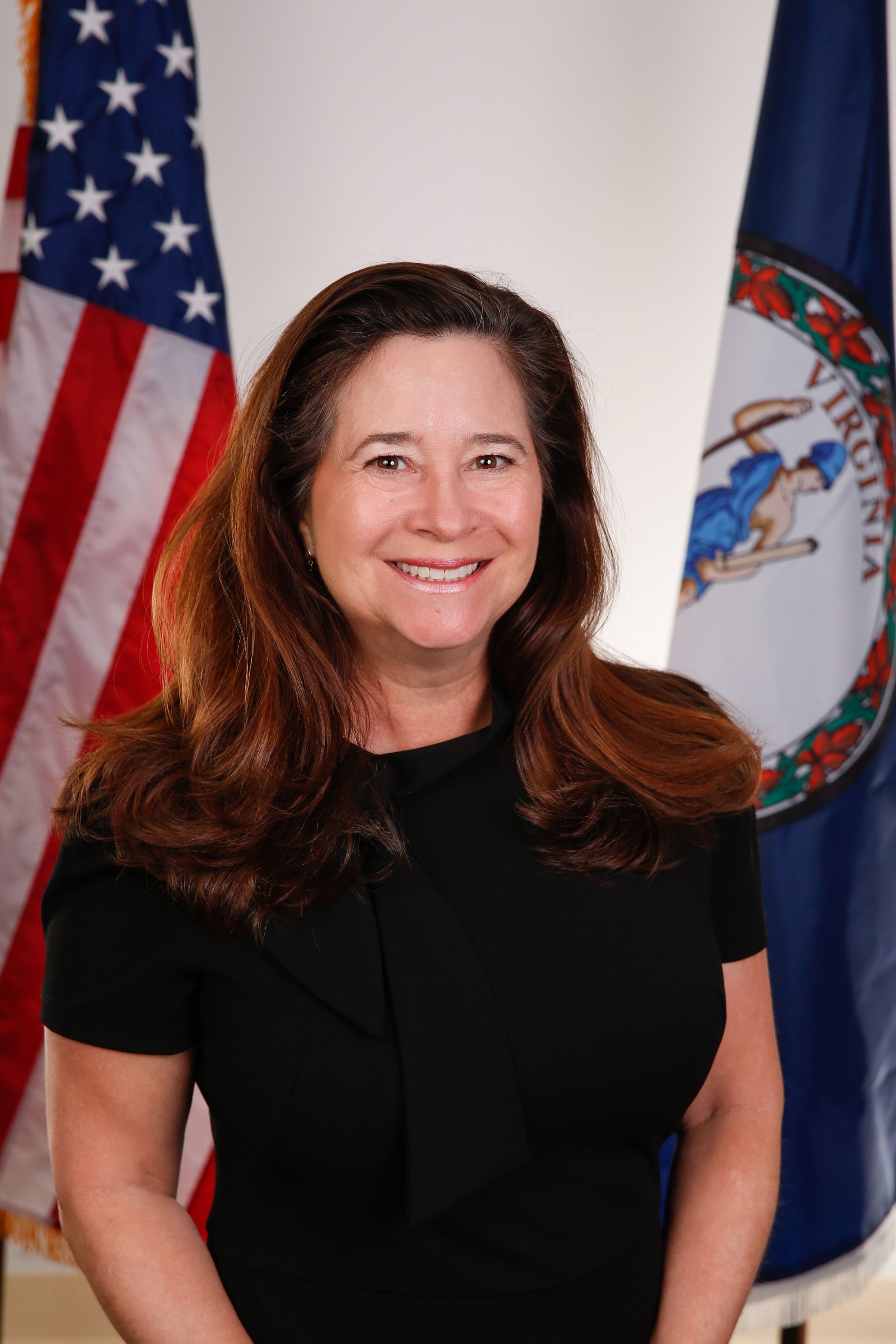
Del. Shelly Simonds
Sponsored bills
Maddy summaryThis resolution formally commends Linda Ford for her contributions. It passed unanimously in both the Senate and House via voice vote, with final passage recorded on February 19, 2025. As a ceremonial resolution, it does not create new laws or affect policies, funding, or regulations. It serves solely to recognize an individual's service.
Maddy summarySJ 363 is a ceremonial resolution commending the Virginia Spaceport Authority for its work in advancing space exploration and economic development in Virginia. It does not create new laws or affect any policies, as it is purely symbolic recognition. The bill passed both chambers of the Virginia General Assembly with unanimous voice votes in February 2025. It honors the Authority's contributions but has no binding effect or direct impact on residents, businesses, or regulations.
Maddy summaryThis bill (SJ 371) is a ceremonial resolution commending Hoda Kotb, a well-known television host and co-anchor, for her contributions. It does not create any legal requirements or affect any individuals, organizations, or policies. The resolution simply expresses the legislature's appreciation through a formal statement. As a commemorative measure, it has no binding effect and passed unanimously in both chambers.
Local comprehensive plan; tiny homes; accessory dwelling units. Clarifies that the comprehensive plan prepared by a local planning commission and adopted by a local governing body may include the use of tiny homes and accessory dwelling units, defined in the bill, as part of any residential development and use designated within such plan. The bill contains technical amendments.
Department of Education; Child Care Subsidy Program waiting list; additional priority group; target timeline for assigning slots to priority groups. Requires the Department of Education to amend its Child Care Subsidy Program Guidance Manual to add a seventh priority group to the Child Care Subsidy Program waiting list that consists of any family that meets all other Program eligibility criteria and includes a parent who is employed for at least 30 hours per week by a publicly funded child care provider in the Commonwealth that serves children from birth to age five, excluding employment by a local school division but including employment by a Head Start program that is located within a public school building. The bill also directs the Department of Education to require local departments of social services to target a maximum of 30 days for moving priority group families from the waiting list into services; regularly assess, in coordination with the Department of Social Services, the length of time it takes for priority groups to be assigned slots; and provide quarterly updates, beginning October 1, 2025, to the Commission on Early Childhood Care and Education on such timeline and any other barriers experienced by families in priority groups on the waiting list in accessing services.

Workers' compensation benefits; post-traumatic stress disorder, anxiety disorder, or depressive disorder incurred by law-enforcement officers and firefighters. Increases from 52 weeks to 104 weeks the maximum duration after the date of diagnosis that workers' compensation benefits are payable for post-traumatic stress disorder, anxiety disorder, or depressive disorder incurred by law-enforcement officers and firefighters acting in the line of duty.
Employment health and safety standards; heat illness prevention. Requires the Safety and Health Codes Board to adopt regulations establishing reasonable standards designed to protect employees from heat illness and establish a list of high-hazard industries, as defined in the bill. The bill authorizes a person aggrieved by a violation of its provisions or the regulations promulgated thereunder to seek to obtain injunctive relief, to recover statutory damages of $1000, or both, in an action commenced within one year of the cause of action. The bill requires the Safety and Health Codes Board, in consultation with the Department of Labor and Industry, to develop a list of high-hazard industries by January 1, 2026, and to develop and adopt regulations requiring employers in high-hazard industries to implement standards for heat illness prevention by May 1, 2026.
Employee Child Care Assistance Pilot Program. Establishes the Employee Child Care Assistance Pilot Program (the Program) to provide matching funds to employers in order to incentivize employers to contribute to the child care costs of their employees. The Program shall be administered by the Virginia Early Childhood Foundation (the Foundation). To participate in the Program, an employer shall agree to make child care contributions to the eligible mixed-delivery provider on behalf of the employee and shall provide any other information deemed necessary by the Foundation. To the extent funds are available, the Foundation shall issue a state match directly to such eligible mixed-delivery provider or to a third-party administrator. Program funds shall be awarded on a first-come, first-served basis; however, the Foundation is encouraged to prioritize awards to proposals involving contributions from small businesses. The bill requires the Virginia Early Childhood Foundation to provide an interim report to the General Assembly by September 1, 2026, and a summative report to the General Assembly by September 1, 2027, on the effectiveness and impact of the Program.
Maddy summaryThis resolution honors the life and contributions of Thomas S. Whipple. It passed the Senate on February 6, 2025, and the House on February 10, 2025, and is now awaiting the governor's action. As a ceremonial resolution, it does not create new laws or affect any policies or individuals.