

Department of Social Services; improving access to and maximizing participation in federal food assistance programs; work group; report. Requires the Department of Social Services to convene a work group to evaluate methods to improve access to and maximize participation in federal public assistance programs relating to assistance with food access and improving food security. The Department shall report the work group's findings and recommendations to the Chairs of the House Committees on Health and Human Services and Appropriations and the Senate Committees on Education and Health and Finance and Appropriations by December 1, 2025.
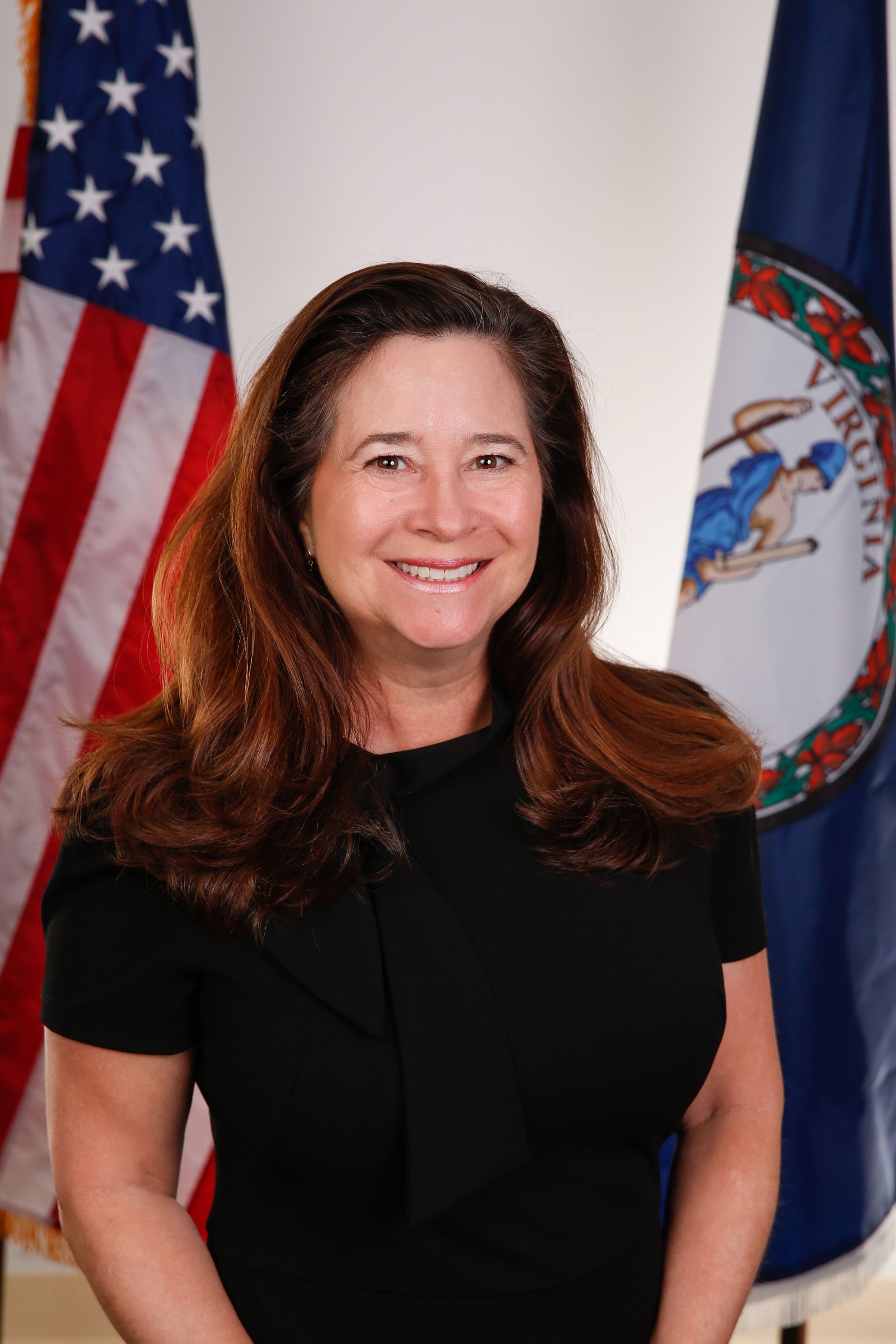
Del. Shelly Simonds
Sponsored bills
Task Force on Maternal Health Data and Quality Measures; report. Directs the State Health Commissioner to reestablish the Task Force on Maternal Health Data and Quality Measures for the purpose of evaluating maternal health data collection processes to guide policies in the Commonwealth to improve maternal care, quality, and outcomes for all birthing people in the Commonwealth. The bill directs the Task Force to report its findings and conclusions to the Governor and General Assembly by November 1 of each year regarding its activities. The bill directs the Task Force to conclude its work by November 1, 2026. This bill reestablishes the Task Force on Maternal Health Data and Quality Measures that concluded on December 1, 2023.
An Act to amend and reenact §§ 2.2-234, 2.2-401.01, 2.2-1149, 2.2-1604, 2.2-2699.10, 2.2-4310, 10.1-104.02, 10.1-659, 10.1-1003, 10.1-1018, 10.1-1020, 10.1-1186.3:1, 10.1-1188, 10.1-2202.5, 10.1-2205.1, 10.1-2206.1, 10.1-2214, 10.1-2305, 15.2-4202, 15.2-4203, 20-88.32, 20-146.1, 22.1-254, 24.2-128, 28.2-104.01, 28.2-302.5, 29.1-301, 29.1-401, 29.1-521, 32.1-272, 36-105.5, 51.1-700, 56-46.1, 56-576, 58.1-2201, 58.1-2403, 59.1-480, 62.1-266, 64.2-701, 64.2-2100, and 64.2-2600 of the Code of Virginia and to amend the Code of Virginia by adding in Subtitle II of Title 2.2 a part labeled D, containing a chapter numbered 61, consisting of sections numbered 2.2-6100 and 2.2-6101, relating to definitions; American Indians; Virginia recognized tribes; federally recognized tribes; sovereignty.
Baby Food Protection Act; testing and labeling requirements for toxic heavy metals. Prohibits a person from selling, distributing, or offering for sale a baby food product that contains certain toxic heavy metals that exceed the limits established by the U.S. Food and Drug Administration (FDA). The bill requires a manufacturer of a baby food product to meet certain testing requirements and include certain information related to toxic heavy metals on the manufacturer's website and on the baby food product. The bill requires a consumer to report a baby food product to the Commissioner of Agriculture and Consumer Services if the consumer reasonably believes that the baby food is being sold in the Commonwealth with toxic heavy metals that exceed the limits established by the FDA. The foregoing provisions of the bill have a delayed effective date of January 1, 2026. The bill also directs the Department of Agriculture and Consumer Services to convene a work group to study and make recommendations on the current enforcement of laws related to the presence of toxic heavy metals in baby food products and any further action needed to address the issue of toxic heavy metals in baby food products. The bill requires the work group to report on its findings and recommendations by the first day of the 2026 Regular Session.
Virginia military forces; Sexual Offense Prevention and Response Program established. Establishes the Sexual Offense Prevention and Response Program (the Program) within the Department of Military Affairs. The bill also establishes the Sexual Offense Prevention and Response Officer (the Officer) to perform victim advocacy services, including helping victims of certain criminal sexual assault offenses make either a restricted report or an unrestricted report, as those terms are defined in the bill. Restricted and unrestricted reports may be made (i) by a person who is a member of the Virginia military forces, defined in the bill as the Virginia National Guard and the Virginia Defense Force, or (ii) against a member of the Virginia military forces. The bill directs the Adjutant General, in coordination with the Officer, to submit an annual report to the Governor, the Lieutenant Governor, the Speaker of the House of Delegates, and the chairmen of both the House and Senate Committees for Courts of Justice. The annual report shall include relevant information enumerated in the bill, including implementation and effectiveness of the Program's policies and procedures, as well as statistical information about restricted reports and unrestricted reports.
Small Family Day Home Provider Incentive Pilot Program established. Establishes the four-year Small Family Day Home Provider Incentive Pilot Program whereby funds are provided to the Ready Region Chesapeake Bay lead to work in conjunction with public and private partners to (i) cover the cost of hiring a Navigator focused on providing training and support to small family day homes in the region, including weekend training sessions to provide information on first aid and cardiopulmonary resuscitation (CPR) certification, medication administration, safe sleep practices, emergency planning, recordkeeping, insurance, and compliance with relevant local ordinances, and (ii) provide incentive payments of $500 to any small family day home in the region (a) that is not licensed or voluntarily registered when such home achieves voluntary registration, (b) that is voluntarily registered or otherwise unlicensed when such home achieves licensure, and (c) when such home first participates in the Virginia Quality Birth to Five (VQB5) system. The bill requires the Ready Region Chesapeake Bay lead to annually collect and make publicly available data on the number of small family day homes in the region that (1) participated in the weekend trainings provided by the Navigator and (2) received incentive payments for first achieving voluntary registration or licensure or participating in VQB5.
Local and regional correctional facilities; treatment of prisoners known to be pregnant. Prohibits the use of restraints, defined in the bill, on any prisoner of a local or regional correctional facility who is (i) known to be pregnant or (ii) in postpartum recovery unless a deputy sheriff or jail officer makes an individualized determination that (a) the prisoner will harm herself, the fetus, the newborn child, or any other person; (b) the prisoner poses a flight risk; or (c) the totality of the circumstances creates a serious security risk. Under current law, such prohibition applies only to state correctional facilities. The bill also requires the Department of Criminal Justice Services to include in the compulsory minimum entry-level training standards training regarding pregnant prisoners for deputy sheriffs and jail officers who are employees of local or regional correctional facilities who may have contact with pregnant prisoners.
Siting of data centers; site assessment; high energy use facility. Provides that prior to any approval of a rezoning application, special exception application, or special use permit for the siting of a new high energy use facility (HEUF), as defined in the bill, a locality shall require that an applicant perform and submit a site assessment to examine the sound profile of the HEUF on residential units and schools located within 500 feet of the HEUF property boundary. The bill also allows a locality to require that a site assessment examine the effect of the proposed facility on (i) ground and surface water resources, (ii) agricultural resources, (iii) parks, (iv) registered historic sites, and (v) forestland on the HEUF site or immediately contiguous land. The provisions of the bill shall not apply to a site with an existing legislative or administrative approval where an applicant is seeking an expansion or modification of an already existing or approved facility and such expansion does not exceed an additional 100 megawatts or more of electrical power. Finally, the bill provides that its provisions shall not be construed to prohibit, limit, or otherwise supersede existing local zoning authority. This bill is identical to SB 1449.
Maddy summaryThis bill (HR 856) is a ceremonial resolution honoring Clarice Lorine Jordan. It does not create new laws or affect any policies, as it solely serves to recognize and celebrate her life. The resolution was passed by the House of Representatives on February 21, 2025, and is a standard procedural measure for commemorative purposes.
Maddy summaryHR 853 is a ceremonial resolution commending Khadijeh Aslankhani for her contributions, with no substantive policy changes or direct impact on legislation. It serves solely as a formal expression of appreciation from the House of Representatives. The bill was passed by voice vote and engrossed without debate, reflecting standard procedural steps for such resolutions. As a commemorative measure, it does not allocate funds, alter laws, or affect any specific group or policy.