

Wildlife Corridor Action Plan; interagency implementation group; report. Directs the Secretary of Natural and Historic Resources to, in coordination with the Secretary of Transportation, convene an Interagency Implementation Group to advance projects, policies, and priorities identified under the Wildlife Corridor Action Plan. The bill requires the Group to (i) facilitate the development of a statewide memorandum of understanding among participating state agencies to formalize roles, data-sharing practices, and collaborative processes; (ii) facilitate sharing of wildlife vehicle collision data; (iii) support local level connectivity planning; (iv) develop and offer training to state agencies, localities, and metropolitan planning organizations relating to wildlife crossings and habitat connectivity strategies; (v) coordinate and prioritize projects identified in the Plan; and (vi) assist state agencies and political subdivisions, and by request any federal agency, in considering and incorporating wildlife corridors and the recommendations of the Plan when developing any governmental strategic plan, map, or action. The bill requires the Secretary of Transportation and the Secretary of Natural and Historic Resources to jointly submit a report of the Group's progress in advancing the Plan to the Chairs of the Senate Committees on Agriculture, Conservation and Natural Resources and Transportation and the House Committees on Agriculture, Chesapeake and Natural Resources and Transportation by September 1 of each year.
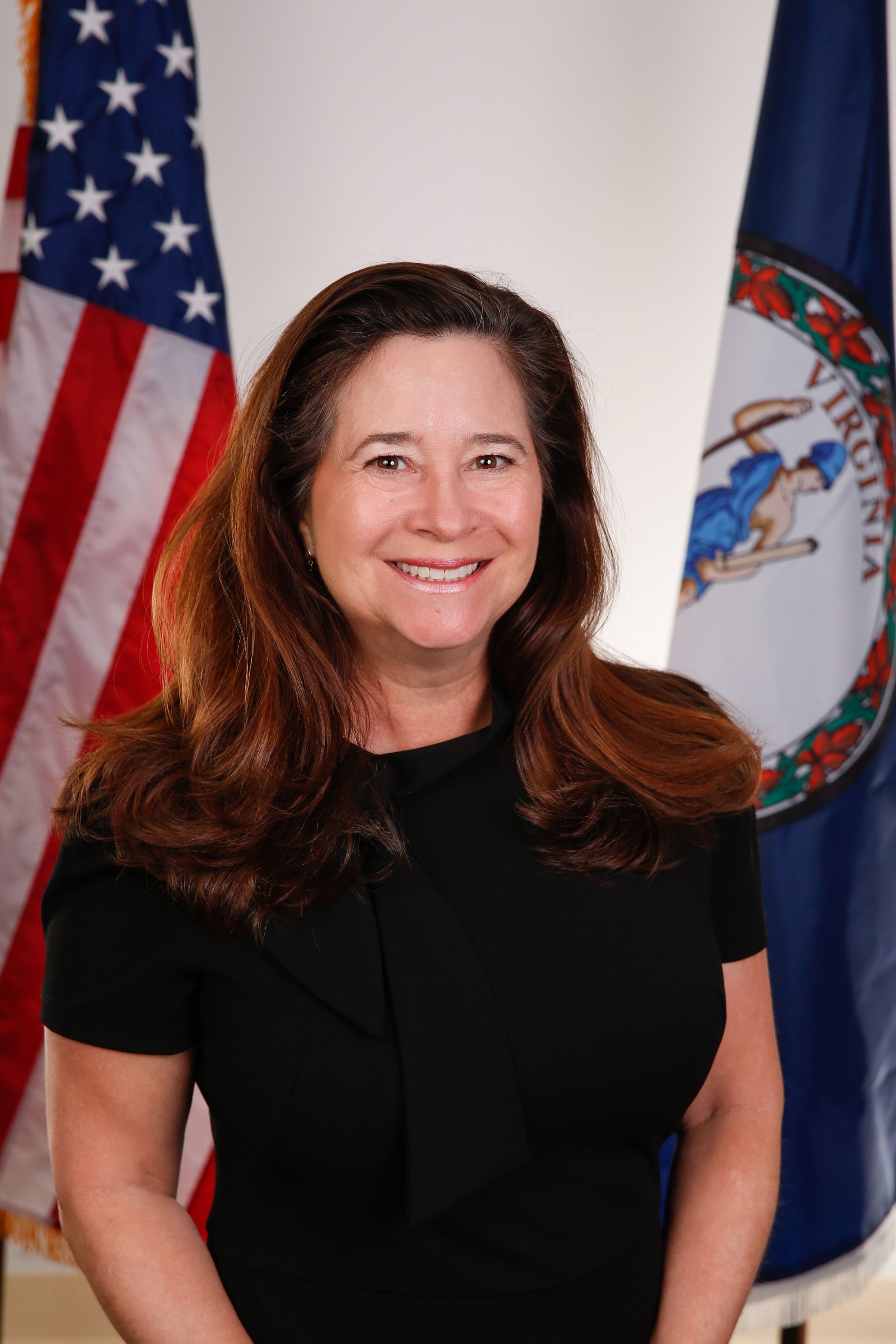
Del. Shelly Simonds
Sponsored bills
Short-term rental properties; human trafficking awareness training. Requires every short-term rental operator, defined in the bill, and its employees to complete an approved training course on recognizing and reporting instances of suspected human trafficking, as provided or approved by the Department of Criminal Justice Services. The bill requires that any short-term rental registry ordinance adopted by a locality pursuant to relevant law shall include that the training on recognizing and reporting instances of suspected human trafficking required by the bill be completed as part of the registration process. The bill has a delayed effective date of July 1, 2027. The bill contains technical amendments.
Consultation with federally recognized tribes; permits and reviews with potential impacts on environmental, cultural, and historic resources. Adds to the duties of the Ombudsman for Tribal Consultation requirements to (i) facilitate communication between federally recognized tribes and relevant state agencies and local governments to ensure an opportunity for meaningful and timely consultation on environmental, cultural, and historical permits and reviews; (ii) assist the Department of Transportation in developing consultation policies; (iii) make recommendations to the Governor on the basis of communications with federally recognized tribes about (a) circumstances under which tribal consent should be required for issuance of certain permits and (b) additional agencies that should develop policies and procedures to ensure meaningful, timely, and appropriate consultation with federally recognized tribes; (iv) provide training at least once a year to certain state agency personnel on issues of concern to the federally recognized tribes to support effective communication, collaboration, and positive government-to-government relations between the Commonwealth and the federally recognized tribes; and (v) submit an annual report to the Secretary of the Commonwealth on the activities undertaken to implement such provisions and the issues that have arisen in that pursuit. The bill also requires the Department of Conservation and Recreation, Department of Environmental Quality, Department of Historic Resources, Department of Transportation, and Marine Resources Commission to engage in consultation with federally recognized tribes on certain issues. During such consultation, the burden is on the agency to show that it has made a good faith effort to elicit meaningful and timely feedback, including formal communication between agency employees and the federally recognized tribe. When a burial permit will result in the disturbance of a burial site of an individual that has a cultural affiliation with a particular federally recognized tribe, the bill requires the Department of Historic Resources to acquire the consent of such federally recognized tribe before issuing a permit for the archaeological excavation of human remains. This bill is a recommendation of the Commission on Updating Virginia Law to Reflect Federal Recognition of Virginia Tribes.
Virginia Institute of Marine Science; duties; oyster stock assessment; report. Directs the Virginia Institute of Marine Science (VIMS) to conduct, in collaboration with the Virginia Marine Resources Commission (VMRC), a stock assessment of the oyster population in the waters of the Commonwealth beginning in calendar year 2026 and occurring no less frequently than every three years thereafter. The bill directs VIMS to report its findings and any recommendations to the Secretary of Natural and Historic Resources, VMRC's Shellfish Management Division, and the Chairs of the House Committee on Agriculture, Chesapeake and Natural Resources and the Senate Committee on Agriculture, Conservation and Natural Resources no later than December 1 of the calendar year in which such assessment has been conducted. The bill also directs VMRC to utilize the findings and recommendations of such assessment in its fisheries and restoration management decisions no later than July 1 of the calendar year following the calendar year in which such assessment has been conducted.
Early childhood care and education; Home-Based Child Care Provider Start-Up Grants Pilot Program established; requirements. Establishes the Home-Based Child Care Provider Start-Up Grants Pilot Program, whereby funds are provided to Child Care Aware of Virginia to work in conjunction with the public and private partners enumerated in the bill in order to expand the supply of licensed home-based child care providers in the Commonwealth, promote the safety of licensed home-based child care providers, and support access to child care for working parents in the Commonwealth, through providing for the award of grants to licensed and unlicensed home-based child care providers in the Commonwealth in accordance with the requirements of the bill. The bill requires Child Care Aware of Virginia to annually collect and make publicly available data on the number of home-based child care providers supported under the Program. The bill has an expiration date of July 1, 2029.
Hospital price transparency; price comparison tool; penalties for noncompliance. Directs the Department of Health to establish a hospital price transparency comparison tool based on the information hospitals provide under existing law and the information available through the Virginia All-Payer Claims Database. The bill specifies that the list of standard charges provided by the hospital controls in the event of a dispute between a hospital and a patient over a patient payment amount and requires hospitals to discharge debt and not require payment for any elective procedure, test, or service for which the patient payment amount is disputed and there is not a standard charge made available to the public on the hospital's website on the date such elective procedure, test, or service is performed.
Commission on School Construction and Modernization; sunset date. Extends from July 1, 2026, to July 1, 2029, the sunset date for the Commission on School Construction and Modernization.
Public high schools; personnel; career coach required. Requires each school board to employ at least one career coach in each public high school in the local school division whose duties shall include assisting students with securing internships, externships, and credentialing opportunities as required by the Profile of a Virginia Graduate, providing students with information on apprenticeship programs, and connecting students to career opportunities. The bill provides that each such individual shall work under the direction of school counselors to assist with direct counseling, as such term is defined in relevant law, relating to college and career readiness. The bill also provides that each such individual shall be employed in addition to and not as a replacement for the required school counselor positions, specialized student support positions, or support services positions.
Certain data from water users; water use consumption of data centers. Requires any water user that provides water to a data center, as defined in the bill, and is required to register certain water withdrawal and use data with the State Water Control Board to report to the Board, on a monthly basis or as frequent a basis as practicable, the total volume of water, including the portion that is reclaimed water, provided to such data center during the reporting period.
Law-enforcement officers; restrictions on wearing of facial coverings; exceptions; civil liability; penalty. Prohibits certain state and federal law-enforcement officers from wearing facial coverings, defined in the bill, while engaged in the performance of their official duties. The bill sets out several exceptions to such prohibition, including protective facial coverings to protect against disease, infection, and exposure to toxic substances and facial coverings worn by any law-enforcement officer assigned to a special weapons and tactics team while engaged in the performance of his official duties with such team. The bill subjects the law-enforcement officer to disciplinary action, including dismissal, demotion, suspension, transfer, or decertification, and creates a Class 1 misdemeanor for any law-enforcement officer who wears a facial covering in violation of the provisions of the bill unless the law-enforcement agency that employs such law-enforcement officer has adopted and established a written policy for and restrictions on the use of facial coverings. The bill also directs the Department of Criminal Justice Services to develop a model policy for and restrictions on the use of facial coverings by law-enforcement officers. Finally, the bill creates a civil cause of action for any person injured as a result of tortious conduct by a law-enforcement officer who knowingly and intentionally wears a facial covering in violation of the provisions of the bill. The bill provides that sovereign immunity shall not be a defense to civil liability for such tortious conduct.