

Conservation and replacement of trees during development process; work group; report. Expands certain existing local government authority to plant or replace trees during the development process by expanding such authority statewide. The bill allows localities to establish higher tree canopy replacement percentages based on density per acre. The bill also alters the current process for granting exceptions to a local ordinance by modifying a provision that requires the granting of an exception when the strict application of the ordinance would result in unnecessary or unreasonable hardship to the developer, and replacing it with a requirement that the locality concur with such a determination. The bill permits localities to monitor and assess the condition and coverage of tree canopies at development sites during a period of up to 20 years after the trees are planted. The bill also allows any town within Planning District 8 belonging to an eight-hour nonattainment area for air quality standards to require, by ordinance, that a subdivision or development provide for the preservation or replacement of trees on the development site such that the minimum tree canopy or cover 10 years after development is projected to meet specified coverage criteria. Under current law, the criteria apply to tree canopy coverage 20 years after development. Finally, the bill directs the Institute for Coastal Adaptation and Resilience to convene a work group to conduct a comprehensive review of the tree canopy laws and regulations and report the work group's findings and recommendations to the Chairs of the House Committee on Counties, Cities and Towns and Senate Committee on Local Government by November 1, 2026. This bill incorporates HB 995 and is identical to SB 589.
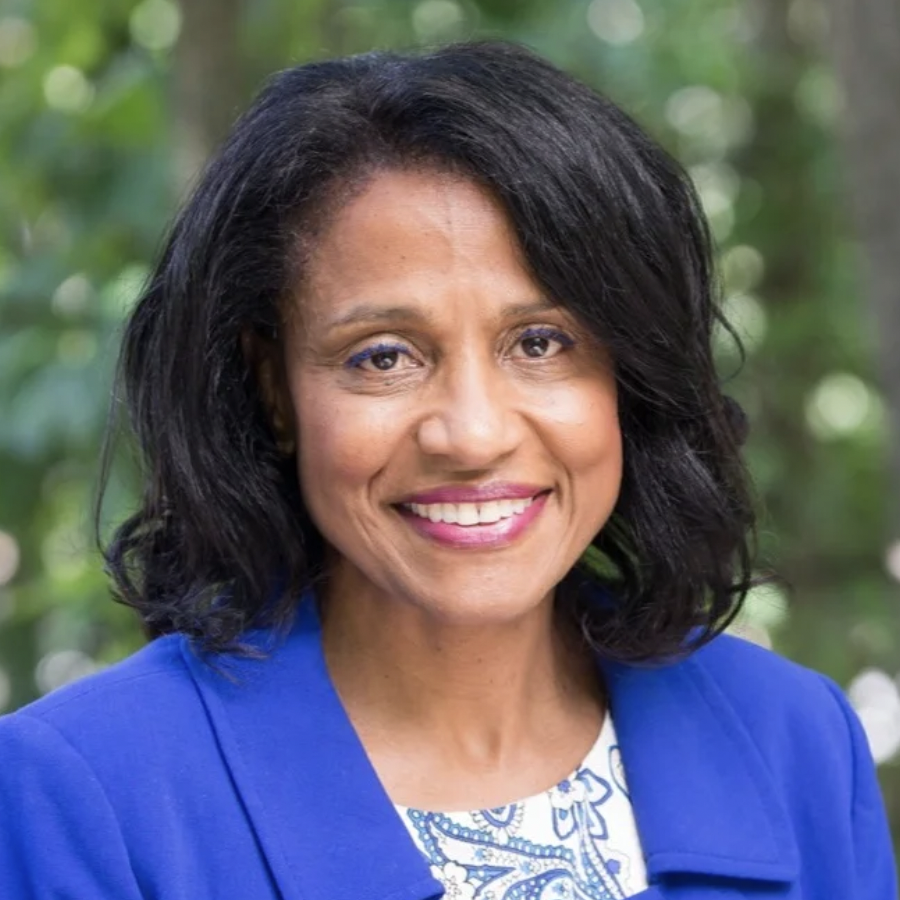
Del. Karen Keys-Gamarra
Sponsored bills
Kinship foster care; barrier crime waiver; report. Establishes a process by which a local department of social services may apply for a barrier crime waiver on behalf of an individual who has been convicted of a Virginia barrier crime that (i) is not (a) included on the list of federal barrier crimes; (b) a violent felony offense; or (c) an offense requiring registration under the Sex Offender and Crimes Against Minors Registry Act and (ii) does not otherwise fall under a barrier crime exception for foster or adoptive homes for the purpose of approval of the individual's home as a kinship foster home. The bill creates a process by which such a local department of social services may apply to the Department of Social Services for a waiver and for the Department to conduct an assessment of such application. The bill also requires the Department of Social Services to file an annual report by December 1 of each year detailing the specifics of the waiver process to the Senate Committee on Rehabilitation and Social Services and the House Committee on Health and Human Services. This bill is identical to SB 305.
Foster and adoptive homes; barrier crimes; exceptions. Consolidates existing barrier crime exceptions for foster or adoptive homes, including kinship foster homes, and establishes new barrier crime exceptions for certain drug offenses.
Land development; solar canopies in parking areas. Provides that any locality may include in its land development ordinances a provision that requires that an applicant must install a solar canopy over designated surface parking areas. Such provisions shall apply only to nonresidential parking areas with 100 or more new off-street contiguous parking spaces and may require coverage of up to 50 percent of the surface parking area. The bill provides that an ordinance adopted pursuant to this bill shall be subject to various additional requirements and shall allow for deviations, in whole or in part, from the requirements of the ordinance when its strict application would prevent the development of uses and densities otherwise allowed by the locality's zoning or development ordinance or when a property owner shows that the solar canopy, if installed as otherwise required under the ordinance, will generate less than 75 percent of the electricity that would be expected, given the nameplate capacity of the solar modules installed on such canopy, if the canopy were to be installed at another location in the locality without surrounding impediments to insolation such as buildings or shading vegetation. Finally, the bill provides that the applicant or owner may use the electric energy generated from such solar canopy to offset the consumption of the parking lot or adjoining building served under the same account. The bill has a delayed effective date of July 1, 2027. This bill incorporates HB 457 and is identical to SB 26.
Impersonating law-enforcement officer; penalties. Creates a Class 5 felony for impersonating a law-enforcement officer while wearing a facial covering, as that term is defined in the bill, and a Class 4 felony for a second or subsequent violation.
Elections; Voting Rights Act of Virginia. Revises provisions of the Voting Rights Act of Virginia (the Act) by (i) clarifying the legal standards for evaluating claims of alleged voter suppression and vote dilution, (ii) providing guidance to the courts to follow when determining whether a violation of the prohibition against voter suppression or vote dilution has occurred, and (iii) outlining the factors that the courts are permitted to consider and those factors that the courts are prohibited from considering. The bill expands the class of persons who may initiate a cause of action for an alleged violation of the Act to include organizations whose membership includes members of a protected class, organizations whose mission would be frustrated by a violation of the Act, and organizations that would expend resources in order to fulfill their mission as a result of a violation of the Act. The population thresholds for a locality to be designated as a covered locality for purposes of minority language accessibility pursuant to the Act are also amended. Current law designates a locality as a covered locality if, in the locality, (a) more than five percent of the voting age population or (b) more than 10,000 of the voting age population are members of a single language minority and are unable to speak or understand English adequately enough to participate in the electoral process; the bill reduces those thresholds from five to three percent and from 10,000 to 5,000. The bill contains technical amendments for organizational purposes.
Land subdivision and development; optional provisions of a subdivision ordinance; electric vehicle charging stations; Department of Energy; report. Allows, effective July 1, 2027, a locality to include in its subdivision ordinance a requirement for electric vehicle (EV) supply equipment, EV-ready charging spaces, or EV-capable parking spaces that provide infrastructure to facilitate future EV charging, including electrical capacity, prewiring, and conduit for a development containing commercial, industrial, or multifamily residential uses. Effective in due course, the bill directs the Department of Energy to evaluate the design and deployment of the electrical distribution infrastructure necessary to support the installation of electric vehicle charging facilities in new developments consisting of single-family and multifamily residential units, to provide recommendations on the appropriate number and type of EV charging spaces for new commercial and industrial developments, and to report its findings and recommendations to the State Corporation Commission no later than November 15, 2026.
College partnership laboratory schools; transparency. Requires, for college partnership laboratory schools that form a collaborative partnership with one or more school divisions, the parents of any enrolled student to be notified of such collaborative partnership and provided with contact information for an administrator in such partnering division that the parent can contact with questions or concerns about program administration or the student's experience at the college partnership laboratory school. The bill requires each college partnership laboratory to identify in a conspicuous and publicly accessible manner and location on the school's website the members and meeting schedule of the school's governing board; a summary of the operational, budgetary, and contractual decisions of such governing board; and the Board of Education regulations to which such school is subject.
Child abuse or neglect; prenatal use of a controlled substance or drug as prescribed. Clarifies that a pregnant woman's prenatal use of a controlled substance or drug as prescribed by such woman's health care provider for opioid addiction recovery shall not solely be a reason to suspect that a child is abused or neglected.
Earned sentence credits; incarceration while awaiting trial or pending an appeal. Provides that a person's eligibility for earned sentence credits includes any period of time actually spent in any state or local correctional facility, state hospital, or juvenile detention facility awaiting trial or pending an appeal that was deducted from such person's term of incarceration or detention. The bill provides that the provisions apply retroactively to any person who is confined in any state or local correctional facility on July 1, 2028. The bill has a delayed effective date of July 1, 2028.