

Signed into law Mar 21, 2019
0 co-sponsors
Total votes
9,241
all sessions
Attendance
96%
328 missed
Lower than 94% of chamber peers
With party
95%
of cast votes
Near the chamber average
Bipartisan score
3%
crosses aisle rarely
Near the chamber average
Sponsored
346
bills & resolutions
Lower than 93% of chamber peers
Committees
0
assignments
346 bills and resolutions
Sponsored bills
Total
346
Primary
91
Co-sponsor
255
This page
346
matching current filters
Sales and Use Tax; additional local tax in Halifax County.
Authorizes Halifax County to impose an additional local sales and use tax at a rate not to exceed one percent, as determined by the governing body, if initiated by a resolution of the local governing body and approved by the voters at a referendum. The bill requires the governing body to specify in the enacting ordinance the time period, not to exceed 20 years, for which the tax would be imposed. Revenue from the tax shall be used solely for capital projects for new construction or major renovation of schools in Halifax County.
Signed into law Mar 19, 2019
0 co-sponsors
Prostitution and sex trafficking; offenses involving a minor, penalties.
Provides that any person who commits an act of aiding prostitution or illicit sexual intercourse or using a vehicle to promote prostitution or unlawful sexual intercourse, when such act involves a minor, is guilty of a Class 6 felony. Under current law, such acts are punishable as a Class 1 misdemeanor. The bill adds the two new felony offenses to (i) the definition of "violent felony" for the purposes of sentencing guidelines, (ii) the definition of barrier crimes for the purposes of background checks for employees or volunteers providing care to children or the elderly or disabled, (iii) the definition of predicate criminal acts for street gangs, (iv) the definition of racketeering activity under the Virginia Racketeer Influence and Corrupt Organization Act, (v) the list of violations that a multi-jurisdiction grand jury is responsible for investigating, and (vi) the list of offenses requiring registration in the Sex Offender and Crimes Against Minors Registry. The bill also adds felony prostitution and felony human trafficking offenses to the definition of "violent felony" for the purposes of sentencing guidelines. The bill also provides that each violation of commercial sex trafficking is a separate and distinct felony. The bill as introduced was a recommendation of the Virginia State Crime Commission.
Signed into law Mar 19, 2019
1 co-sponsor
Prostitution; promoting travel, penalty.
Makes it a Class 1 misdemeanor for any travel agent to knowingly promote travel services for the purposes of prostitution or certain offenses involving minors that require registration on the Sex Offender and Crimes Against Minors Registry.
Signed into law Mar 18, 2019
1 co-sponsor
School and Campus Safety, Virginia Center for; threat assessment, case management tool.
Requires the Virginia Center for School and Campus Safety to develop a case management tool for use by public elementary and secondary school threat assessment teams and requires such threat assessment teams to use such tool to collect and report to the Center quantitative data on its activities. This bill is identical to
Signed into law Mar 18, 2019
1 co-sponsor
Signed into law Mar 18, 2019
1 co-sponsor
Enterprise zones; designation.
Changes from two to three for an enterprise zone designated on or after July 1, 2005, and from two to one for an enterprise zone designated prior to July 1, 2005, the number of times the Governor may renew a five-year designation of an enterprise zone upon recommendation of the Director of the Department of Housing and Community Development. This bill is identical to
Signed into law Mar 18, 2019
0 co-sponsors
False caller identification information; penalty.
Makes it a Class 3 misdemeanor for any person who, with the intent to defraud, intimidate, or harass, causes a telephone to ring and engages in conduct that results in the display of false caller identification information on the called party's telephone. The bill raises the penalty to a Class 2 misdemeanor for a second or subsequent conviction. The bill does not apply to the blocking of caller identification information, to law-enforcement agencies and officers, to intelligence or security agencies of the federal government and their employees, or to telecommunications, broadband, or Voice-over-Internet protocol service providers in certain circumstances.
Signed into law Mar 18, 2019
1 co-sponsor
Health insurance; coverage for autism spectrum disorder.
Requires health insurers, health care subscription plans, and health maintenance organizations to provide coverage for the diagnosis and treatment of autism spectrum disorder in individuals of any age. Currently, such coverage is required to be provided for individuals from age two through age 10. The provision applies with respect to insurance policies, subscription contracts, and health care plans delivered, issued for delivery, reissued, or extended on or after January 1, 2020. This bill is identical to
Signed into law Mar 18, 2019
1 co-sponsor
Workers' compensation; presumption of compensability for certain diseases, review of program.
Adds cancers of the colon, brain, or testes to the list of cancers that are presumed to be an occupational disease covered by the Virginia Workers' Compensation Act when firefighters and certain employees develop the cancer. The measure will become effective if reenacted by the 2020 Session of the General Assembly. The measure also directs the 2020 Session of the General Assembly, in considering and enacting any legislation relating to workers' compensation and the presumption of compensability for certain cancers, to consider any research, findings, and recommendations from the Joint Legislative Audit and Review Commission's review of the Virginia Workers' Compensation program. The provisions of this bill do not become effective unless reenacted by the 2020 Session of the General Assembly. This bill is identical to
Signed into law Mar 18, 2019
1 co-sponsor
Ask Maddy
·
AI policy assistant
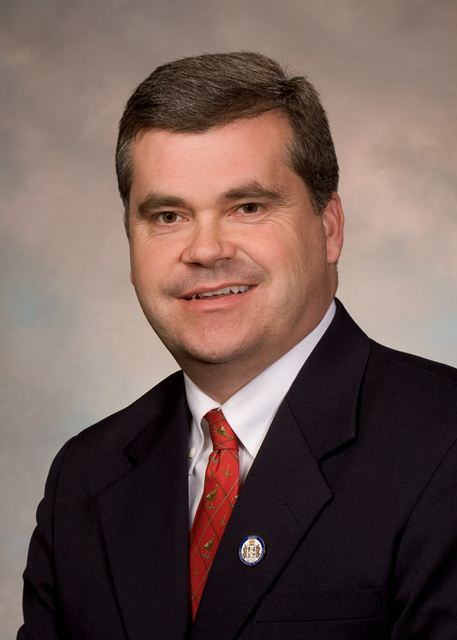
Ask Maddy about James Edmunds
Scope: virginia
Hi! I can help you understand James Edmunds's legislative record. What would you like to know?
Try one of these
i
Maddy answers using official bill text and legislative records. Always verify before sharing.
Sources cited inline