

In committee Jan 15, 2018
1 co-sponsor
Total votes
9,196
all sessions
Attendance
94%
487 missed
Near the chamber average
With party
94%
of cast votes
Lower than 87% of chamber peers
Bipartisan score
3%
crosses aisle rarely
Higher than 85% of chamber peers
Sponsored
408
bills & resolutions
Lower than 82% of chamber peers
Committees
0
assignments
408 bills and resolutions
Sponsored bills
Total
408
Primary
100
Co-sponsor
308
This page
408
matching current filters
In committee Jan 8, 2018
1 co-sponsor
Direct primary care agreements; the Commonwealth's insurance laws do not apply.
Provides that a direct agreement between a patient, the patient's legal representative, or the patient's employer and a health care provider for ongoing primary care services in exchange for the payment of a monthly periodic fee is not health insurance or a health maintenance organization, if patients are not required to pay monthly periodic fees prior to initiation of the direct agreement coverage period. The measure also provides that a health care provider who participates in a direct primary care practice may participate in a health insurance carrier network so long as the provider is willing and able to meet the terms and conditions of network membership set by the health insurance carrier. The measure establishes requirements for disclosures regarding direct primary care agreements, including a list of the services covered under the agreement. This bill is identical to
Signed into law Apr 26, 2017
1 co-sponsor
Religious freedom; solemnization of marriage.
Provides that no person shall be (i) required to participate in the solemnization of any marriage or (ii) subject to any penalty by the Commonwealth, or its political subdivisions or representatives or agents, solely on account of such person's belief, speech, or action in accordance with a sincerely held religious belief or moral conviction that marriage is or should be recognized as the union of one man and one woman. The bill defines "person" as any (a) religious organization; (b) organization supervised by or controlled by or operated in connection with a religious organization; (c) individual employed by a religious organization while acting in the scope of his paid or volunteer employment; (d) successor, representative, agent, agency, or instrumentality of any of the foregoing; or (e) clergy member or minister. The bill also defines "penalty." This bill is identical to
Vetoed Apr 5, 2017
1 co-sponsor
Application for public assistance; eligibility, review of records.
Requires entities processing applications for medical assistance and other public assistance to conduct a review of death records and records relating to incarceration status, employment status, and income of the applicant to determine whether the applicant is eligible for assistance and to review the records of the Virginia Lottery to determine whether the applicant has received any winnings from the Virginia Lottery that may constitute income or resources for purposes of determining eligibility for medical assistance or public assistance. The bill also requires the Department of Social Services to report annually on the types and sources of information reviewed in verifying eligibility and the number of applications for public assistance approved, denied, or referred for investigation.
Vetoed Apr 5, 2017
1 co-sponsor
Virginia Virtual School Board; established, report.
Establishes the Board of the Virginia Virtual School (the Board) as a policy agency in the executive branch of state government for the purpose of governing the full-time virtual school programs offered to students enrolled in the Virginia Virtual School (the School). The Secretary of Education is responsible for such agency. The 14-member Board is given operational control of the School and assigned powers and duties. Beginning with the 2019-2020 school year, the bill requires the School to be open to any school-age person in the Commonwealth and to provide an educational program meeting the Standards of Quality for grades kindergarten through 12, with a maximum enrollment of 5,000 students statewide. The bill requires the average state share of Standards of Quality per pupil funding for each enrolled student to be transferred to the School. This bill is identical to
Vetoed Apr 5, 2017
1 co-sponsor
Absentee voting; photo identification required with application.
Requires any voter submitting an application for an absentee ballot by mail or by electronic or telephonic transmission to a facsimile device to submit with his application a copy of one of the forms of identification acceptable under current law. The bill exempts military and overseas voters and persons with a disability from this requirement. This bill is identical to
Vetoed Apr 5, 2017
1 co-sponsor
Franchisees; status thereof and its employees as employees of the franchisor.
Provides that, notwithstanding any voluntary agreement between the U.S. Department of Labor and the franchisee or franchisor, neither a franchisee nor a franchisee's employee shall be deemed to be an employee of the franchisee's franchisor. The measure also provides that this exclusion does not apply with respect to a specific claim for relief made by a franchisee or a franchisee's employee if the franchisor has been found by a court of competent jurisdiction to have exercised a type or degree of control over the franchisee or the franchisee's employees not customarily exercised by a franchisor for the purpose of protecting the franchisor's trademarks and brand.
Vetoed Apr 5, 2017
1 co-sponsor
Unpaid court fines, etc.; increases grace period for collection.
Increases the grace period after which collection activity for unpaid court fines, costs, forfeitures, penalties, and restitution may be commenced from 30 days to 90 days after sentencing or judgment. The bill also establishes the requirements for deferred or installment payment agreements that a court must offer a defendant who is unable to pay court-ordered fines, costs, forfeitures, and penalties. The bill requires that a court take into account a defendant's financial circumstances, including whether the defendant owes fines and costs to other courts, in setting the terms of a payment agreement, but such decision shall not be based solely on the amount of fines and costs owed. The bill fixes the maximum down payments that a court may require as a condition of entering a payment plan and provides that payments made within 10 days of their due date are timely made. The bill precludes a court from denying a defendant the opportunity to enter into a payment agreement solely because of the crime committed, the total amount owed or that such amount has been referred to collections, any previous default by the defendant or failure to establish a payment history, or the defendant's eligibility for a restricted driver's license. The bill allows all costs and fines owed by a defendant to any one court to be incorporated into one payment agreement and allows a defendant to request a modification of the terms of the agreement, which shall be granted upon a good faith showing of need. The bill requires a court to consider a request by a defendant who has defaulted on a payment agreement to enter into a subsequent agreement and requires the court to fix a down payment for subsequent payment agreements. Finally, the bill provides that the payment agreement includes restitution unless the court has entered a separate order regarding the payment of restitution. This bill is identical to
Passed Apr 5, 2017
1 co-sponsor
Sanctuary policies; prohibited.
Provides that no locality shall adopt any ordinance, procedure, or policy that restricts the enforcement of federal immigration laws.
Vetoed Apr 5, 2017
1 co-sponsor
Ask Maddy
·
AI policy assistant
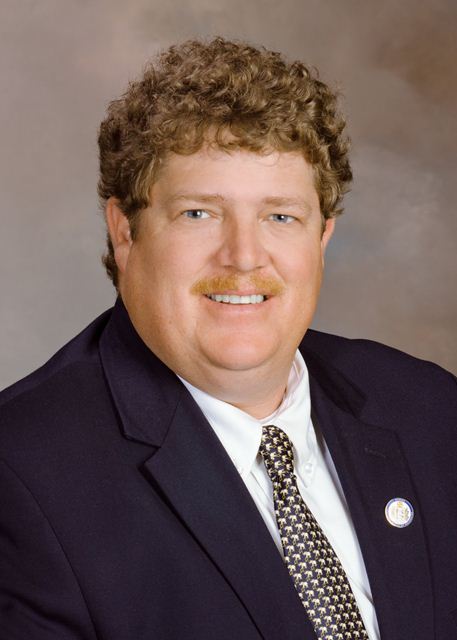
Ask Maddy about Matt Fariss
Scope: virginia
Hi! I can help you understand Matt Fariss's legislative record. What would you like to know?
Try one of these
i
Maddy answers using official bill text and legislative records. Always verify before sharing.
Sources cited inline