

Permits the parent of a public preschool, elementary, or secondary school student who meets certain criteria to apply to the school division in which the student resides for a one-year, renewable Parental Choice Education Savings Account that consists of an amount that is equivalent to a certain percentage of all applicable annual Standards of Quality per pupil state funds appropriated for public school purposes and apportioned to the resident school division in which the student resides, including the per pupil share of state sales tax funding in basic aid and any state per pupil share of special education funding to which the student is eligible. The bill permits the parent to use the moneys in such account for certain education-related expenses of the student, including tuition, deposits, fees, and required textbooks at a private, sectarian or nonsectarian elementary or secondary school or preschool that is located in the Commonwealth and does not discriminate on the basis of race, color, or national origin. The bill also contains provisions relating to auditing, rescinding, and reviewing expenses made from such accounts. The bill contains a reenactment clause.
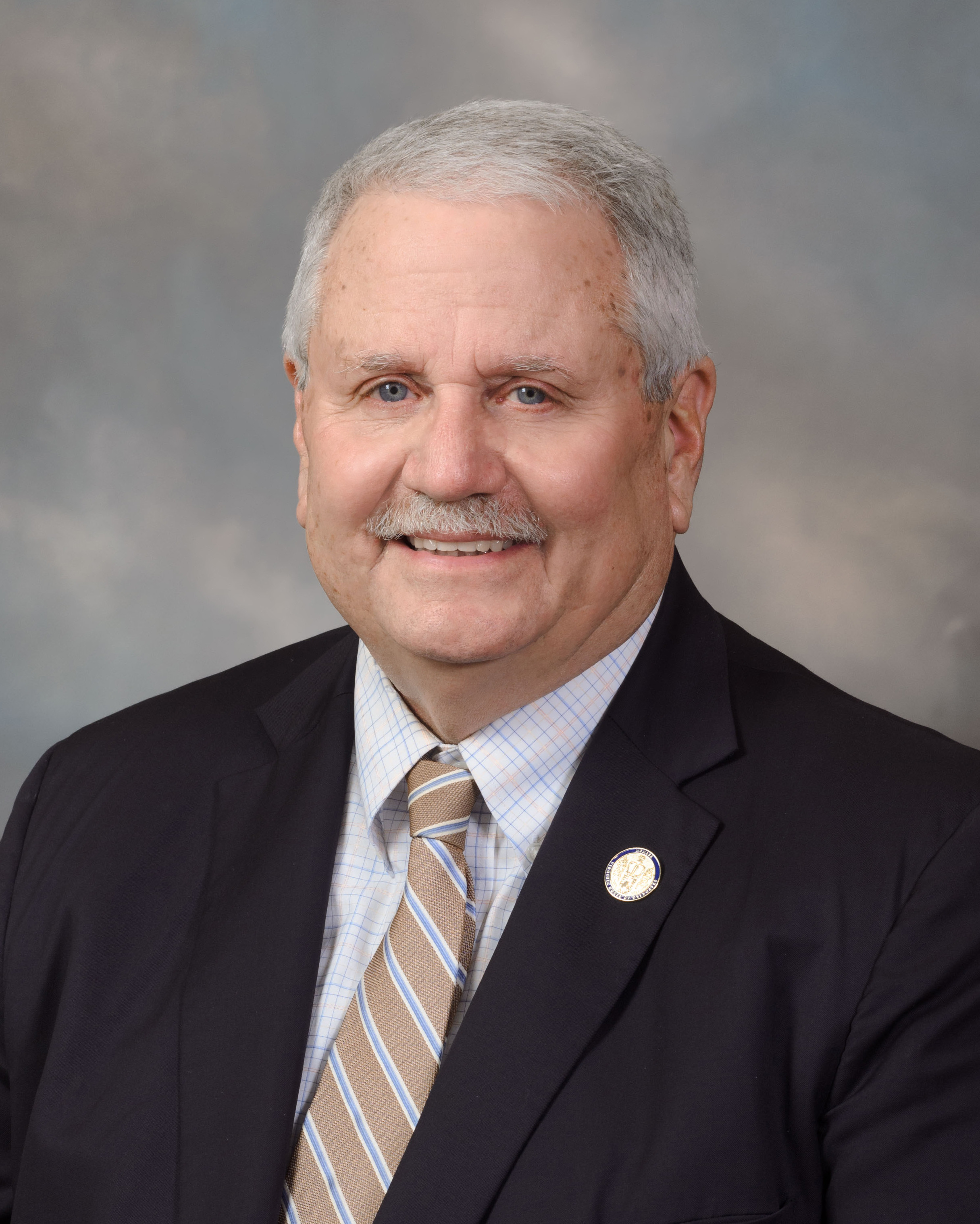
Del. Buddy Fowler
Sponsored bills
Requires any health benefit plan that is amended, renewed, or delivered on or after January 1, 2018, that provides coverage for hormonal contraceptives to cover up to a 12-month supply of hormonal contraceptives when dispensed or furnished at one time for a covered person or at a location licensed or otherwise authorized to dispense drugs or supplies. Such a plan is prohibited, in the absence of clinical contraindications, from imposing utilization controls or other forms of medical management limiting the supply of hormonal contraceptives that may be dispensed or furnished by a provider or pharmacy, or at a location licensed or otherwise authorized to dispense drugs or supplies, to an amount that is less than a 12-month supply. The measure does not require a provider to prescribe, furnish, or dispense 12 months of self-administered hormonal contraceptives at one time. The measure also provides that it shall not be construed to exclude coverage for hormonal contraceptives as prescribed by a provider for reasons other than contraceptive purposes, such as decreasing the risk of ovarian cancer or eliminating symptoms of menopause, or for contraception that is necessary to preserve the life or health of an enrollee.
Establishes the Online Virginia Network Authority (the Authority) as a political subdivision of the Commonwealth for the purpose of establishing the Online Virginia Network to coordinate the online delivery of courses that facilitate the completion of degrees at George Mason University and Old Dominion University. The bill requires the Authority to be governed by a 15-member board that consists of four members of the House of Delegates appointed by the Speaker of the House of Delegates, three members of the Senate appointed by the Senate Committee on Rules, three nonlegislative citizen members appointed by the Governor, one nonlegislative citizen member appointed by the board of visitors of George Mason University, one nonlegislative citizen member appointed by the board of visitors of Old Dominion University, the President of George Mason University, the President of Old Dominion University, and the Director of the State Council of Higher Education for Virginia. The bill sets forth several duties of the Authority and grants the Authority operational flexibility in the areas of procurement and information technology, provided that the Authority adopts and complies with certain policies.
Requires the Department of Criminal Justice Services, in consultation with the Department of Behavioral Health and Developmental Services, to develop a model addiction recovery program that may be administered by sheriffs, deputy sheriffs, jail officers, administrators, or superintendents in any local or regional jail. The bill provides that such programs shall be based on existing addiction recovery programs being administered by any local or regional jails in the Commonwealth and requires that participation in such program be voluntary and that such program address multiple aspects of the recovery process, including medical and clinical recovery, peer-to-peer support, availability of mental health resources, family dynamics, and aftercare aspects of the recovery process.
Creates an exemption from the retail sales and use tax for parts, engines, and supplies used for maintaining, repairing, or reconditioning aircraft, including unmanned aerial systems. The exemption does not apply to tools and other equipment not attached to or that does not become a part of the aircraft. The exemption is effective from July 1, 2018, to July 1, 2022.
Provides that any doctor of medicine, osteopathy, chiropractic, or podiatry or any nurse practitioner, physician assistant, optometrist, physical therapist, or clinical psychologist who reports to the Department of Motor Vehicles the existence, or probable existence, of a mental or physical disability or infirmity of any person licensed to operate a motor vehicle that the reporting individual believes affects such person's ability to operate a motor vehicle safely is not subject to civil liability or deemed to have violated the practitioner-patient privilege unless he has acted in bad faith or with malicious intent. This bill is identical to
Provides that the Virginia Historical Society shall plan and lead the commemoration of the centennial anniversary of women's right to vote in 2020. The bill creates a 12-member task force to assist the Virginia Historical Society, in collaboration with the Library of Virginia, the Department of Education, the Virginia Foundation for the Humanities and Public Policy, the VCU Libraries Special Collections and Archives, and interested civic and community organizations, in planning, developing, and performing programs and activities appropriate to commemorate the 100th anniversary of women's right to vote and the passage of the Nineteenth Amendment to the United States Constitution. The provisions of the bill expire on January 1, 2021.
Prohibits public institutions of higher education from abridging the constitutional freedom of any individual, including enrolled students, faculty and other employees, and invited guests, to speak on campus, except as otherwise permitted by the First Amendment to the United States Constitution.
Removes the requirement that a compliance agent for a private security services business have either five years of experience or three years of managerial or supervisory experience in a private security services business, a state or local law-enforcement agency, or a related field. The bill also removes the option for a private security services business or a private security services training school to be covered by a bond in lieu of liability insurance. The bill provides that it will not become effective unless reenacted by the 2018 Session of the General Assembly.
Authorizes a school security officer to carry a firearm in the performance of his duties if (i) within 10 years immediately prior to being hired by the local school board he was an active law-enforcement officer in the Commonwealth; (ii) he retired or resigned from his position as a law-enforcement officer in good standing; (iii) he meets the training and qualifications to carry a concealed handgun as a retired law-enforcement officer; (iv) he has met the additional training and certification requirements of the Department of Criminal Justice Services (DCJS); (v) the local school board solicits input from the chief law-enforcement officer of the locality regarding the qualifications of the school security officer and receives verification from such chief law-enforcement officer that the school security officer is not prohibited by state or federal law from possessing, purchasing, or transporting a firearm; and (vi) the local school board grants him the authority to carry a firearm in the performance of his duties. The bill requires DCJS to establish additional firearms training and certification requirements for school security officers who carry a firearm in the performance of their duties. Existing law requires DCJS to establish minimum training and certification requirements for school security officers.