Elections; absentee voting; drop-off locations for return of absentee ballots; 24-hour video surveillance requirement. Requires 24-hour video surveillance of all absentee ballot drop-off locations.
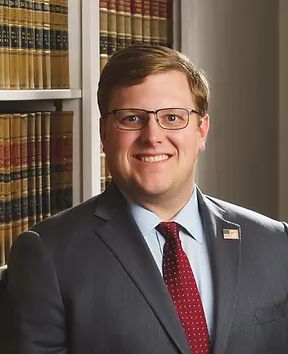
Del. Wren Williams
Sponsored bills
Estimated tax; failure by individual, trust, or estate to pay. Increases from $150 to $1,000 the maximum underpayment of estimated tax for which no addition to tax shall be added.
Prohibition of gender reassignment surgery on individuals younger than 18 years of age. Prohibits gender reassignment surgery, as defined in the bill, for individuals younger than 18 years of age. The bill establishes enforcement procedures for violations of the provisions of the bill.
Authority of Attorney General; criminal cases; human and sex trafficking. Authorizes the Attorney General to prosecute violations of criminal law relating to human and sex trafficking offenses in connection with racketeering.
A BILL to amend and reenact §§ 18.2-386.2 and 19.2-8 of the Code of Virginia, relating to unlawful dissemination of intimate images of another; penalties.
School boards; employment of school resource officers in each public elementary and secondary school. Requires each school board to enter into a collaborative agreement with the local law-enforcement agency to employ at least one school resource officer in each public elementary and secondary school in the local school division and provides that no school board shall be granted any full or partial waiver from such staffing requirements. The bill contains a contingent effective date that states that the foregoing requirement shall become effective beginning with the fiscal year in which funding has been provided pursuant to the general appropriation act to fully fund such requirement.
Reckless exposure of illegal fentanyl to certain persons; penalty; arrest and prosecution when experiencing or reporting overdoses. Provides that any person who unlawfully possesses fentanyl, including its isomers, esters, ethers, salts, and salts of isomers, and recklessly exposes a law-enforcement officer, correctional officer, jail officer, firefighter, search and rescue personnel, or emergency medical services personnel, as those terms are defined in relevant law, to such fentanyl and causes severe bodily injury or an overdose to such officer, firefighter, or personnel is guilty of a Class 4 felony. The bill also provides that no individual incarcerated in a local, regional, or state correctional facility shall be subject to arrest or prosecution for such offense if such individual seeks or obtains emergency medical attention for himself or another individual experiencing an overdose or is experiencing an overdose and another individual seeks or obtains emergency medical attention for him.

Unlawful dissemination of intimate images of another; penalties. Creates a tiered system of penalties for the unlawful dissemination of intimate images of another person, an offense formerly known as the unlawful dissemination or sale of videographic or still images of another person.
Parental access to minor's health records. Requires health care entities that provide access to health records of minors through a secure website to make such health records available to the minor's parent or guardian through the same secure website.
Violations of protective orders; child protective order; penalties. Changes the punishment and sentencing requirements for a violation of a preliminary child protective order and a protective order entered in a dispositional order related to abused, neglected, or abandoned children or children without parental care to the same penalties as violations of preliminary, emergency, and permanent family abuse protective orders, including enhanced penalties for certain violations. Under current law, (i) the maximum penalty for violations of child protective orders constitutes contempt of court; however, if the violation involves an act or acts of commission or omission that endanger the child's life or health, or results in bodily injury to the child, it is punishable as a Class 1 misdemeanor and (ii) the court is not required to enter a permanent family abuse protective order (i.e., a protective order with a maximum duration of two years) upon a conviction of a violation of a preliminary child protective order.