

Maddy summaryThis bill formally commends John Smith, a person of unspecified identity, for unspecified contributions or achievements. It does not create new laws, alter policies, or affect any individuals or groups beyond this specific recognition. The measure was approved by the House of Representatives through a voice vote and is primarily ceremonial in nature.
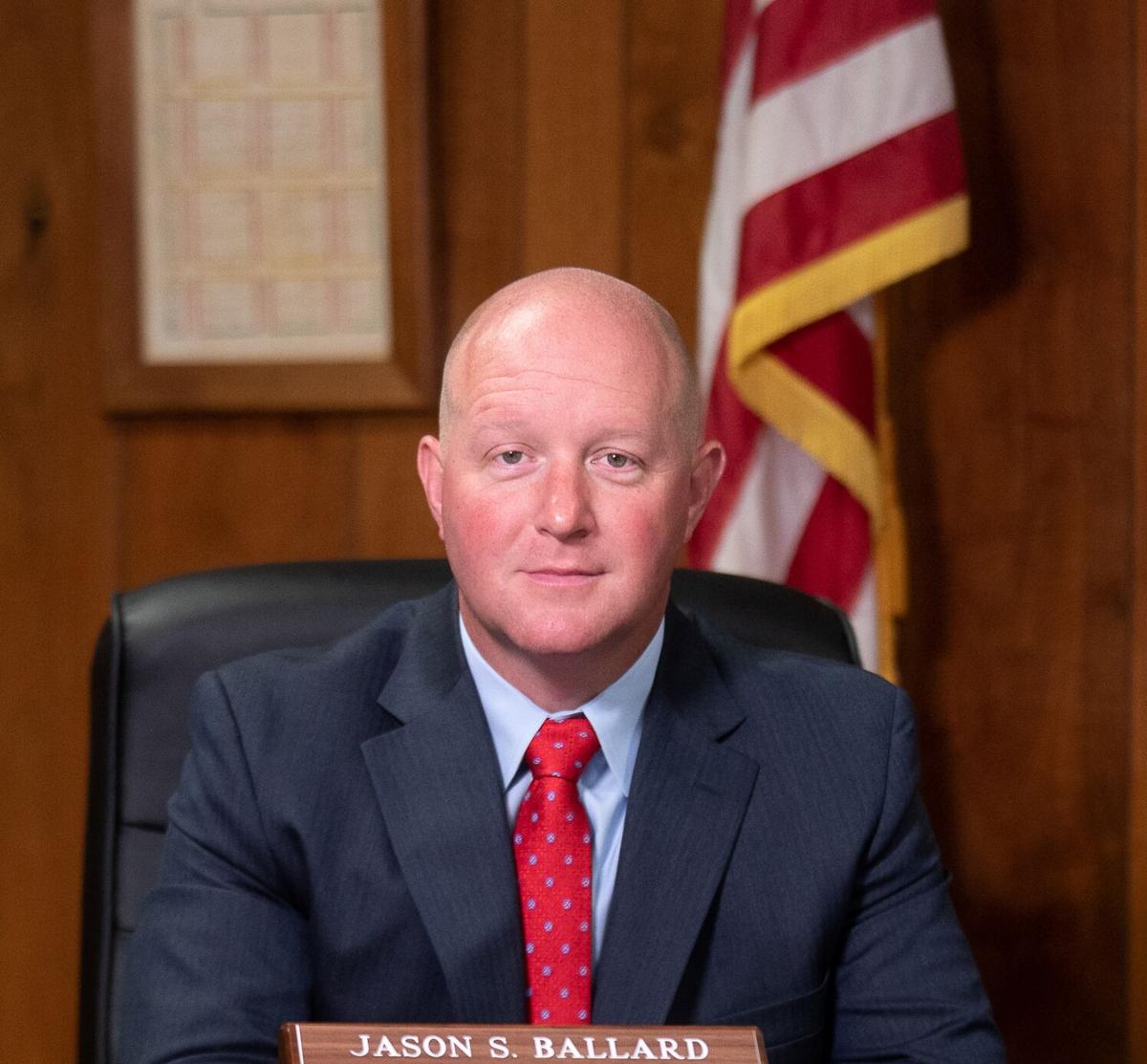
Del. Jason Ballard
Sponsored bills
Maddy summaryThis bill formally recognizes and honors Mae B. Midkiff, a notable individual, through a congressional commendation. It does not create new laws or policies but serves as a symbolic gesture to acknowledge her contributions. The measure was passed by the House of Representatives by voice vote and is now awaiting further legislative steps. Such resolutions typically have no legal effect beyond official recognition and record-keeping.
Maddy summaryThis resolution (SJ 130) honors the life and legacy of Eddie L. Radden, Jr., a specific individual. It is a non-binding commemorative measure passed by both the Senate and House in 2026, expressing collective recognition for his contributions. The resolution does not create new laws or affect any policies or groups.
Maddy summaryThis bill (SJ 84) is a ceremonial resolution commending the Virginia Association of Chiefs of Police and its Foundation for their service. It does not create new laws, alter policies, or affect any individuals or organizations through concrete measures. The resolution formally recognizes the group's contributions, as is typical for such non-binding acknowledgments. It passed both the Senate and House via voice vote in February 2026.
Electric utilities; suspension of certain requirements. Provides that the renewable energy portfolio standard requirements and any associated construction, procurement, or retirement mandates are suspended for the applicable compliance year if the State Corporation Commission determines that compliance has resulted in, or will result in, any of the following: (i) an increase in the average residential customer’s total monthly electric bill of more than five percent in any calendar year that is attributable to compliance with the renewable energy portfolio standard or associated zero-carbon generation or energy storage requirements; (ii) an increase in any rate adjustment clause, rider, or non-bypassable charge associated with compliance with this section that exceeds $50 per month for the average residential customer; (iii) a determination that compliance poses a material risk to electric system reliability or resource adequacy in the Commonwealth; or (iv) a determination that the cost of renewable energy certificates necessary for compliance exceeds the applicable alternative compliance payment or deficiency payment for two consecutive compliance years.
Public schools; mathematics and reading in kindergarten through grade eight; certain initiatives. Establishes several requirements relating to mathematics and reading proficiency in kindergarten through grade eight, including (i) requiring the Department of Education to establish and administer the math teacher and specialist corps to provide grants on a competitive basis to school divisions in which the mathematics proficiency of students in kindergarten through grade eight indicates a high need for intervention and improvement in order for such school divisions to offer annual stipends to effective educators with endorsements in mathematics or as mathematics specialists and deploy such individuals to the schools with the highest need; (ii) requiring each student in kindergarten through grade three to participate in a mathematics screener approved by the Department and requiring any student whose results on such screener indicate the need for further assessment to participate in a diagnostic mathematics assessment approved by the Department and to receive a mathematics improvement plan if the results on such assessment indicate the need for accelerated interventions to progress toward proficient performance in mathematics; and (iii) prohibiting any student in grade three who receives reading intervention services and whose performance on the statewide literacy screener or the grade-level reading Standards of Learning assessment at the end of the school year demonstrates substantial deficiencies from being promoted to grade four except in certain enumerated cases.
Professions and occupations; precious metals dealers; permit requirements. Eliminates the requirement that an applicant for a precious metals dealer permit submit fingerprints to the chief law-enforcement officer of the appropriate jurisdiction as part of the application process. The bill instead requires the chief law-enforcement officer to issue a permit to an applicant after confirming via a fingerprint-based or computerized criminal background check that such applicant has not been convicted of a felony or crime of moral turpitude within seven years prior to the date of application.
Electric utilities; retirement of certain electric generating units. Provides that, for the required retirement by December 31, 2045, of electric generating units that emit carbon as a by-product of combusting fuel to generate electricity, exceptions to such requirement include natural gas electric generating units with carbon capture capability and emissions-positive electric generating units. Under the bill, "emissions-positive generating unit" means an electric generating unit that produces a net reduction in greenhouse gas emissions by either preventing, capturing, or collecting such emissions from fuel combustion.
Department of Behavioral Health and Developmental Services; Early Intervention Program for Infants and Toddlers with Disabilities; program extension. Directs the Department of Behavioral Health and Developmental Services to take all steps necessary to implement the federal extension option for the federal Early Intervention Program for Infants and Toddlers with Disabilities to allow children four years of age or younger to receive services through such Program. Under current law, the Program is available for children between birth and three years of age.
Felony eluding; mandatory minimum. Imposes a one year mandatory minimum term of confinement in a state correctional facility for any person convicted of felony eluding if evidence is presented at sentencing that (i) the law-enforcement officer or responding law-enforcement agency used equipment, including spike strips or a law-enforcement vehicle, to forcibly stop such person's motor vehicle or (ii) such person's motor vehicle was used to intentionally damage a law-enforcement vehicle.