

Income tax deduction; eligible educators.Provides for taxable years 2022 and thereafter an income tax deductionof the lesser of $500 or the actual amount paid or incurred by aneligible educator, defined in the bill as (i) an individual who forat least 900 hours during the taxable year served as a Virginia licensedteacher, instructor, student counselor, principal, or student aidefor public or private primary and secondary school students in Virginiaor (ii) a parent providing home instruction to his child in Virginia,for qualifying expenses, defined in the bill as expenses incurredfrom participation in professional development courses and the purchaseof books, supplies, computer equipment (including related software and services), other educational equipment, and supplementary materialsused directly in service to Virginia students as an eligible educator.
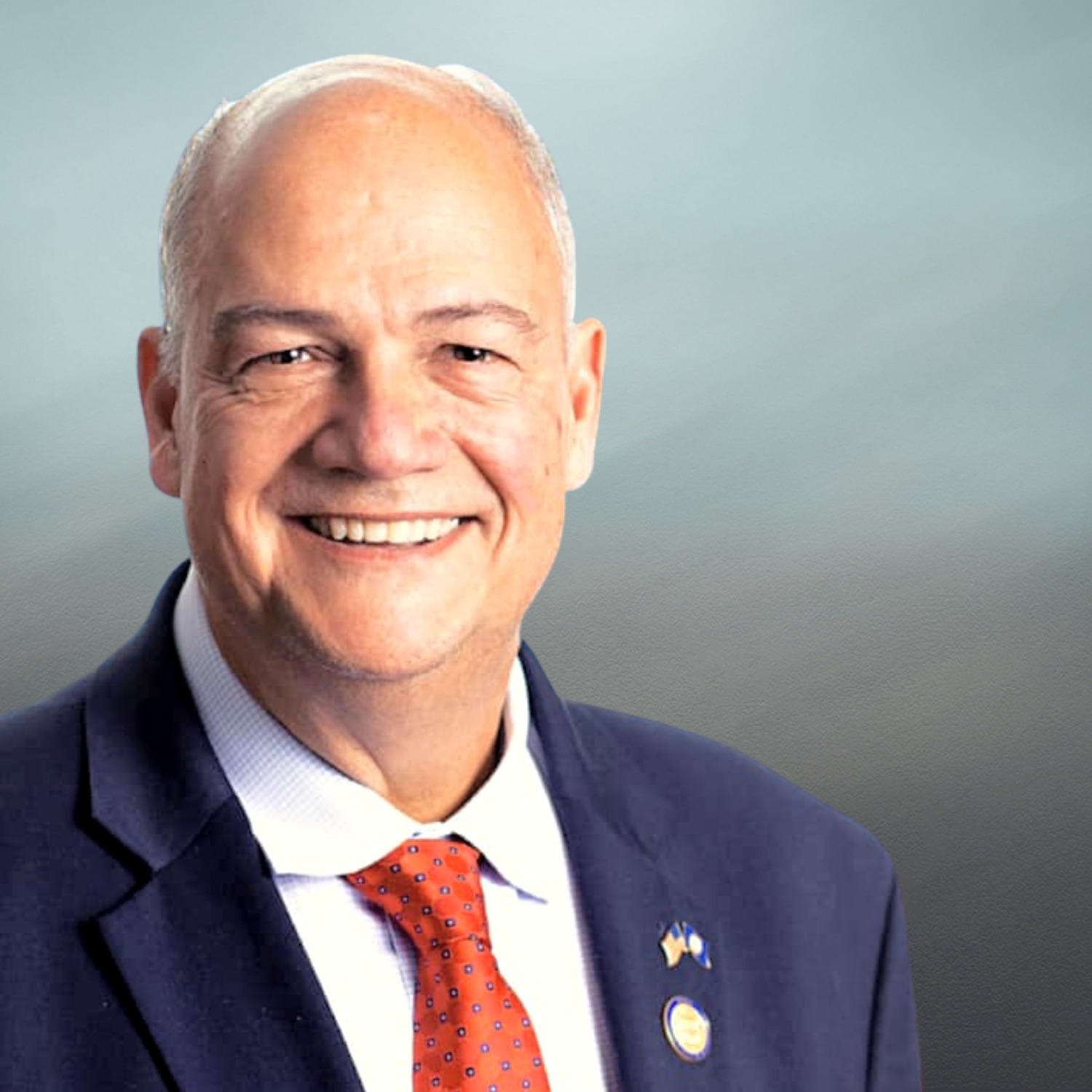
Del. Chris Runion
Sponsored bills
Income tax; military benefits subtraction; emergency. Establishes an income tax subtraction for up to $20,000 of military benefits in taxable year 2022, up to $30,000 in taxable year 2023, and up to $40,000 in taxable year 2024 and each year thereafter. The bill defines military benefits to include military retirement income and benefits paid to the surviving spouse of a veteran. The bill contains an emergency clause.
Sales tax; exemption for food purchased for human consumption and essential personal hygiene products. Exempts food purchased for human consumption and essential personal hygiene products (the grocery tax) from all state, regional, and local sales taxes. The bill dedicates an amount equal to a 0.182 percent sales and use tax to cities and counties as a supplemental school payment. Such payment shall, from July 1, 2022, until July 1, 2024, be distributed based on each city and county's estimated average share of monthly distributions attributable to the tax on such food and hygiene products between February 2020 and December 2021. Beginning July 1, 2024, such payment shall be based upon each city and county's pro rata share of total local sales and use taxes.
School principals; incident reports. Requires that school principals report to law enforcement certain enumerated acts that may constitute a misdemeanor offense and report to the parents of any minor student who is the specific object of such act that the incident has been reported to law enforcement. Under current law, principals are required to make such reports only for such acts that may constitute a felony offense. The bill provides, as an exception to the requirement to report any written threats against school personnel while on a school bus, on school property, or at a school-sponsored activity, that a principal is not required but may report to the local law-enforcement agency any such incident committed by a student who has an individualized education plan. This bill is identical to SB 36.
Powers of the Governor; limited duration of rules, regulations, and orders. Limits the initial duration of any rule, regulation, or order issued by the Governor pursuant to his powers under the Emergency Services and Disaster Law to no more than 30 days after the date of issuance. The bill provides that the Governor may extend the duration after the initial 30-day period for two additional 30-day periods. Upon each extension, the Governor is required to report to the General Assembly on the status of the continued need for the order. During each of the extension periods, the General Assembly may convene to consider and take action on the rule, regulation, or order. If the Governor deems it is in the best interest of the Commonwealth for the order to be in effect for more than 90 days, the General Assembly shall be convened to consider and take action on such extension. The bill provides that unless the General Assembly takes action on the rule, regulation, or order within such 90-day period encompassing the initial issuance and any extensions during which the rule, regulation, or order is effective, the Governor shall thereafter be prohibited from issuing the same or a similar rule, regulation, or order relating to the same emergency without the approval of the General Assembly.
Public elementary and secondary schools and public school-based early childhood care and education programs; student instruction; masks. Requires, except in the case of the 10 unscheduled remote learning days otherwise permitted by law or in certain cases of student discipline, each school board to offer in-person instruction, as defined in the bill, to each student enrolled in the local school division in a public elementary or secondary school for at least the minimum number of required annual instructional hours and to each student enrolled in the local school division in a public school-based early childhood care and education program for the entirety of the instructional time provided pursuant to such program. The bill permits, notwithstanding any other provision of law or any regulation, rule, or policy implemented by a school board, school division, school official, or other state or local authority, the parent of any child enrolled in a public elementary or secondary school, or in any school-based early childhood care and education program, to elect for such child to not wear a mask while on school property. The bill provides that no parent making such an election shall be required to provide a reason or any certification of the child's health or education status and no student shall suffer any adverse disciplinary or academic consequences as a result of this parental election. The bill clarifies that none of the foregoing provisions shall be construed to affect the authority granted to the Governor to achieve the purposes of relevant emergency services and disaster law with regard to a communicable disease of public health threat.
Virginia Public Procurement Act; preference for plastic recycled materials. Requires the Department of General Services (DGS), in determining the award of any contract for plastic materials to be purchased for use by agencies of the Commonwealth, to procure using competitive sealed bidding and give preference to bidders that supply materials containing plastic recycled content, as long as such materials are cost competitive with materials that do not contain plastic recycled content. The bill directs DGS to promulgate regulations to (i) in consultation with the Virginia Manufacturers Association, define "cost competitive" for purposes of the implementation of the bill and (ii) establish a system that requires an incremental increase in the minimum percentage of plastic recycled content required to be included in materials in order for a bidder to be given preference in the procurement process, as follows: (a) 10 percent plastic recycled content by January 1, 2025; (b) 20 percent plastic recycled content by January 1, 2028; and (c) 30 percent plastic recycled content by January 1, 2030.
Group health benefit plans; bona fide associations; formation of benefits consortium. Provides that certain trusts constitute a benefits consortium and are authorized to sell health benefit plans to members of a sponsoring association that (i) has been formed and maintained in good faith for purposes other than obtaining or providing health benefits; (ii) does not condition membership in the sponsoring association on any factor relating to the health status of an individual, including an employee of a member of the sponsoring association or a dependent of such an employee; (iii) makes any health benefit plan available to all members regardless of any factor relating to the health status of such members or individuals eligible for coverage through a member; (iv) does not make any health benefit plan available to any person who is not a member of the association; (v) makes available health plans or health benefit plans that meet requirements provided for in the bill; (vi) operates as a nonprofit entity under § 501(c)(5) or 501(c)(6) of the Internal Revenue Code; and (vii) has been in active existence for at least five years. The bill replaces references to "bona fide association," as used in provisions applicable to health care plans in the small employer market, with the term "sponsoring association."The bill requires any health benefit plan issued by a self-funded multiple employer welfare arrangement (MEWA) that covers one or more employees of one or more small employers to (a) provide essential health benefits and cost-sharing requirements; (b) offer a minimum level of coverage designed to provide benefits that are actuarially equivalent to 60 percent of the full actuarial value of the benefits provided under the plan; (c) not limit or exclude coverage for an individual by imposing a preexisting condition exclusion on that individual; (d) be prohibited from establishing discriminatory rules based on health status related to eligibility or premium or contribution requirements as imposed on health carriers; (e) meet the renewability standards set forth for health insurance issuers; (f) establish base rates formed on an actuarially sound, modified community rating methodology that considers the pooling of all participant claims; and (g) utilize each employer member's specific risk profile to determine premiums by actuarially adjusting above or below established base rates, and utilize either pooling or reinsurance of individual large claimants to reduce the adverse impact on any specific employer member's premiums.The bill prohibits a self-funded MEWA from issuing health benefit plans in the Commonwealth until it has obtained a license pursuant to regulations promulgated by the State Corporation Commission. The bill authorizes the Commission to adopt regulations applicable to self-funded MEWAs, including regulations addressing financial condition, solvency requirements, and the exclusion of self-funded MEWAs from the Virginia Life, Accident and Sickness Insurance Guaranty Association. This bill is identical to SB 195.
Marcus alert system; participation. Extends the date by which localities shall establish voluntary databases to be made available to the 9-1-1 alert system and the Marcus alert system to provide relevant mental health information and emergency contact information for appropriate response to an emergency or crisis from July 1, 2021, to July 1, 2023, and provides an exemption to the requirement that localities establish protocols for local law-enforcement agencies to enter into memorandums of agreement with mobile crisis response providers regarding requests for law-enforcement back-up during mobile crisis or community care team response and minimum standards, best practices, and a system for the review and approval of protocols for law-enforcement participation in the Marcus alert system for localities with a population that is less than or equal to 40,000, so that localities with a population that is less than or equal to 40,000 may but are not required to establish such protocols. The bill also requires the Department of Behavioral Health and Developmental Services to include in its annual report to the Governor and the Chairmen of the House Committees for Courts of Justice and on Health, Welfare and Institutions, the Senate Committees on the Judiciary and Education and Health, and the Behavioral Health Commission information regarding barriers to establishment of local Marcus alert programs and community care or mobile crisis teams to provide mobile crisis response in geographical areas served by community services boards or behavioral health agencies in which such programs and teams have not been established and a plan for addressing such barriers. This bill is identical to SB 361.
Academic year Governor's Schools; certain practices prohibited and permitted. Prohibits any academic year Governor's School or governing board member, director, administrator, or employee thereof from (i) discriminating against or granting preferential treatment to any individual or group on the basis of race, sex, color, ethnicity, or national origin; (ii) engaging in proxy discrimination, as defined in the bill, in student admissions; or (iii) seeking information on students' race, sex, color, ethnicity, or national origin during the application process for admission to such school unless expressly required by federal law, and to the extent it is required by federal law, the bill requires such information to be withheld to the maximum extent practicable from any individual involved in admissions decisions to the end that admissions decisions are blind as to the applicants' race, sex, color, ethnicity, and national origin. The bill permits any academic year Governor's School or governing board member, director, administrator, or employee thereof to use traditional academic success factors, as defined in the bill, in student admissions and provides that such use presumptively does not constitute proxy discrimination. The bill also contains provisions relating to evidentiary burdens of proof in certain causes of action involving such proxy discrimination or traditional academic success factors. The bill requires each local school board that jointly manages and controls a regional academic year Governor's school to collaborate to ensure that each public middle school that is eligible to send students to attend such Governor's school offers coursework, curriculum, and instruction that is comparable in content and in rigor in order to provide each student in each such middle school with the opportunity to gain admission to and excel academically at such Governor's school.