

Authorizes a school security officer to carry a firearm in the performance of his duties if (i) within 10 years immediately prior to being hired by the local school board he was an active law-enforcement officer in the Commonwealth; (ii) he retired or resigned from his position as a law-enforcement officer in good standing; (iii) he meets the training and qualifications to carry a concealed handgun as a retired law-enforcement officer; (iv) he has met the additional training and certification requirements of the Department of Criminal Justice Services (DCJS); (v) the local school board solicits input from the chief law-enforcement officer of the locality regarding the qualifications of the school security officer and receives verification from such chief law-enforcement officer that the school security officer is not prohibited by state or federal law from possessing, purchasing, or transporting a firearm; and (vi) the local school board grants him the authority to carry a firearm in the performance of his duties. The bill requires DCJS to establish additional firearms training and certification requirements for school security officers who carry a firearm in the performance of their duties. Existing law requires DCJS to establish minimum training and certification requirements for school security officers.
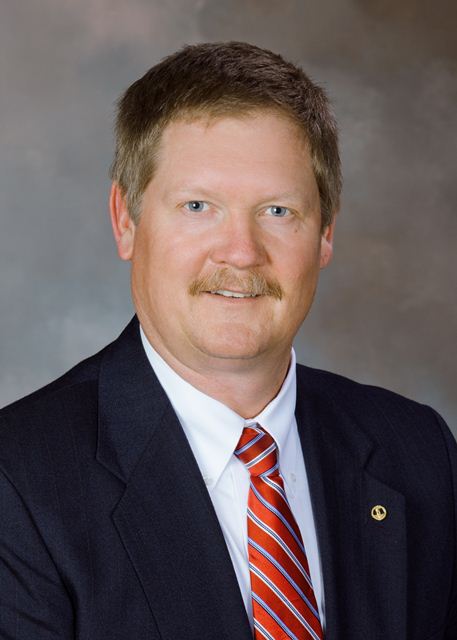
Del. Tony Wilt
Sponsored bills
Updates the purposes and priorities of the Virginia Veteran and Family Support program to, in a cost-effective manner, refer veterans to mental health, physical rehabilitation, and other services as needed to help them achieve individually identified goals and to monitor their progress toward achieving those goals. The program is available to veterans and members of the Virginia National Guard in the Commonwealth, residents of the Commonwealth in the Armed Forces Reserves who are not in active federal service, and family members of covered military members who have been affected by the covered military members' service and deployments and who are located in the Commonwealth. The bill requires an annual report on the program be sent to the Governor and the General Assembly.
Prohibits any individual or group conducting a voter registration drive from compensating its volunteers or employees on the basis of the number of completed voter registration applications the volunteer or employee collects. The bill also prohibits volunteers and employees from accepting compensation based on the number of completed voter registration applications he collects.
Establishes a process for amending death certificates to change the name of the deceased, the deceased's parent or spouse, or the informant; the marital status of the deceased; or the place of residence of the deceased when the place of residence is outside the Commonwealth. This bill is identical to
Allows comprehensive community colleges in the Virginia Community College System to administer the in-vehicle component of driver instruction to students enrolled in a commercial driver training course offered by such community college who have failed the behind-the-wheel examination or general knowledge examination for a commercial driver's license three times. The bill requires that after such additional training, the Department of Motor Vehicles only shall administer the applicable exam. The bill requires that comprehensive community colleges offering such coursework meet certain standards as established by the Department and that the Department notify such comprehensive community colleges and similarly affected schools of course curriculum requirements and notify such colleges and schools if new topics are added to the mandatory curriculum. Such comprehensive community colleges and affected schools shall have 45 days to comply and update their course curriculum with the relevant changes.
Authorizes the Alcoholic Beverage Control Board to grant an annual mixed beverage performing arts facility license to persons operating food concessions at any performing arts facility located in the arts and cultural district of the City of Harrisonburg, provided that the performing arts facility (i) is occupied under a bona fide long-term lease or concession agreement, the original term of which was more than five years; (ii) has been rehabilitated in accordance with historic preservation standards; (iii) has monthly gross receipts from the sale of food cooked, or prepared, and consumed on the premises and nonalcoholic beverages served on the premises that meet or exceed the monthly minimum established by Board regulations for mixed beverage restaurants; and (iv) has a total capacity in excess of 900 patrons. Such license shall authorize the sale, on the dates of performances or private or special events, of alcoholic beverages for on-premises consumption in areas upon the licensed premises approved by the Board.