

Failed Jul 9, 2019
0 co-sponsors
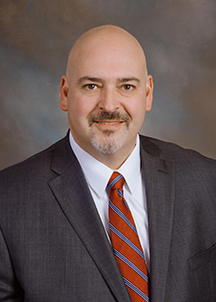
Total votes
8,758
all sessions
Attendance
99%
46 missed
Near the chamber average
With party
93%
of cast votes
Lower than 91% of chamber peers
Bipartisan score
4%
crosses aisle rarely
Higher than 89% of chamber peers
Sponsored
387
bills & resolutions
Lower than 95% of chamber peers
Committees
0
assignments
387 bills and resolutions
Sponsored bills
Total
387
Primary
115
Co-sponsor
272
This page
387
matching current filters
In committee Jul 9, 2019
0 co-sponsors
In committee Jul 9, 2019
0 co-sponsors
Felony homicide; certain drug offenses, penalty.
Provides that a person is guilty of felony homicide, which constitutes second degree murder and is punishable by confinement of not less than five nor more than 40 years, if the underlying felonious act that resulted in the killing of another involved the manufacture, sale, gift, or distribution of a Schedule I or II controlled substance to another and (i) such other person's death results from his use of the controlled substance and (ii) the controlled substance is the proximate cause of his death. The bill provides that venue for a prosecution of this crime shall lie in the locality where the underlying felony occurred, where the use of the controlled substance occurred, or where death occurred. The bill also provides that if a person gave or distributed a Schedule I or II controlled substance only as an accommodation to another individual who is not an inmate in a community correctional facility, local correctional facility, or state correctional facility, or in the custody of an employee thereof, and not with intent to profit thereby from any consideration received or expected nor to induce the recipient of the controlled substance to use or become addicted to or dependent upon such controlled substance, he is guilty of a Class 5 felony.
Vetoed May 2, 2019
1 co-sponsor
Assault and battery against a family or household member; prior conviction, etc.
Provides that upon a conviction for assault and battery against a family or household member where it is alleged in the warrant, petition, information, or indictment on which a person is convicted that such person has been previously convicted of an offense that occurred within a period of 10 years of the instant offense against a family or household member of (i) assault and battery against a family or household member, (ii) malicious wounding or unlawful wounding, (iii) aggravated malicious wounding, (iv) malicious bodily injury by means of a substance, (v) strangulation, or (vi) an offense under the law of any other jurisdiction that has the same elements of any of the above offenses such person is guilty of a Class 1 misdemeanor and the sentence of such person shall include a mandatory minimum term of confinement of 60 days.
Vetoed May 1, 2019
1 co-sponsor
Prostitution and sex trafficking; offenses involving a minor, penalties.
Provides that any person who commits an act of aiding prostitution or illicit sexual intercourse or using a vehicle to promote prostitution or unlawful sexual intercourse, when such act involves a minor, is guilty of a Class 6 felony. Under current law, such acts are punishable as a Class 1 misdemeanor. The bill adds the two new felony offenses to (i) the definition of "violent felony" for the purposes of sentencing guidelines, (ii) the definition of barrier crimes for the purposes of background checks for employees or volunteers providing care to children or the elderly or disabled, (iii) the definition of predicate criminal acts for street gangs, (iv) the definition of racketeering activity under the Virginia Racketeer Influence and Corrupt Organization Act, (v) the list of violations that a multi-jurisdiction grand jury is responsible for investigating, and (vi) the list of offenses requiring registration in the Sex Offender and Crimes Against Minors Registry. The bill also adds felony prostitution and felony human trafficking offenses to the definition of "violent felony" for the purposes of sentencing guidelines. The bill also provides that each violation of commercial sex trafficking is a separate and distinct felony. The bill as introduced was a recommendation of the Virginia State Crime Commission.
Signed into law Mar 19, 2019
1 co-sponsor
Virginia Public Procurement Act; exempts counties, cities, etc., with population greater than 3,500.
Signed into law Mar 18, 2019
0 co-sponsors
School boards; local law-enforcement agencies, memorandums of understanding.
Requires (i) the Virginia Center for School and Campus Safety to develop a model memorandum of understanding and (ii) the school board in each school division in which the local law-enforcement agency employs school resource officers to enter into a memorandum of understanding with such local law-enforcement agency that is based on such model and sets forth the powers and duties of the school resource officers. The bill requires each such school board and local law-enforcement agency to review and amend or affirm the memorandum at least once every five years or at any time upon the request of either party. This bill is identical to
Signed into law Mar 18, 2019
0 co-sponsors
Human trafficking hotline; posting information.
Requires the Virginia Alcoholic Beverage Control Authority and the Virginia Employment Commission to post notice of the existence of a human trafficking hotline in government stores, except for government stores established on a distiller's licensed premises, and in employment offices, respectively, to alert possible witnesses or victims of human trafficking to the availability of a means to report crimes or gain assistance.
Signed into law Mar 14, 2019
1 co-sponsor
Income tax, state; modification for certain companies, grants, Page County.
Adds Page County to the list of qualified localities in which a company may invest to become eligible for income tax modification. Under current law, a company is eligible for such modification if, among other things, it either (i) invests at least $5 million in new capital investment in a qualified locality and creates at least 10 jobs paying at least 150 percent of the minimum wage in a qualified locality or (ii) creates at least 50 jobs paying at least 150 percent of the minimum wage in a qualified locality. This bill is identical to
Signed into law Mar 8, 2019
0 co-sponsors
Ask Maddy
·
AI policy assistant
Ask Maddy about Todd Gilbert
Scope: virginia
Hi! I can help you understand Todd Gilbert's legislative record. What would you like to know?
Try one of these
i
Maddy answers using official bill text and legislative records. Always verify before sharing.
Sources cited inline