

Commending Barry M. Barnard.
Commending Barry M. Barnard.
Introduced Jan 25, 2021
1 co-sponsor
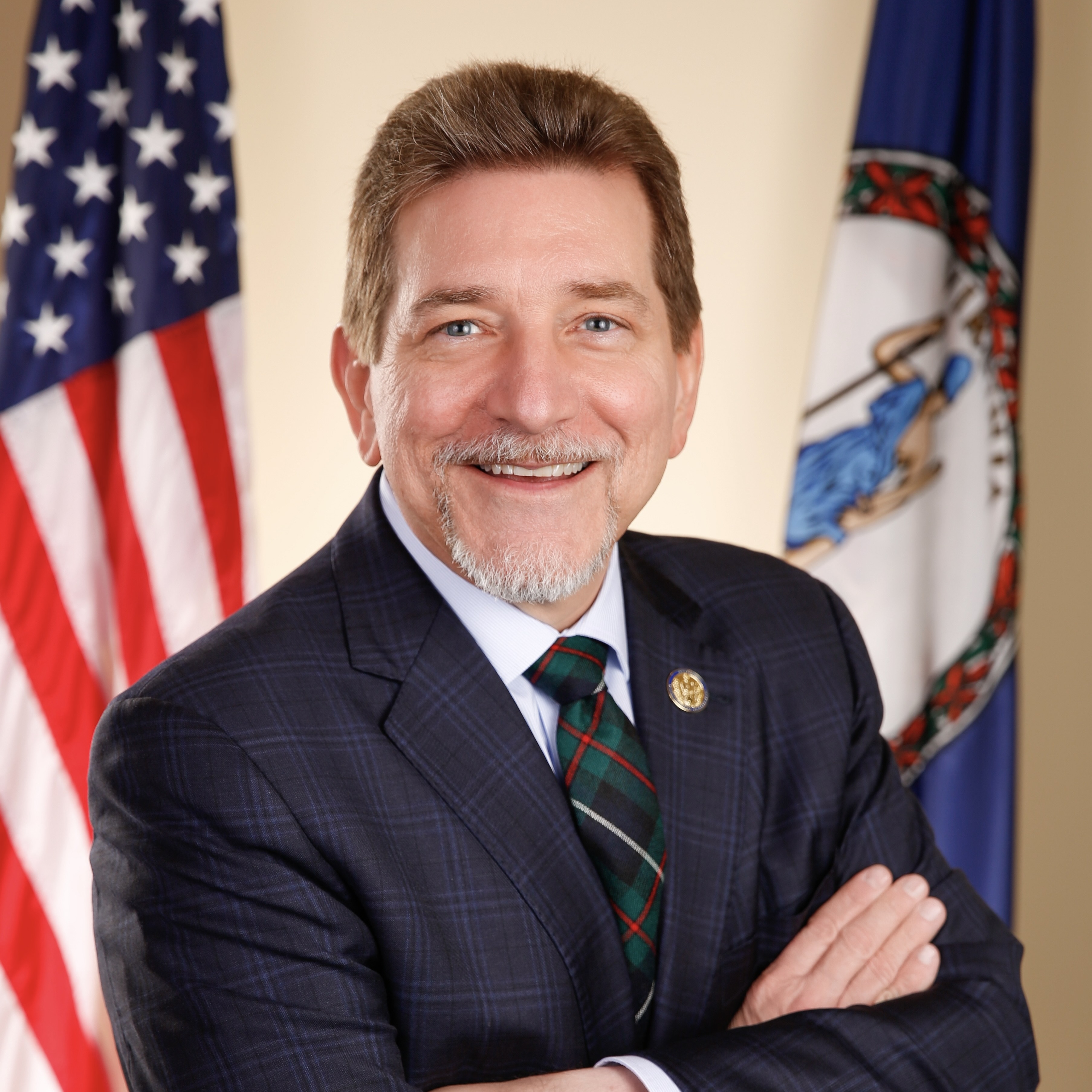
Commending Barry M. Barnard.
Commending Virginia's Crossroads.
Celebrating the life of the Honorable AugustusBenton Chafin, Jr.
Celebrating the life of the Honorable AugustusBenton Chafin, Jr.
Celebrating the life of the Honorable RobertS. Bloxom, Sr.
Feral cats; trap, neuter, and return programs. Authorizes any public or private animal shelter, releasing agency,or hospital or clinic that is operated under the immediate supervisionof a duly licensed veterinarian to operate a trap, neuter, and returnprogram, as defined in the bill. The bill exempts volunteers ofsuch program from provisions related to abandonment and licensingof animals and exempts the operator from general requirements ofshelters related to holding periods, release of animals, and recordkeeping.
Virginia Fuels Tax Act; refueling vehicles. Exempts persons properly licensed by the Department of Motor Vehicles from the prohibition on delivering fuel from a transport truck or tank wagon to the fuel tank of a highway vehicle, provided that such vehicle is on certain premises or a site approved by the local fire official. The bill requires the Department to license such delivery persons.
Transit funding. Raises the existing regional transportation fee, a grantor's tax, from $0.15 per $100 to $0.20 per $100 for localities in the Northern Virginia Transportation Authority that are also members of the Northern Virginia Transportation District. The bill requires half of the revenues to be deposited in the Northern Virginia Transportation Authority Fund and half to be deposited in the Washington Metropolitan Area Transit Authority (WMATA) Capital Fund. The rate of tax in the other localities will remain at $0.15 per $100, with one-third of the revenues to be retained by the locality to be used for transportation purposes and the other two-thirds to be deposited in the Northern Virginia Transportation District Fund. The bill also raises the existing transient occupancy tax in the localities located in the Northern Virginia Transportation District from $2 to $3, with all of the revenues from the tax being used to support WMATA. This bill incorporates HB 977.
Dulles Greenway. Amends the powers and responsibilitiesof the State Corporation Commission (SCC) to regulate toll road operators underthe Virginia Highway Corporation Act of 1988. The bill adds requirements thattoll rates not materially discourage the public's use of the toll road, thatthe cost of operating the toll road be reasonably apportioned across all tollroad users based on the relative distance each class of user travels on thetoll road, such that the toll rates are established in a reasonable andnondiscriminatory manner in relation to the benefit obtained, and that tollrates shall provide the operator with no more than a reasonable return. Inaddition, the bill (i) requires the SCC, by October 1, 2020, to initiate aninvestigation into the tolls charged by all operators subject to the Act and toissue a ruling by April 1, 2021, on its investigation as to whether the currenttolls charged by the operator comply with such new requirements; (ii) prohibitsthe SCC from using the fact that any incremental return resulting fromincreased traffic related to a relative change in potential toll users that isgreater than zero on a cumulative basis as the sole basis for finding that theoperator's return exceeds a reasonable level as specified in such newrequirements, during any future complaint proceeding; (iii) requires the SCC,in its initial investigation, to develop a baseline from which it can measurethe relative change in potential toll users and directs how the incrementalreturn shall be computed; (iv) prohibits an operator from seeking a tollincrease that attempts to raise its return above the reasonable level; (v)requires the full disclosure, in public financial reports to the SCC, of thedetails of any related party transactions; and (vi) establishes a presumptionthat any related party transactions shall be presumed to be imprudent andexcluded from costs used for any purpose, including but not limited to costs oflobbyists, excessive compensation, and entertainment expenses, unless theoperator provides information showing that at least three separate competitivebids demonstrate that the operator could not have achieved better contractterms from a third party.
Labor and employment; collective bargaining; employees of counties, cities, and towns. Permits counties, cities, and towns to adopt local ordinances authorizing them to (i) recognize any labor union or other employee association as a bargaining agent of any public officers or employees, except for Constitutional officers and their employees, and including public school employees and (ii) collectively bargain or enter into any collective bargaining contract with any such union or association or its agents with respect to any matter relating to them or their employment. The bill provides that for any governing body of a county, city, or town that has not adopted an ordinance or resolution providing for collective bargaining, such governing body is required, within 120 days of receiving certification from a majority of public employees in a unit considered by such employees to be appropriate for the purposes of collective bargaining, to take a vote to adopt or not adopt an ordinance or resolution to provide for collective bargaining by such public employees and any other public employees deemed appropriate by the governing body. The bill provides that the prohibition against striking for public employees applies, irrespective of any such local ordinance. The bill has a delayed effective date of May 1, 2021. This bill is identical to SB 939.